Passivation vs electropolishing plays a critical role in metal surface finishing for B2B manufacturing. These processes improve corrosion resistance, cleanliness, and surface stability in industrial components. Manufacturers rely on them to enhance durability and meet strict compliance standards. Passivation removes free iron and strengthens the oxide layer on stainless steel surfaces. Electropolishing removes microscopic peaks through electrochemical reactions, producing smoother finishes. Both methods support high-performance requirements in demanding industries. Choosing the right method impacts product lifespan, maintenance cost, and operational efficiency. Accurate selection also ensures consistent quality across large production batches.
Surface Chemistry Mechanisms Behind Passivation vs Electropolishing
Surface chemistry defines how each method improves metal performance. Passivation vs electropolishing differs in chemical interaction and material response. Passivation uses nitric or citric acid to remove contaminants and promote chromium oxide formation. This oxide layer protects stainless steel from corrosion and oxidation. The process does not significantly alter surface roughness or appearance. Electropolishing works differently through controlled anodic dissolution. Electrical current removes surface irregularities at the microscopic level. Peaks dissolve faster than valleys, creating a smooth and reflective finish. This method reduces surface defects and improves cleanliness.
Process Workflow Comparison in Industrial Applications
Passivation vs electropolishing also differs in operational workflow and equipment requirements. Passivation involves cleaning, acid immersion, rinsing, and drying stages. Operators must control temperature, acid concentration, and exposure time. The process requires minimal equipment and suits batch production environments. Electropolishing requires specialized power supplies, electrolytes, and cathode fixtures. Components act as anodes during the process. Current density and electrolyte composition directly influence final results. This method demands precise parameter control and safety measures. Waste treatment systems are also necessary due to chemical disposal requirements.
Material Compatibility and Alloy Performance Differences
Material composition affects the effectiveness of both processes. Passivation vs electropolishing behaves differently across various alloys and grades. Stainless steel grades like 304 and 316 respond well to passivation. Chromium content allows stable oxide layer formation. Duplex stainless steels also benefit but require stricter process control. Electropolishing works effectively on stainless steel and certain nickel alloys. Titanium components also benefit from improved surface quality after electropolishing. Aluminum requires different electrolytes and careful parameter adjustments. Microstructure plays a role in how surfaces react during treatment.
Surface Finish and Roughness Outcomes Analysis
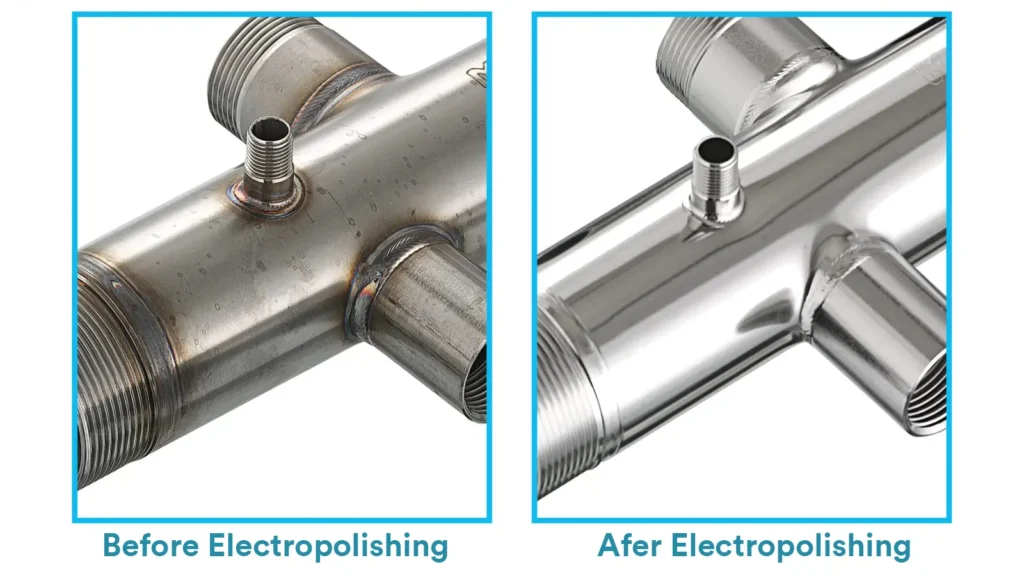
Surface finish differs significantly between both methods. Passivation vs electropolishing creates distinct outcomes in roughness and reflectivity. Passivation maintains the original surface texture of the material. It does not remove machining marks or improve roughness values. Electropolishing reduces surface roughness by removing micro-level imperfections. Typical Ra values improve by up to 50 percent depending on conditions. The resulting surface becomes bright and highly reflective. Smooth surfaces reduce friction and improve cleanability in industrial environments. This advantage becomes important in industries requiring hygiene or precision.
Corrosion Resistance and Durability Comparison
Both processes enhance corrosion resistance but in different ways. Passivation vs electropolishing shows variation in long-term durability under harsh conditions. Passivation strengthens the natural oxide layer, improving resistance to rust. It performs well in moderate environments with controlled exposure conditions. Electropolishing provides additional benefits by reducing surface defects. Fewer irregularities mean fewer corrosion initiation points. This results in improved performance in aggressive environments. Salt spray testing often shows better results for electropolished surfaces. Long-term durability improves due to reduced contamination and smoother finishes.
Cost Structure and Production Efficiency Considerations
Cost considerations vary significantly between the two processes. Passivation vs electropolishing presents different cost structures and operational efficiency levels. Passivation remains cost-effective due to simple equipment and lower energy use. It suits large batch processing with minimal operational complexity. Electropolishing involves higher costs due to electricity consumption and specialized equipment. Labor costs also increase due to process monitoring requirements. However, improved surface quality can reduce downstream finishing costs. Lifecycle cost analysis often favors electropolishing in high-performance applications.
Applications Across Industries and Use Cases
Different industries choose these processes based on performance needs. Passivation vs electropolishing influences application selection across multiple sectors. Medical manufacturers require smooth, clean surfaces for hygiene compliance. Electropolishing is widely used for surgical tools and implants. Aerospace industries use both processes depending on component requirements. Passivation supports corrosion protection in structural parts. Food processing equipment benefits from electropolished surfaces for easy cleaning. Semiconductor industries demand ultra-clean surfaces for contamination control. Many precision cnc machined parts require surface finishing to meet strict tolerance and cleanliness standards.
Key Differences Summary Table
| Factor | Passivation | Electropolishing |
|---|---|---|
| Process Type | Chemical | Electrochemical |
| Surface Finish | No change | Smooth and bright |
| Corrosion Resistance | Improved | Enhanced |
| Cost | Low | High |
| Equipment | Simple | Complex |
This comparison highlights how process selection impacts performance and cost. Passivation vs electropolishing provides clear trade-offs for industrial buyers. Passivation offers reliable corrosion protection at lower cost levels. Electropolishing provides superior surface quality and cleanliness. Manufacturers must align process choice with application requirements. High-end industries often prioritize performance over cost. Simpler applications may benefit from cost-effective passivation. Clear evaluation of these trade-offs supports better procurement decisions.
Technical Performance Metrics Comparison
| Metric | Passivation | Electropolishing |
|---|---|---|
| Ra Reduction | Minimal | Up to 50% |
| Reflectivity | Low | High |
| Cleanability | Moderate | Excellent |
| Process Time | Short | Moderate |
| Environmental Control | Basic | Strict |
These metrics provide measurable differences between both treatments. Passivation vs electropolishing highlights performance gaps in demanding environments. Electropolishing improves functional performance where surface quality matters most. Passivation delivers consistent protection without altering geometry. Engineers must consider tolerance sensitivity when selecting a process. Some applications cannot tolerate dimensional changes from material removal. Others require ultra-smooth finishes for optimal performance. Evaluating these metrics ensures proper process alignment.
Selection Criteria for B2B Buyers
Choosing between these methods requires a structured evaluation approach. Passivation vs electropolishing decisions depend on multiple technical and commercial factors. Consider the following key factors:
- Required surface finish and roughness level
- Corrosion resistance expectations
- Budget constraints and production scale
- Industry compliance standards
- Material type and alloy composition
Each factor influences the final decision in manufacturing environments. Buyers must balance cost, performance, and regulatory requirements. Some applications demand advanced finishing despite higher costs. Others prioritize efficiency and scalability. Proper evaluation reduces risks and improves supply chain reliability.
Strategic Decision Factors in Industrial Surface Treatment
Selecting the right finishing method requires deep technical knowledge. Passivation vs electropolishing requires alignment with application-specific performance goals. Passivation suits applications needing corrosion resistance without surface modification. Electropolishing fits scenarios requiring smoothness and high cleanliness. Industries with strict hygiene standards often prefer electropolishing. Aerospace and structural sectors may rely on passivation for cost efficiency. Engineers must evaluate both immediate and long-term performance needs. Precision machined components often require tailored finishing solutions.
Common Misconceptions in Passivation vs Electropolishing
Misconceptions often lead to incorrect process selection. Passivation vs electropolishing is sometimes misunderstood due to overlapping benefits. Some assume both methods deliver identical corrosion resistance. In reality, surface smoothness significantly affects long-term durability. Others believe electropolishing always replaces passivation. However, both processes can complement each other in certain applications. Another misconception involves cost justification. Higher cost does not always mean better performance for every scenario. Accurate technical awareness helps avoid unnecessary expenses and failures.
Conclusion: Strategic Selection in Metal Surface Treatment
Passivation vs electropolishing remains a key decision in modern manufacturing. It influences quality, durability, and operational efficiency across industrial applications. Each process offers distinct advantages based on specific requirements. Passivation provides reliable corrosion resistance at lower costs. Electropolishing enhances surface quality and long-term durability. B2B buyers must evaluate technical and economic factors carefully. Proper selection improves product performance and operational efficiency. Clear technical insight supports better manufacturing outcomes.
FAQ
What is the main difference between passivation and electropolishing?
Passivation and electropolishing differ in both mechanism and outcome. Passivation uses chemical treatment to remove contaminants and enhance the natural oxide layer on stainless steel. It does not significantly change the surface texture or appearance. Electropolishing uses an electrochemical process that removes microscopic surface material. This results in a smoother and more reflective finish. The key difference lies in surface modification. Passivation protects, while electropolishing refines and improves surface quality. Each process serves different industrial purposes based on performance requirements.
Which process offers better corrosion resistance for stainless steel?
Both processes improve corrosion resistance, but performance varies by application. Passivation enhances corrosion resistance by strengthening the chromium oxide layer. It works well in controlled environments with moderate exposure conditions. Electropolishing provides additional benefits by smoothing the surface and removing defects. This reduces areas where corrosion can initiate. As a result, electropolished surfaces often perform better in aggressive environments. Salt spray tests usually show longer resistance times for electropolished parts. The final choice depends on environmental conditions and performance expectations.
Is electropolishing worth the higher cost in CNC machining?
Electropolishing can justify its higher cost in many CNC machining applications. The process improves surface finish, reduces contamination, and enhances durability. These benefits can reduce maintenance and cleaning costs over time. In industries like medical and semiconductor manufacturing, surface quality is critical. Electropolishing helps meet strict compliance standards in these sectors. However, not all applications require such advanced finishing. For less demanding environments, passivation may provide sufficient performance at a lower cost. Cost-benefit analysis should always guide the decision.