Why Do Industrial Adjustment Systems Use Trapezoidal Stainless Steel Lead Screws? How Do They Differ from Standard Threaded Rods?
Industrial adjustment systems need reliable components to control linear movement, transfer mechanical loads, and maintain accurate positioning. From machine tools and packaging equipment to lifting mechanisms and adjustable fixtures, lead screws play an important role in mechanical transmission.
Among different screw designs, trapezoidal stainless steel lead screws offer a practical solution for applications that require controlled movement, mechanical load transmission, and corrosion resistance.
But why do equipment manufacturers choose trapezoidal threads instead of standard metric threads? What makes a Tr trapezoidal lead screw different from an ordinary threaded rod?
This guide explains the thread structure, operating principles, material advantages, and key selection factors that industrial buyers and OEM manufacturers should understand.
1. What Is a Trapezoidal Lead Screw?
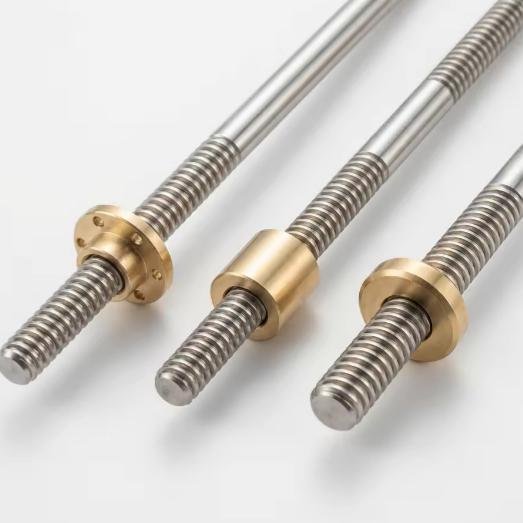
A trapezoidal lead screw, also known as a trapezoidal threaded rod or power screw, uses a trapezoidal thread profile to convert rotational movement into linear motion.
Unlike standard metric threaded rods, which primarily connect and fasten components, trapezoidal lead screws work with matching nuts to transmit mechanical force and control linear movement.
The ISO metric trapezoidal thread system uses a 30-degree included thread angle. Its wider thread profile provides suitable contact surfaces for power transmission.
Common features include:
A trapezoidal thread profile with a 30-degree included angle.
Matching trapezoidal nuts for linear movement.
Different nominal diameters and thread pitches.
Single-start or multiple-start thread configurations.
Right-hand or left-hand thread directions.
Manufacturers use these screws in industrial adjustment mechanisms, machine tools, lifting equipment, and positioning systems.
2. Trapezoidal Threads vs. Standard Metric Threaded Rods: What Is the Difference?
Although both products have external threads, they serve different mechanical purposes.
Standard metric threaded rods use a V-shaped thread profile. Manufacturers primarily use them to fasten, connect, and secure mechanical components.
Trapezoidal lead screws use a wider trapezoidal profile. Their design allows a matching nut to travel along the shaft and transmit axial mechanical loads.
Key Differences
| Comparison Factor | Trapezoidal Lead Screw (Tr) | Standard Metric Threaded Rod |
|---|---|---|
| Thread Profile | Trapezoidal | V-shaped |
| Included Thread Angle | 30° | 60° |
| Main Function | Power transmission | Fastening and connection |
| Matching Component | Trapezoidal nut | Standard metric nut |
| Load Transmission | Designed for axial mechanical loads | Primarily designed for fastening loads |
| Movement | Converts rotation into linear travel | Normally remains fixed after fastening |
| Applications | Adjustment systems, machine tools, lifting mechanisms | Bolted assemblies, frames, and structural connections |
The biggest difference lies in their thread geometry and intended function. A standard metric threaded rod cannot directly replace a trapezoidal lead screw in a power transmission system.
Buyers should also distinguish trapezoidal lead screws from ball screws. Trapezoidal screws use sliding contact between the screw and nut, while ball screws use rolling balls to reduce friction.
For many manual adjustment systems, trapezoidal lead screws offer a straightforward and economical mechanical solution.
3. Why Do Industrial Adjustment Systems Use Trapezoidal Lead Screws?
Trapezoidal lead screws offer several practical advantages for industrial machinery.
Reliable Axial Load Transmission
The trapezoidal thread profile provides broad contact surfaces that transfer axial force between the screw and its matching nut.
This design supports applications such as machine positioning, mechanical adjustment, lifting mechanisms, and equipment fixtures.
The actual load capacity depends on the screw diameter, thread engagement, material strength, nut design, lubrication, and operating conditions.
Controlled Linear Movement
When an operator rotates a trapezoidal lead screw, the matching nut travels along the threaded shaft.
This mechanism converts rotary input into predictable linear displacement.
Equipment manufacturers can select the thread pitch and lead according to the required adjustment distance and movement speed.
Potential Self-Locking Performance
Many trapezoidal lead screw systems resist back-driving because friction between the screw and nut can prevent the load from driving the screw backward.
This characteristic helps some mechanical systems maintain their adjusted positions without continuous input torque.
However, self-locking depends on the lead angle, friction coefficient, lubrication, nut material, and operating conditions. Engineers should evaluate the complete assembly before relying on a screw to hold a load.
Simple Mechanical Construction
A trapezoidal screw system generally uses fewer components than a ball screw assembly.
Manufacturers can combine a screw shaft, matching nut, support bearings, and a manual or powered drive to create a practical adjustment mechanism.
This straightforward construction makes trapezoidal lead screws useful for applications that do not require the high transmission efficiency of a ball screw system.
4. Why Choose Stainless Steel Trapezoidal Lead Screws?
Material selection affects corrosion resistance, mechanical performance, maintenance requirements, and service life.
Stainless steel offers several advantages for industrial lead screw applications.
Corrosion Resistance
Stainless steel forms a protective chromium-rich passive layer that helps resist corrosion.
304 stainless steel works well in many general industrial environments involving moisture and normal cleaning conditions.
For equipment exposed to chlorides, saltwater, or more aggressive cleaning chemicals, 316 stainless steel may provide better corrosion resistance.
Suitable for Moisture-Exposed Equipment
Industrial adjustment systems sometimes operate near water, cleaning fluids, or humid environments.
Stainless steel lead screws help reduce corrosion-related maintenance when manufacturers select the appropriate material grade and surface condition.
Buyers should also consider the complete assembly, including the nut material, bearings, and lubricant.
Durability for Repeated Adjustment
Industrial lead screws often experience repeated rotation and sliding contact with matching nuts.
The right material, thread geometry, surface condition, and lubrication help maintain reliable operation.
For applications involving frequent movement, engineers should evaluate friction, wear, operating speed, and lubrication requirements.
Flexible Material Selection
Manufacturers can offer different stainless steel grades according to the application.
304 Stainless Steel: A practical choice for general industrial applications requiring corrosion resistance and durability.
316 Stainless Steel: A suitable option for environments involving more aggressive corrosion exposure, particularly chlorides.
Buyers should evaluate the actual operating environment before selecting the material.
5. Common Applications of Trapezoidal Stainless Steel Lead Screws
Trapezoidal lead screws support industrial systems that require controlled mechanical movement.
Industrial Adjustment Mechanisms
Equipment manufacturers use trapezoidal screws to adjust machine positions, component spacing, and mechanical clearances.
Packaging Machinery
Packaging equipment often requires adjustable guides, positioning components, and mechanical settings. Lead screws provide a practical way to control these adjustments.
Food Processing Equipment
Stainless steel lead screws can suit certain food processing applications where moisture resistance and material selection matter. Designers should also consider hygienic design, cleanability, lubrication, and the accessibility of the complete assembly.
Machine Tools and Fixtures
Trapezoidal lead screws help operators adjust machine components, fixtures, and positioning mechanisms through controlled rotational input.
Lifting and Positioning Systems
Mechanical lifting and positioning equipment may use trapezoidal screws to convert rotary input into linear movement. Engineers must evaluate load capacity, buckling resistance, critical speed, and holding requirements before selecting a screw.
6. How to Choose the Right Trapezoidal Stainless Steel Lead Screw
When sourcing custom Tr lead screws, equipment manufacturers and purchasing teams should confirm several important specifications.
Nominal Diameter: Specify the major diameter of the external thread, such as Tr16, Tr20, or Tr24, according to the equipment design.
Thread Pitch and Lead: Pitch describes the distance between adjacent thread profiles. Lead describes the axial distance the nut travels during one complete screw revolution. For a single-start screw, pitch and lead are equal.
Thread Direction: Specify right-hand or left-hand threads according to the required movement direction.
Material Grade: Choose 304 or 316 stainless steel according to corrosion exposure and mechanical requirements.
Screw Length: Confirm the overall length, effective threaded length, and required mounting sections.
Matching Nut: Select a compatible trapezoidal nut material and thread tolerance to achieve the required fit and movement.
Dimensional Tolerances: Specify thread dimensions, pitch diameter, straightness, and other critical tolerances according to the application.
Surface Finish and Lubrication: Define the required surface condition and lubrication strategy according to operating speed, load, and environmental requirements.
Providing complete specifications helps suppliers evaluate manufacturing feasibility and prepare accurate quotations.
7. What Standards Apply to Trapezoidal Threaded Rods?
When purchasing Tr trapezoidal lead screws, buyers should consider internationally recognized thread standards.
The ISO metric trapezoidal thread system provides standardized references for thread profiles, dimensions, and tolerances.
Important standards include:
ISO 2901: Defines the basic and design profiles of ISO metric trapezoidal screw threads.
ISO 2902: Specifies the general plan for ISO metric trapezoidal screw threads.
ISO 2903: Specifies the tolerance system for ISO metric trapezoidal screw threads.
ISO 2904: Specifies basic dimensions for ISO metric trapezoidal screw threads.
These standards help buyers and manufacturers communicate thread specifications accurately.
However, standard thread dimensions alone do not guarantee the performance of a complete lead screw assembly. For applications requiring precise positioning, engineers should also specify lead accuracy, backlash, straightness, surface condition, and other application-specific requirements.
8. Why Work with a Custom Stainless Steel Lead Screw Manufacturer?
Standard threaded rods do not always meet the requirements of specialized industrial equipment.
OEM manufacturers may need non-standard diameters, specific thread pitches, custom lengths, special mounting sections, or particular stainless steel grades.
Working with an experienced custom machining supplier helps buyers coordinate these requirements before production.
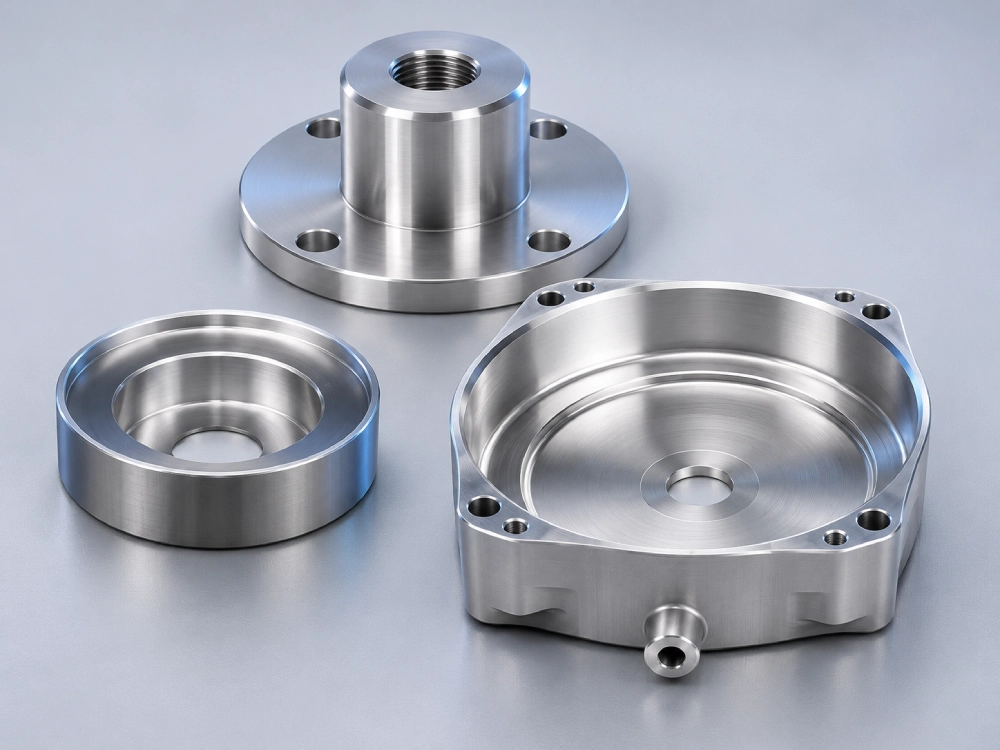
At Zhejiang Dream Industry Limited, we specialize in custom CNC machined parts and precision metal components, with more than 20 years of manufacturing experience.
Our manufacturing capabilities cover stainless steel components, CNC turning, milling, precision machining, and surface finishing. We support OEM projects from drawing evaluation and prototype development to production and quality inspection.
Whether you need a standard metric trapezoidal thread or a customized stainless steel lead screw, our team can review your technical drawings and discuss suitable manufacturing options.
Frequently Asked Questions
What does Tr mean on a trapezoidal threaded rod?
Tr identifies an ISO metric trapezoidal thread. For example, Tr20×4 indicates a nominal diameter of 20 mm and a 4 mm pitch. Buyers should also specify the thread hand, tolerance class, and other relevant details.
What is the difference between a trapezoidal screw and a normal threaded rod?
A trapezoidal screw uses a 30-degree thread profile for power transmission and linear movement. A standard metric threaded rod uses a 60-degree V-shaped thread profile, primarily for fastening and connection.
Are trapezoidal lead screws self-locking?
Many trapezoidal lead screw systems resist back-driving because of friction between the screw and nut. However, actual self-locking performance depends on the lead angle, friction coefficient, lubrication, and operating conditions.
Is stainless steel suitable for trapezoidal lead screws?
Yes. Stainless steel offers good corrosion resistance for many industrial lead screw applications. 304 stainless steel suits general environments, while 316 stainless steel offers better resistance to many chloride-containing environments.
What is the difference between a trapezoidal lead screw and a ball screw?
A trapezoidal lead screw uses sliding contact between the screw and nut. A ball screw uses rolling balls to reduce friction and improve transmission efficiency. Ball screws generally suit applications requiring higher efficiency and precise motion, while trapezoidal screws offer a simpler solution for many adjustment mechanisms.
Can manufacturers customize Tr trapezoidal threaded rods?
Yes. Manufacturers can produce custom diameters, pitches, lengths, thread directions, material grades, and mounting configurations based on engineering drawings, CAD files, or physical samples.
Conclusion
Trapezoidal stainless steel lead screws provide a practical solution for industrial equipment that requires controlled linear movement, mechanical load transmission, and corrosion resistance.
Compared with standard metric threaded rods, Tr trapezoidal threads feature a profile specifically designed for power transmission and mechanical adjustment.
For OEM manufacturers and industrial buyers, selecting the right diameter, pitch, material grade, tolerance, and matching nut helps improve assembly compatibility and operating reliability.
Looking for custom stainless steel trapezoidal lead screws for your next project? Send us your drawings, specifications, or samples to discuss manufacturing options and request a quotation.