6061 vs 7075 cnc machining plays a critical role in modern manufacturing decisions. Engineers often compare these alloys for strength and machinability balance. Aluminum alloys dominate CNC applications due to versatility and cost efficiency. Manufacturers prefer lightweight materials for aerospace and automotive parts. 6061 aluminum offers excellent corrosion resistance and weldability. 7075 aluminum provides superior strength for high-stress environments. Choosing between them affects performance, cost, and durability outcomes. Each alloy responds differently to machining forces and tool wear. Understanding their distinctions helps optimize CNC processes. Designers must evaluate load conditions, surface finish, and tolerances. Material selection directly impacts production efficiency and product lifespan.
Chemical Composition
Material composition directly influences machining performance and durability. 6061 aluminum contains magnesium and silicon as primary alloying elements. These elements improve corrosion resistance and machinability significantly. 7075 aluminum includes zinc as a dominant alloying component. Zinc enhances strength but reduces corrosion resistance compared to 6061. Copper is also present in 7075, increasing hardness and fatigue resistance. Grain structure differs between these alloys after heat treatment. 6061 forms a more ductile and uniform microstructure. 7075 develops a dense structure optimized for strength. These differences shape the outcomes in 6061 vs 7075 cnc machining applications.
Mechanical Properties of 6061 vs 7075 CNC Machining
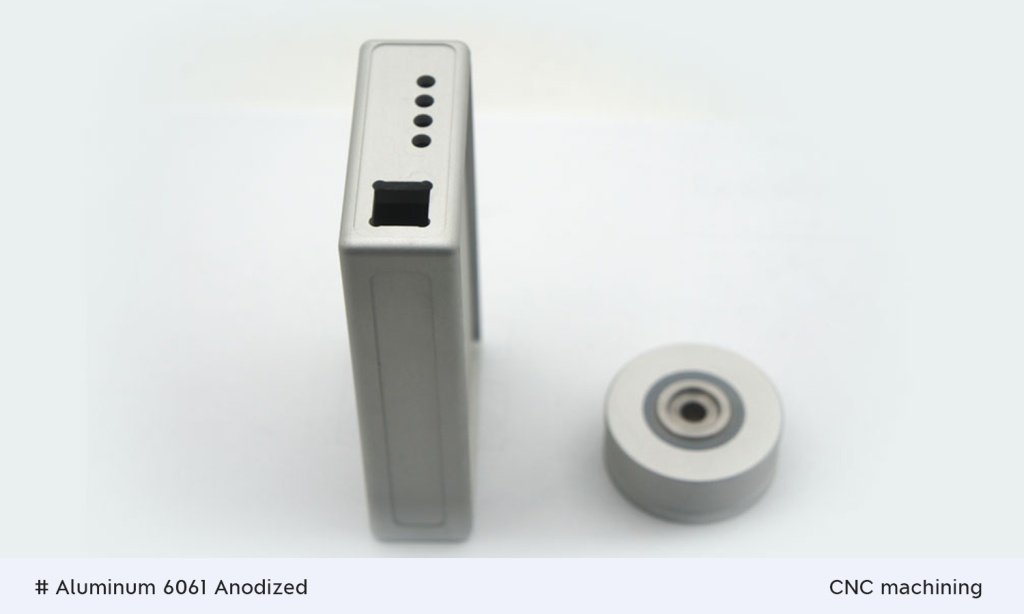
Mechanical performance defines how each alloy behaves under load conditions. 7075 aluminum offers significantly higher tensile strength than 6061. Yield strength also favors 7075 in demanding environments. 6061 provides balanced strength with better flexibility and impact resistance. Fatigue resistance remains higher in 7075 during repeated stress cycles. Hardness differences influence tool wear during machining operations. Engineers often select 7075 for aerospace structural parts. Meanwhile, 6061 suits general engineering applications effectively. These characteristics are central to decisions in 6061 vs 7075 cnc machining projects.
| Property | 6061 Aluminum | 7075 Aluminum |
|---|---|---|
| Tensile Strength | ~310 MPa | ~570 MPa |
| Yield Strength | ~275 MPa | ~505 MPa |
| Hardness | 95 HB | 150 HB |
| Elongation | 12% | 11% |
The table demonstrates the clear performance gap between both alloys. Strength and hardness differences directly affect machining strategies and tool life.
Machinability Factors in 6061 vs 7075 CNC Machining
Machinability determines production efficiency and surface finish quality. 6061 aluminum machines easily with consistent chip formation. Tool wear remains relatively low during cutting operations. 7075 aluminum produces harder chips and increases cutting resistance. Tools wear faster due to higher material hardness. Operators must optimize speeds and feeds for stable performance. Coolant becomes essential when machining high-strength aluminum alloys. Surface finish tends to be smoother with 6061 material. These factors heavily influence outcomes in 6061 vs 7075 cnc machining environments.
| Factor | 6061 | 7075 |
|---|---|---|
| Tool Wear | Low | High |
| Cutting Speed | High | Moderate |
| Surface Finish | Excellent | Good |
| Chip Formation | Smooth | Hard |
This comparison highlights how machinability affects production speed and cost. Engineers must adjust tooling strategies to maintain efficiency.
Corrosion Behavior
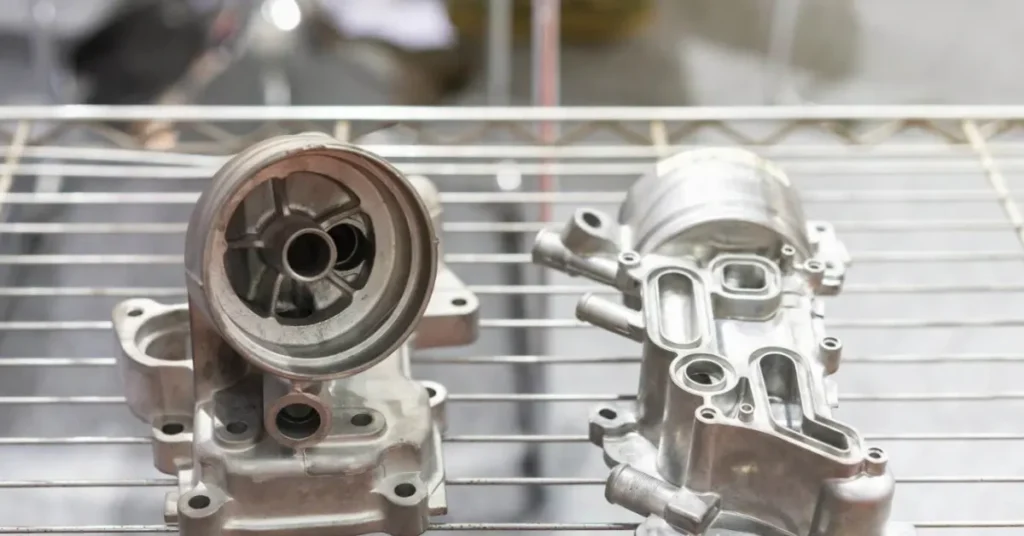
Corrosion resistance impacts long-term durability in different environments. 6061 aluminum resists oxidation effectively due to its composition. Protective oxide layers form naturally on exposed surfaces. 7075 aluminum shows lower corrosion resistance because of copper content. Engineers often apply coatings to improve durability. Anodizing enhances protection and surface appearance for both alloys. 6061 responds better to anodizing with more uniform finishes. Environmental exposure plays a key role in material selection decisions.
Thermal and Physical Properties
Thermal behavior influences machining stability and tool performance. 6061 aluminum offers better thermal conductivity than 7075. Efficient heat dissipation reduces tool wear during cutting. 7075 retains heat longer due to its dense structure. This factor increases the need for coolant systems. Density differences between the alloys remain minimal. Weight considerations rarely determine material selection. Engineers evaluate thermal performance when designing precision cnc machined parts.
Cost Analysis of 6061 vs 7075 CNC Machining
Cost efficiency remains essential for manufacturing and production planning. 6061 aluminum is widely available at lower cost levels. Machining expenses stay lower due to better workability. 7075 aluminum increases production cost because of hardness. Tool wear and slower speeds contribute to higher expenses. High-performance applications justify the additional investment. Budget-sensitive projects often rely on 6061 aluminum. These economic factors define many 6061 vs 7075 cnc machining decisions.
| Cost Factor | 6061 | 7075 |
|---|---|---|
| Material Cost | Low | High |
| Machining Cost | Low | Medium-High |
| Tooling Cost | Low | High |
| Production Speed | Fast | Moderate |
The table provides a clear overview of financial considerations. Cost differences influence large-scale manufacturing strategies significantly.
Applications
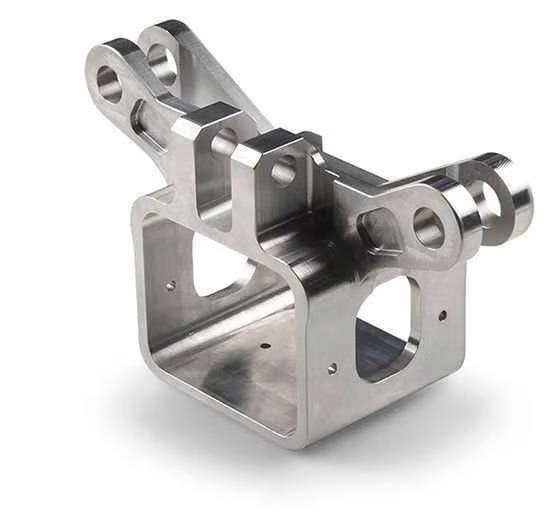
Application requirements determine which alloy performs better in practice. Aerospace industries rely heavily on 7075 for structural strength. Automotive sectors often prefer 6061 for lightweight components. Marine environments benefit from the corrosion resistance of 6061. Consumer products use aluminum for durability and aesthetics. Some assemblies combine aluminum with stainless steel precision machined parts. Hybrid designs enhance performance across different operating conditions.
Advantages and Limitations
Understanding advantages and limitations helps guide material selection decisions.
- 6061 Advantages:
- Excellent corrosion resistance
- Superior machinability
- Lower production cost
- 6061 Limitations:
- Lower strength
- Reduced fatigue resistance
- 7075 Advantages:
- High strength and hardness
- Excellent fatigue performance
- Suitable for aerospace use
- 7075 Limitations:
- Higher cost
- Lower corrosion resistance
- Increased tool wear
These comparisons support informed engineering and manufacturing decisions.
Choosing Materials
Material selection depends on performance requirements and operating conditions. Engineers must evaluate load, environment, and budget carefully. Complex designs benefit from the machinability of 6061 aluminum. High-stress components require the strength of 7075 aluminum. Surface finish expectations also influence final decisions. Production scale affects overall cost efficiency. Careful evaluation ensures optimal results in 6061 vs 7075 cnc machining processes.
FAQ
Which is better for CNC machining, 6061 or 7075?
The choice depends on application requirements and priorities. 6061 aluminum works well for general machining tasks. It provides excellent machinability and corrosion resistance. Manufacturers prefer it for cost-effective production. 7075 aluminum performs better in high-strength applications. Aerospace and defense industries rely on its durability. However, machining 7075 requires advanced tooling strategies. Tool wear increases due to higher hardness. If strength is critical, 7075 becomes the better option. If cost matters more, 6061 is ideal.
Is 7075 aluminum harder to machine than 6061?
Yes, 7075 aluminum is harder to machine than 6061. Its hardness increases cutting resistance during operations. Tools wear faster when machining 7075 components. Operators must adjust speeds and feeds carefully. Coolant usage becomes essential for heat control. Carbide tools are often required for efficient cutting. In contrast, 6061 machines smoothly with less resistance. It produces consistent chips and better surface finishes. These differences impact production efficiency significantly.
When should I choose 6061 over 7075?
6061 aluminum is ideal for corrosion-resistant applications. It performs well in marine and outdoor environments. Complex geometries benefit from its excellent machinability. Budget-sensitive production often favors this material. It also supports welding and forming processes effectively. Lightweight structures commonly use 6061 alloy. When strength demands remain moderate, 6061 is sufficient. Engineers select it for versatility and cost efficiency. It remains widely used in CNC machining industries.