Identify What the Panel Actually Does
Choose a clamping knob for machine guards only after confirming what the fastener does in the assembly. Two covers can look alike while serving different purposes. One might conceal wiring behind a separate barrier. Another might prevent access to a moving belt. Use the machine documentation and risk assessment to identify the panel’s function before measuring its thread. If you cannot confirm that function, ask the machine manufacturer or a qualified safeguarding specialist.
When a Clamping Knob for Machine Guards Is Appropriate
Use hand tightening only where the approved design permits it. For example, an outer trim cover might sit outside a separate, intact hazard barrier. HSE guidance describes removable fixed guards as requiring tools for removal. Keep tool-operated fasteners wherever the safeguarding design requires them. An interlocked door relies on its specified switch, actuator, and sometimes guard locking. Keep those components in the approved configuration. A manual knob cannot perform their safety functions.
Match Thread Type, Pitch, and Working Length
Start with the original drawing or approved part number. Confirm whether the knob uses a male stud or a female insert. A nominal diameter alone does not identify pitch or the thread system. Record usable thread length, shoulder length, and any unthreaded lead. Measure panel thickness, washers, and gasket compression in the assembled stack. Use the available depth in a blind hole to check for bottoming. A stud can feel tight against the hole bottom while the cover still moves.
Check the Seat and Clearance With the Panel in Place
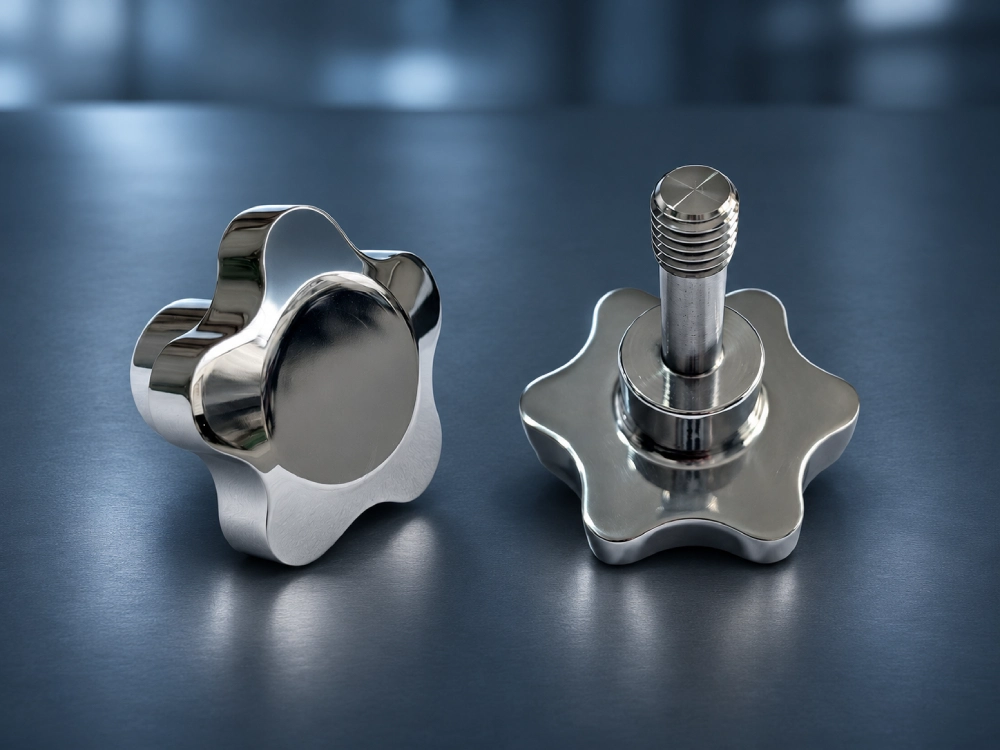
The knob should bear on the surface specified in the assembly drawing. A raised boss or oversized shoulder can contact the surrounding sheet before the seating face engages. Close the approved cover and check the clearance through a full turn. Include hinges, nearby fasteners, cable bends, and gloved fingers. Compare head diameter and grip shape using MXCZ’s five-lobe machine knob as a product example. Confirm the drawing for the exact variant you order.
Choose Materials for the Whole Joint
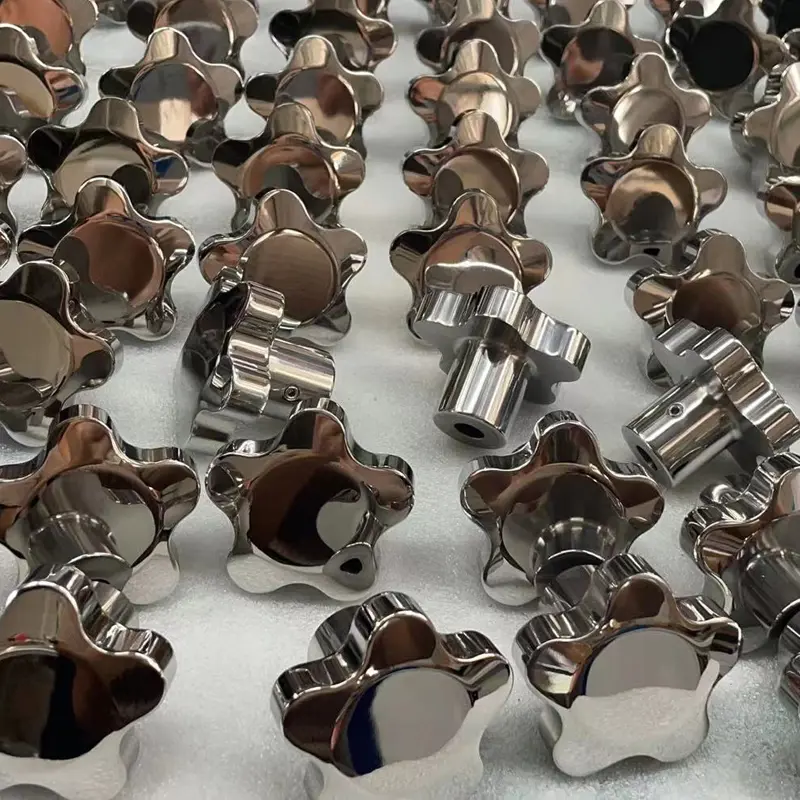
Oil, coolant, washdown chemicals, and temperature affect the head, stud, insert, and mating thread. A polymer head with a metal insert can suit approved covers where weight and grip matter. Confirm the specific polymer against the cleaning process and operating temperature. For wet environments, compare the grade and construction of MXCZ’s stainless steel star knobs against your specification. Check the mating material too. Some stainless thread pairs can gall during repeated tightening. Follow the machine manufacturer’s guidance on finish and lubrication.
Verify a Clamping Knob for Machine Guards Before Ordering
For an approved hand-operated joint, check whether the drawing requires a captive fastener. Captivity keeps hardware from falling out when the panel opens. It does not determine whether hand removal is permissible. Ask the supplier for a dimensioned drawing and confirm how the retaining feature works, if applicable. Specify the original part number, thread, panel stack, head clearance, and operating environment. Confirm the approved tightening method and acceptance checks before ordering a batch.
Inspect a Sample Against the Approved Assembly
Follow the machine’s service and energy isolation procedure before inspecting the assembly. Verify that the sample seats correctly and holds the cover without distortion. Cycle the approved joint through its intended opening and closing sequence. Check for binding, loose inserts, wear, and movement after representative use. If the fastener loosens repeatedly, investigate the seating surface and joint design. Escalate any change that could affect the protective barrier, its openings, or the interlock alignment.
Frequently Asked Questions
Can I replace a tool-operated guard screw with a hand knob?
If the guard design requires a tool for removal, retain the specified fastener. Check the machine manual and original part number. A hand knob can match the thread yet allow someone to open a fixed guard without tools. If technicians need more frequent access, request a review of the access arrangement. Consult the machine manufacturer or a qualified safeguarding specialist. That review may identify a suitable interlocked access door. For a cosmetic cover outside the hazard barrier, confirm that the approved design permits hand tightening.
Why does a replacement feel tight while the panel rattles?
The knob may stop turning before its seating face clamps the panel. A long stud can reach the bottom of a blind hole. An oversized shoulder can hit a raised boss and leave a gap under the knob. With the machine safely isolated, compare the replacement with the original drawing. Check usable hole depth, stud projection, and shoulder length. Then measure the combined thickness of the panel, washers, and gasket. If the seating face makes full contact, check for a loose insert or a distorted panel. Use the specified replacement dimensions and tightening method.
Does a captive knob make a guard safe?
A captive fastener stays attached to the panel or frame after its thread disengages. This helps prevent lost hardware during servicing. A captive fastener can still loosen, and a hand-operated version can still permit tool-free opening. Check the approved drawing for both retention and the required removal method. For a movable guard, follow the machine procedure to verify the interlock and any required guard locking. Confirm that the panel seats correctly and the fastener stays captive throughout the intended service cycle.