EDM vs CNC Machining: Which Process Fits the Part?
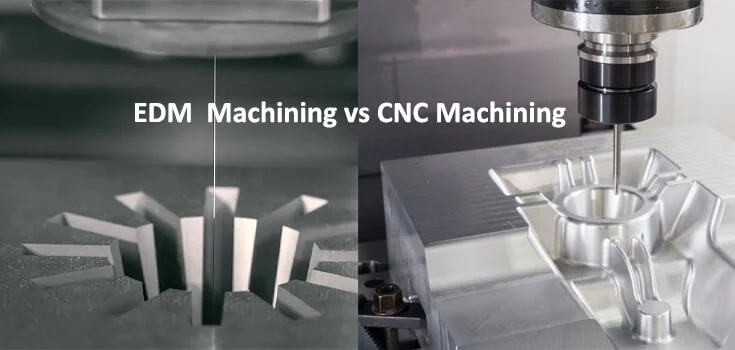
“EDM vs CNC machining” is a useful search question, but the terms are not perfect opposites. Electrical discharge machining (EDM) uses controlled sparks to remove conductive material; many EDM machines are themselves CNC-controlled. In this guide, “CNC machining” means conventional cutting processes such as CNC milling and turning. The decision is about the material-removal method and the geometry it can produce.
How the processes remove material
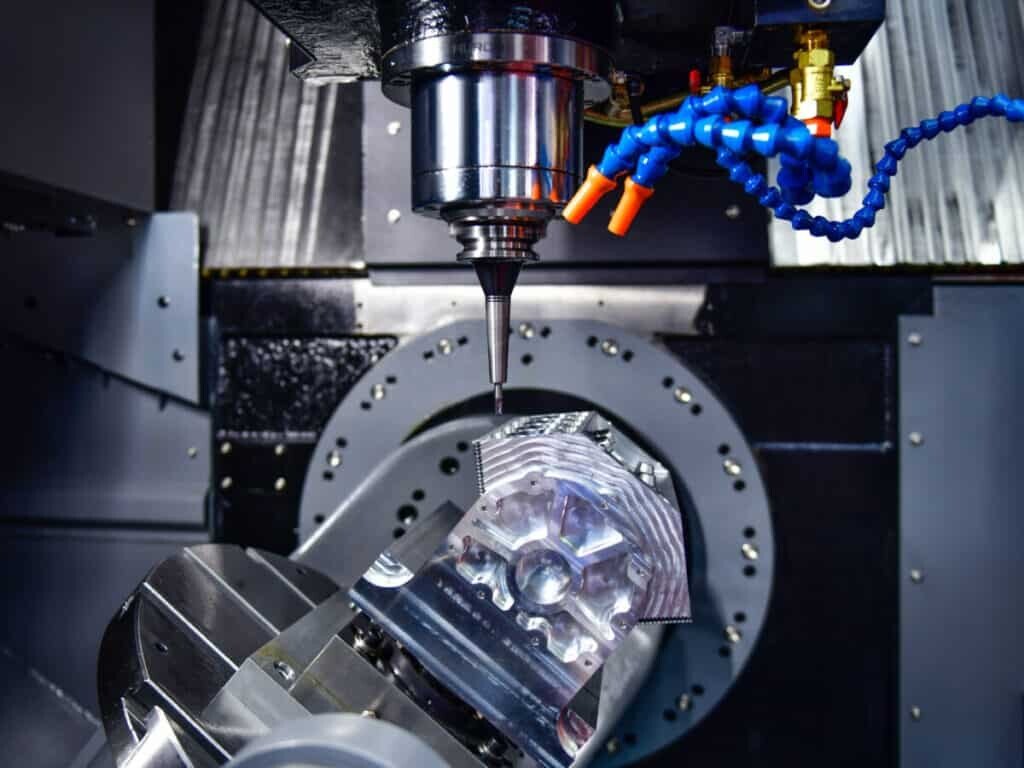
Milling and turning use a cutting edge in physical contact with the workpiece. Tool access, cutting forces, chip evacuation and rigidity affect the result when manufacturing precision CNC machined parts. EDM removes material by electrical discharge between an electrode and a conductive workpiece in a controlled fluid. It does not rely on a conventional cutting edge contacting the workpiece, but it introduces its own constraints: electrode access, dielectric management and a thermally affected surface layer that may require review.
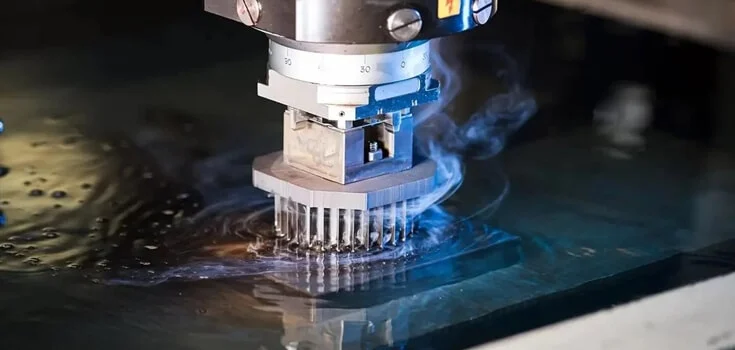
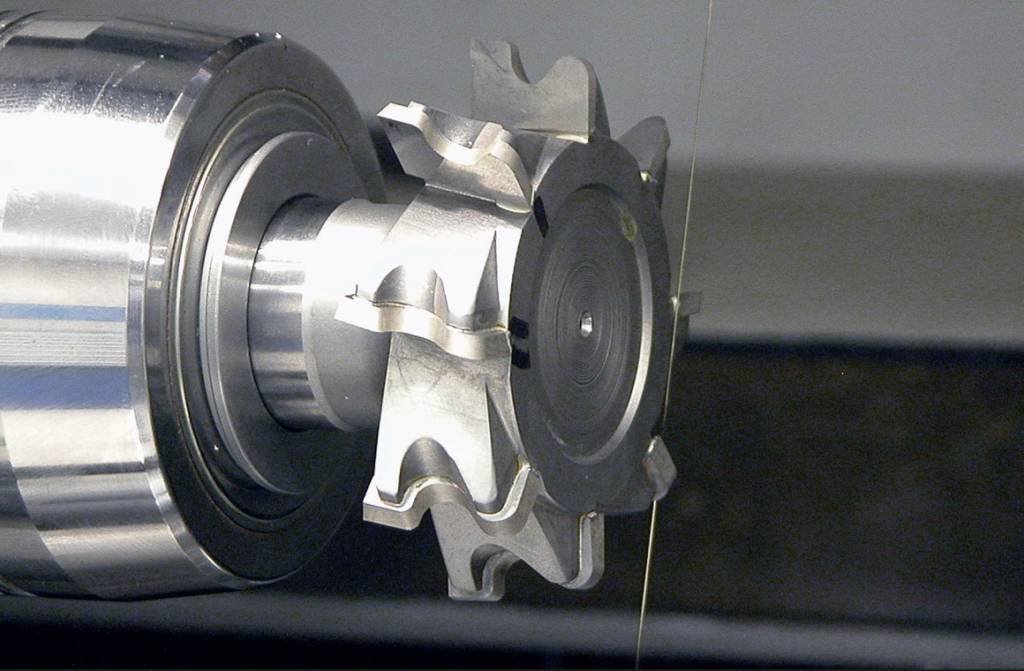
Wire EDM feeds a wire electrode through or around a conductive workpiece to cut a profile. Die-sinking EDM uses a shaped electrode to form a cavity or feature. These are not interchangeable methods, and a quote should identify which one is proposed.
Compare the important constraints
| Decision Factor | Conventional CNC Cutting | EDM |
|---|---|---|
| Material | Broad range, including many nonconductive materials with suitable tools | Workpiece must be electrically conductive |
| Tool Interaction | Physical cutting forces and chips | Electrical discharge, no conventional cutting force at the feature |
| Access | Cutting tool and holder need clearance | Wire path or shaped electrode and flushing access are needed |
| Geometry | Strong for many open surfaces, holes and turned forms | Useful for certain narrow slots, intricate conductive profiles or cavities |
| Surface Concern | Burrs, tool marks and residual stress may need control | Recast layer, thermal effects and flushing conditions may need control |
| Production Plan | Often efficient for broad material removal | May be valuable for selected features or difficult-to-cut conditions |
Neither process is automatically more accurate. The actual result depends on equipment, setup, material, part thickness, programming and inspection. A narrow feature that favors wire EDM may still require conventional machining for the rest of the part.
When CNC cutting is a strong starting point
Use conventional milling or turning as the first candidate for accessible features, general shaping, round components and bulk removal. It can process many conductive and nonconductive materials, subject to suitable tooling. Tool diameter and holder clearance can limit sharp internal corners and deep narrow cavities. Cutting forces can matter for thin walls or delicate features, so fixturing and sequence should be planned.
When EDM deserves a review
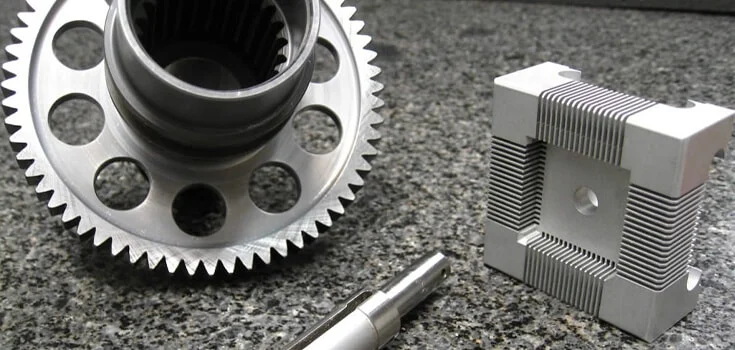
Consider wire EDM for a conductive profile where a wire can be threaded or enter from an edge and where a narrow cut or complex outline is important. Consider die-sinking EDM when a shaped electrode can form a conductive cavity that is difficult to machine with a rotating tool. The exact corner radius, minimum feature and achievable surface condition must be checked for the machine and electrode or wire used. Avoid assuming an EDM method can reach every hidden feature.
EDM can be useful after heat treatment, but heat-treated status alone does not make it the best choice. The surface integrity and any required stock removal after EDM should be agreed for critical parts.
A combined route can be the best route
Many parts are most practical when rough geometry and datum faces are milled or turned, while a restricted feature is produced by EDM. The route may then include deburring, finishing or inspection. This division avoids using EDM for unnecessary bulk removal and prevents forcing a cutting tool into inaccessible geometry.
Provide a feature-level drawing and identify the functional surfaces. Ask each supplier to show the proposed operation sequence, fixturing and inspection plan. Compare quotations on the same finished drawing, quantity and quality scope rather than on a vague process label.
Specify the surface and inspection needs
For EDM features, ask whether the application imposes a limit on recast layer, microcracking or edge condition. For conventional cutting, define burr and surface requirements. Both methods need suitable datum control and inspection. If a feature has a tight fit or fatigue-sensitive duty, the engineering team should decide the acceptance criteria before the process is selected.
Separate wire EDM from die-sinking EDM in an enquiry
Wire EDM needs a path for the wire and an accessible cut profile. An internal contour generally requires a start opening, while an outside profile can begin at an edge. A closed cavity with no through path may call for a shaped electrode and die-sinking EDM instead. The supplier should review entry, flushing, part thickness and how the cut-off portion will be supported. A narrow drawing line does not by itself prove that wire access exists.
Die-sinking EDM adds electrode design and manufacture to the process plan. Electrode wear, flushing and finishing passes can affect the final cavity. The quote should state whether electrode cost is included, whether the electrode can be reused and how the cavity will be inspected. This matters especially for a small order, where tooling and setup can dominate total cost.
Compare processes feature by feature
Consider a conductive plate that needs broad flat faces, drilled mounting holes and a narrow internal slot. Milling and drilling may efficiently create the faces and holes. If the slot has a geometry or material condition that limits a rotating tool, wire EDM may be reviewed for that feature alone, provided a wire path can be made. For precision machined components, this combined approach can help match each feature with a suitable manufacturing process. This is a process-planning example, not a prescription: the actual part drawing, material and tolerance determine whether the combined route is sensible.
For a mold cavity, a different decision may apply. Milling may remove the bulk material, while die-sinking EDM forms a feature the milling cutter cannot reach. The supplier might also propose a smaller cutting tool or a redesigned corner. Compare these routes against the same finished geometry and surface requirement. Changing the process without updating the drawing can conceal a different corner radius or surface condition.
Put inspection at the right stage
Roughing, heat treatment, EDM and finishing can each change the surfaces used as datums. The route should identify when the part is measured and which surfaces establish the final coordinate system. If the finished feature is difficult to probe, agree an inspection method before machining begins. A supplier can otherwise produce a feature that appears correct in a process setup but cannot be verified against the drawing’s datum scheme.
For an EDM feature with surface-integrity requirements, specify the acceptance method rather than merely writing “EDM finish.” Likewise, a machined surface may need a burr or edge-break requirement, not just a roughness number. Ask for evidence appropriate to the function, and avoid demanding a costly finish where it has no effect on performance.
Request comparable quotations
Send the same drawing, material condition, quantity and inspection scope to every bidder. Ask each supplier to identify its proposed process sequence and any deviations. Compare setup charges, electrode or tool cost, cycle time, finishing and inspection as separate items where possible. A lower machining price may omit a finish pass or quality check needed for the final part.
Frequently Asked Questions
Is EDM a type of CNC machining?
EDM is a material-removal process, and many EDM machines use CNC motion control. In sourcing discussions, the phrase usually contrasts spark erosion with cutting tools.
Can EDM machine plastic?
Conventional EDM requires an electrically conductive workpiece. Other processes are more suitable for most plastics.
Is EDM always slower or more expensive?
No universal comparison applies. Geometry, quantity, material, tooling, setups and inspection determine total cost.