Why Choose Stainless-Steel Handwheels for Food Processing Equipment?
Food processing equipment operates in environments where cleanliness, corrosion resistance, and reliable operation are essential. From conveyor systems and filling machines to mixing equipment and packaging lines, every component can affect maintenance requirements and the overall hygiene of the production environment.
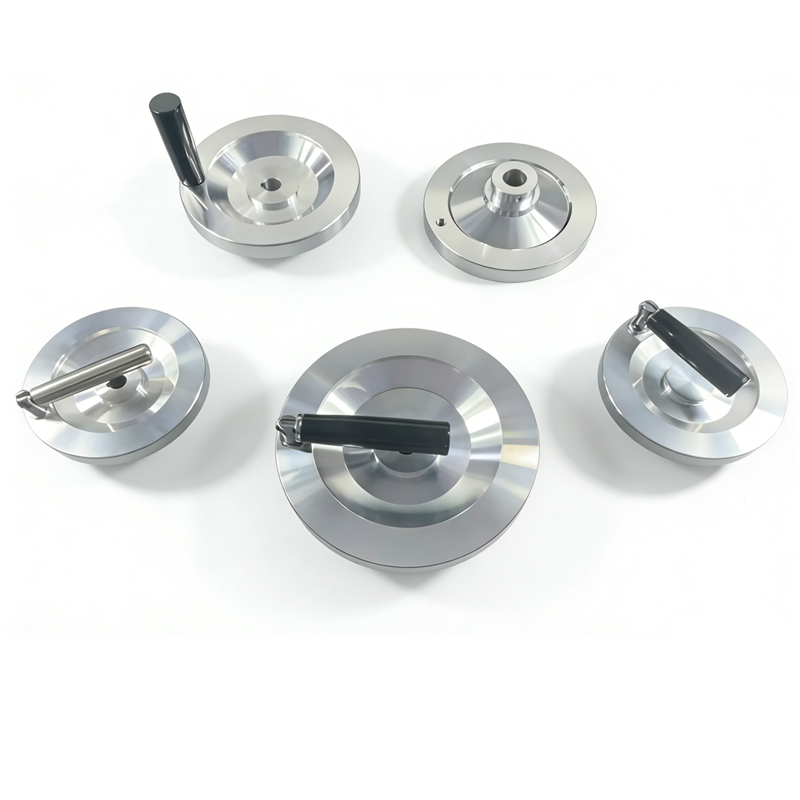
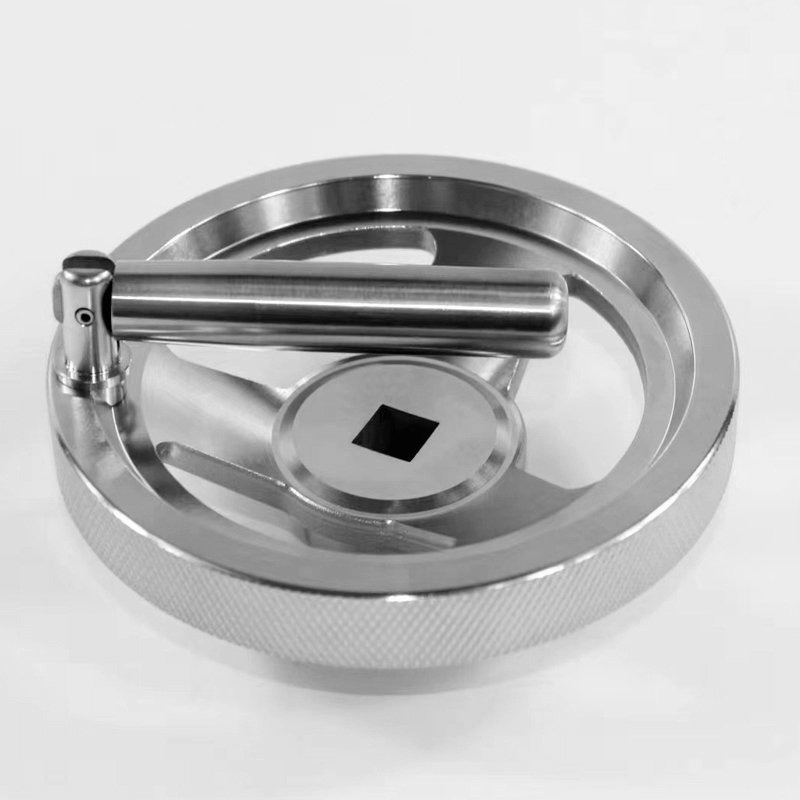
All-stainless-steel handwheels offer a practical solution for food processing equipment because they combine corrosion resistance, durability, and straightforward cleaning with reliable manual adjustment. Compared with handwheels that combine metal hubs with plastic or other materials, an all-stainless-steel design can help manufacturers meet specific material and maintenance requirements in demanding production environments.
However, material selection alone does not guarantee hygienic performance. Buyers should also consider the handwheel’s surface finish, geometry, mounting arrangement, and compatibility with the equipment’s cleaning procedures.
1. Corrosion Resistance in Demanding Food Processing Environments
Food processing equipment may encounter water, moisture, food residues, cleaning agents, and frequent washdowns. These conditions can challenge machine components, particularly when manufacturers select materials that do not suit the operating environment.
Stainless steel provides corrosion resistance through a protective chromium-rich passive film on its surface. When manufacturers select the appropriate stainless steel grade and maintain the surface properly, they can help extend component service life and reduce corrosion-related maintenance.
For general food machinery applications, 304 stainless steel offers a useful combination of corrosion resistance, durability, and cost-effectiveness. In environments involving higher chloride concentrations, aggressive cleaning chemicals, or other demanding conditions, 316 stainless steel may be a more suitable option.
The right choice depends on the actual operating conditions, including chemical exposure, temperature, cleaning frequency, and maintenance practices.
For equipment manufacturers, selecting a suitable stainless steel handwheel from the design stage can help reduce premature component replacement and simplify long-term maintenance planning.
2. Easier Cleaning and Better Hygienic Design
Cleaning is a routine part of food production, and equipment components should support the plant’s established sanitation procedures.
All-stainless-steel handwheels can help simplify material selection by reducing the number of different materials within the component. Their actual cleanability, however, depends on more than whether the handwheel is made entirely of stainless steel.
Designers and purchasing teams should evaluate:
Surface finish: Smooth, well-finished surfaces are generally easier to clean than surfaces with rough areas, pits, or defects.
Geometry: Avoid unnecessary gaps, deep recesses, and inaccessible areas where food residues or cleaning liquids may accumulate.
Mounting arrangement: Ensure that the installed handwheel does not create difficult-to-clean spaces around adjacent machine components.
Cleaning compatibility: Confirm that the material and surface finish can withstand the detergents, sanitizers, temperatures, and cleaning methods used in the facility.
These considerations are particularly relevant to equipment used in dairy processing, meat processing, beverage production, and ready-to-eat food manufacturing.
An all-stainless-steel handwheel can support a hygienic equipment design, but the complete assembly must still meet the applicable cleaning and sanitation requirements.
3. Durability for Frequent Manual Adjustment
Handwheels allow operators and maintenance personnel to make manual adjustments without relying on powered actuators. They are commonly used to adjust machine positions, secure fixtures, set clearances, and operate mechanical adjustment mechanisms.
In food processing facilities, these adjustments may occur repeatedly during product changeovers, equipment setup, cleaning, and routine maintenance.
A properly specified stainless steel handwheel can provide the durability needed for repeated operation in suitable industrial environments. Buyers should also consider the hub design, shaft or bore interface, fastening method, and expected operating loads.
For OEM equipment manufacturers, choosing a handwheel that matches the mechanical requirements can help maintain consistent operation while reducing the likelihood of fit-related problems during assembly or maintenance.
4. Reduced Material Complexity and Maintenance Concerns
Some handwheels combine stainless steel fasteners or hubs with plastic handles, inserts, or other non-metal components. These designs may be appropriate for many applications, but they can introduce additional material compatibility considerations.
An all-stainless-steel handwheel provides a more uniform material construction. This can be beneficial when buyers want to standardize machine components, avoid certain polymer materials, or specify metal components throughout a particular equipment assembly.
The advantages depend on the application. Buyers should evaluate the complete component, including any inserts, bushings, seals, or other auxiliary parts, rather than assuming that a stainless steel exterior means every component is stainless steel.
It is also important to consider operator ergonomics. Stainless steel handwheels may feel colder or offer less cushioning than polymer-grip alternatives, so grip geometry and operating comfort should be assessed where frequent manual adjustment is required.
5. How to Choose the Right Stainless Steel Handwheel
Selecting a handwheel involves more than choosing a material grade. Equipment designers and procurement teams should confirm the mechanical specifications and environmental requirements before placing an order.
Key factors include:
Material grade: Select 304 stainless steel for suitable general-purpose applications or evaluate 316 stainless steel when the operating environment requires greater resistance to certain corrosive conditions.
Handwheel dimensions: Confirm the overall diameter, hub dimensions, bore size, and other installation measurements to ensure compatibility with the equipment.
Connection type: Specify the required bore, keyway, threaded connection, shaft interface, or other mounting arrangement according to the machine design.
Surface finish: Define the required finish based on cleaning requirements, appearance, and the intended operating environment.
Operating conditions: Consider adjustment frequency, expected loads, exposure to moisture, cleaning chemicals, and washdown procedures.
Documentation and inspection: Where required, request material documentation, dimensional inspection results, and agreed quality records from the supplier.
Providing these details early helps manufacturers assess feasibility, reduce specification misunderstandings, and prepare more accurate quotations.
6. Why Work with a Custom Stainless Steel Handwheel Manufacturer?
Standard handwheels do not always match the dimensions, connection types, or material requirements of specialized food processing equipment. For OEM manufacturers, working with a supplier that can evaluate custom specifications helps align component design with the overall machine assembly.
A capable manufacturing partner should be able to review technical drawings, discuss material selection, confirm critical dimensions, and clarify surface finish and inspection requirements before production.
Depending on the design, custom manufacturing may involve CNC machining, precision casting, or other suitable metalworking processes. The appropriate process depends on the handwheel’s geometry, required tolerances, production volume, and performance requirements.
For purchasing teams, clear technical communication is just as important as the quoted unit price. Confirming the specifications, sample requirements, lead time, and quality acceptance criteria at the beginning of a project can help reduce sourcing risks and support repeat orders.
If you are sourcing custom stainless steel handwheels for food processing machinery, provide your drawings, material requirements, target quantities, and application details to help your supplier evaluate the most suitable manufacturing solution.
FAQ
Are all-stainless-steel handwheels required for all food processing equipment?
No. The appropriate material depends on the machine design, application, cleaning procedures, and applicable requirements. All-stainless-steel handwheels can be a suitable choice for demanding washdown environments, but other materials may also be appropriate when they meet the relevant performance and hygiene requirements.
Is 304 or 316 stainless steel better for food processing handwheels?
304 stainless steel is suitable for many general food machinery applications. 316 stainless steel offers improved resistance to certain corrosive environments, particularly those involving chlorides. Buyers should assess the actual cleaning chemicals, exposure conditions, and operating environment before selecting a grade.
Does an all-stainless-steel handwheel automatically meet hygienic design requirements?
No. Material alone does not establish hygienic suitability. Surface finish, geometry, accessibility for cleaning, mounting details, and compatibility with the sanitation process all influence performance. Any required hygienic design certification or compliance should be verified for the specific component and application.
Can stainless steel handwheels be customized for OEM equipment?
Yes. Depending on manufacturing capabilities, suppliers can evaluate custom diameters, hub dimensions, bore sizes, mounting interfaces, material grades, and surface finishes. Technical drawings or samples help clarify the requirements before quotation and production.
What information should buyers provide when requesting a quotation?
Provide the handwheel drawing or sample, required stainless steel grade, dimensions, mounting interface, surface finish, estimated order quantity, and operating environment. If the equipment uses frequent washdowns or specific cleaning chemicals, include those details to support material and design evaluation.