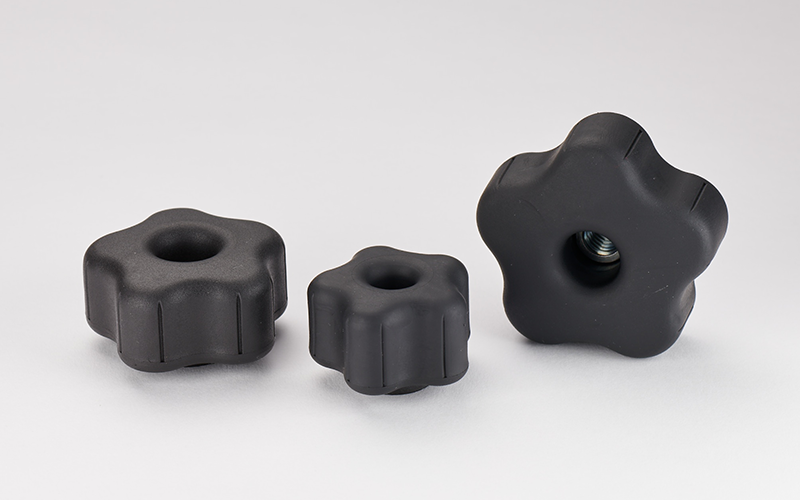
Industrial mechanical assemblies depend on manual fastening components for accurate positioning and stability control. A five lobe clamping knob is widely applied in adjustable fixtures and modular equipment structures. It provides consistent tightening performance without requiring auxiliary tools during operation. Operators rely on its ergonomic geometry to enhance grip efficiency in repetitive adjustment tasks. Compared with basic fastening elements, it improves handling comfort in continuous production environments. Many automation systems integrate this component to support rapid changeover operations. Its design enables predictable mechanical response under moderate load conditions. Engineers select it to balance operational speed with structural precision. In certain global manufacturing setups, metric clamping lobe knobs are still used to maintain compatibility across standardized machine interfaces. This compatibility supports flexible integration across multi-system industrial platforms.
Working Principle of Five Lobe Clamping Knob
The working principle is based on converting rotational motion into axial clamping force through threaded engagement. When operators rotate the knob, internal threads pull connected components together. The five lobe structure distributes applied torque evenly across multiple contact points. This reduces localized stress concentration during tightening operations. Internal metal inserts reinforce load transfer between plastic housing and threaded interface. Users apply direct manual force without external mechanical assistance. Friction between mating threads maintains locking stability after adjustment. This mechanism ensures fast repositioning in modular machine structures. The simplicity of the system increases reliability in repetitive industrial applications. Consistent torque behavior supports predictable assembly outcomes across production cycles.
Five Lobe Clamping Knob Mechanical Design and Materials
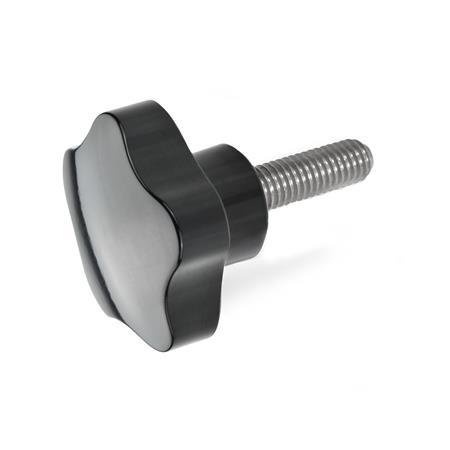
Mechanical design focuses on balancing ergonomic efficiency with structural strength. Each lobe is shaped to maximize finger contact area during rotation. This improves torque transmission while reducing operator fatigue during repeated use. Manufacturers commonly use reinforced nylon for lightweight and cost-effective performance. Steel or brass inserts enhance thread durability under higher mechanical loads. Material selection directly influences vibration resistance and service life. Surface textures are often added to improve grip stability in oily environments. Engineers optimize geometry to distribute stress evenly across the knob body. In heavy-duty environments, stainless steel star knobs are sometimes selected for superior corrosion resistance. However, five lobe designs remain more efficient for frequent manual adjustment systems requiring ergonomic handling.
Installation and Torque Performance of Five Lobe Clamping Knob
Correct installation ensures stable mechanical performance and long-term durability. Thread alignment must be verified before tightening begins to avoid damage. Operators apply gradual torque to ensure smooth engagement of threads. The knob converts rotational input into controlled axial clamping pressure. Torque performance depends on material strength and thread precision. Repeated operation requires consistent mechanical response without deformation. Vibration exposure can influence long-term tightening stability. Engineers define maximum torque limits to prevent overloading of components. Proper installation reduces wear and improves operational safety in machinery systems. Accurate assembly practices directly enhance equipment reliability in industrial environments.
| Specification | Standard Range | Functional Role |
|---|---|---|
| Thread size | M6–M12 | Machine interface compatibility |
| Torque capacity | 2–10 Nm | Manual tightening control |
| Body material | Glass-filled nylon | Lightweight structural support |
| Insert material | Steel / brass | Load reinforcement and durability |
| Operating temperature | -20 to 120°C | Industrial environment tolerance |
This specification table defines core mechanical parameters used in industrial fastening selection. Engineers evaluate thread size to ensure proper system compatibility. Torque capacity determines safe manual tightening limits during operation. Material composition influences strength, wear resistance, and long-term durability. Temperature tolerance ensures stable performance under environmental fluctuations. Steel or brass inserts improve resistance to thread stripping under load. Glass-filled nylon offers a balance of rigidity and lightweight structure. These parameters help buyers match components to specific machine requirements. Accurate specification selection reduces failure rates in production environments. It also improves consistency across automated and manual assembly systems.
Five Lobe Clamping Knob Applications in Industrial Equipment
This fastening component is widely used across industrial machinery systems. It is commonly installed in jigs and precision fixtures. CNC machining equipment relies on it for rapid positioning adjustments. Packaging machinery uses it for alignment and height control functions. Automation systems integrate it for modular structural flexibility. Maintenance teams apply it for quick calibration and equipment adjustment. It supports fast configuration changes in production environments. The design improves workflow efficiency in repetitive manufacturing tasks. Its simple structure reduces downtime during mechanical repositioning operations. This makes it a standard component in modern industrial engineering applications.
Advantages Compared to Traditional Knob Systems
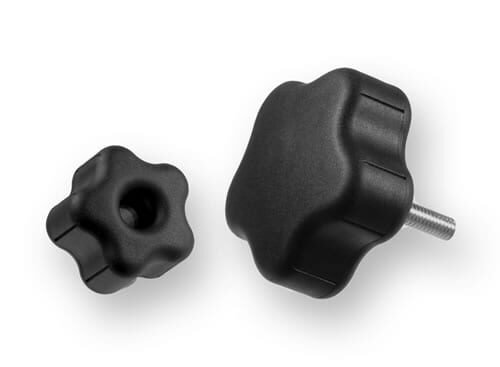
Five lobe designs offer significant advantages over traditional round knobs. The ergonomic structure improves grip stability during tightening operations. Torque efficiency increases due to enhanced surface contact distribution. Operators experience reduced fatigue during repetitive adjustment cycles. Slip risk decreases significantly under moderate load conditions. Force distribution across five lobes ensures balanced mechanical control. This improves precision in alignment-sensitive applications. Productivity increases in environments requiring frequent configuration changes. The design also improves safety during manual operation tasks. Many industrial systems now replace older knobs with this improved structure.
Maintenance and Long-Term Durability Factors
Long-term performance depends on material quality and environmental exposure. Reinforced inserts reduce thread wear during repeated mechanical cycling. Dust and oil accumulation can affect grip performance over time. Regular cleaning helps maintain stable friction characteristics. Vibration exposure may gradually loosen threaded connections. Scheduled inspection ensures consistent operational reliability. Lubrication is typically unnecessary but may be applied in metal variants. Replacement intervals depend on load frequency and operational intensity. Proper maintenance significantly extends service life in industrial systems. Preventive care reduces unexpected downtime in production environments.
Technical Specification Overview Table of Five Lobe Clamping Knob
| Type | Construction | Load Capacity | Application Area |
|---|---|---|---|
| Standard version | Reinforced nylon | Medium | Light machinery |
| Heavy-duty version | Metal reinforced | High | Industrial fixtures |
| Corrosion-resistant version | Coated steel | High | Harsh environments |
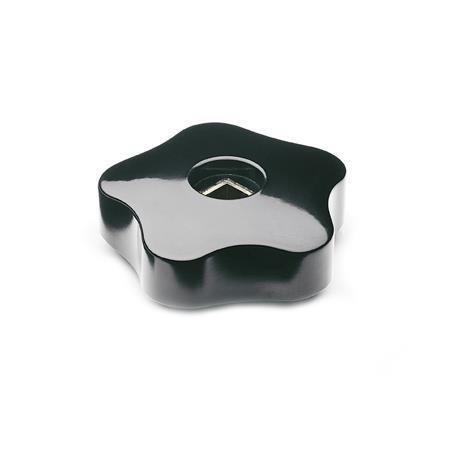
This comparison table highlights structural variations across different fastening types. Standard versions prioritize lightweight handling and cost efficiency. Heavy-duty versions provide enhanced mechanical strength under high load conditions. Corrosion-resistant designs perform better in chemically aggressive environments. Load capacity determines suitability for industrial applications. Material selection affects durability and maintenance requirements. Engineers match each type to specific operational demands. Application areas define integration scenarios in machinery systems. This classification improves procurement accuracy in industrial supply chains. It also supports optimized performance across diverse engineering environments.
B2B Procurement and Selection Guidelines
Industrial procurement decisions depend on performance reliability and cost efficiency balance. Buyers evaluate material strength, dimensional accuracy, and supplier consistency. Thread compatibility ensures seamless integration into existing machinery systems. Quality control processes verify torque stability and mechanical durability. Sample testing is often required before bulk production orders. Lead time affects manufacturing scheduling and supply chain planning. Batch consistency is critical for large-scale industrial applications. Engineers assess fatigue resistance under repeated operational cycles. Proper supplier selection reduces long-term maintenance costs. It also ensures stable performance across production environments.
FAQ
How does a five lobe clamping knob improve grip efficiency?
Grip efficiency improves due to the ergonomic five-point contact geometry. Each lobe increases surface area for finger engagement during tightening. This structure distributes applied force evenly across the hand. Operators achieve higher torque with reduced slippage risk. The design minimizes localized pressure during repetitive adjustment tasks. Surface texture enhances friction control in industrial environments. It supports stable handling under oily or dusty conditions. Mechanical stability improves in precision assembly operations. Users benefit from faster adjustments without auxiliary tools. Overall performance increases in repetitive industrial workflows requiring frequent positioning.
What materials are best for industrial five lobe clamping knob?
Material selection depends on load requirements and environmental conditions. Reinforced nylon is widely used for lightweight applications. It provides good impact resistance and cost efficiency. Aluminum offers a balance between strength and corrosion resistance. Steel inserts improve thread durability under higher torque loads. Brass components allow smoother mechanical engagement. Chemical resistance requirements may require coated surfaces. Temperature stability also influences material selection in harsh environments. Engineers test fatigue resistance under repeated load cycles. Proper material choice ensures long service life and consistent performance. It also reduces failure rates in industrial operations.
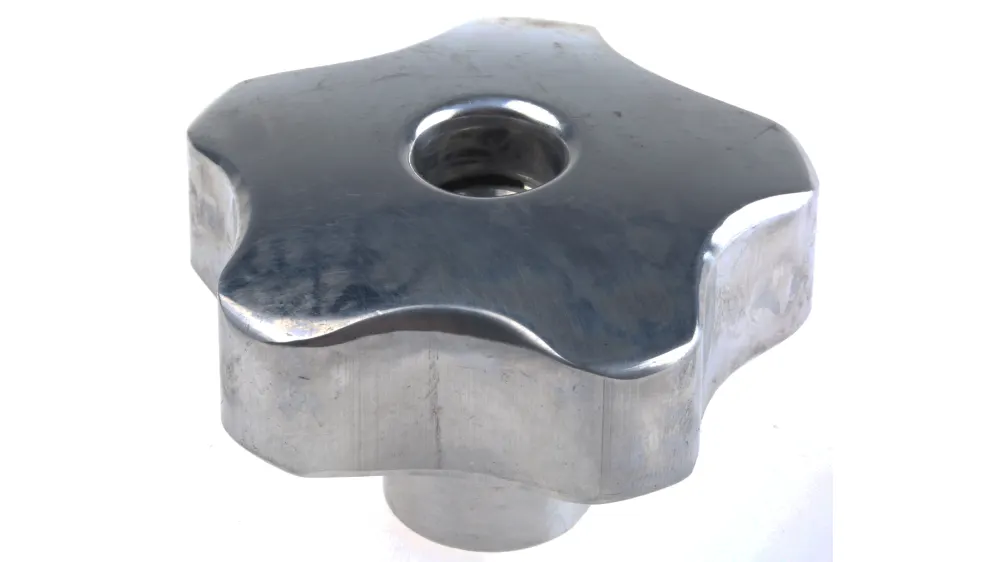
Can a five lobe clamping knob withstand heavy vibration environments?
Vibration resistance depends on design quality and installation accuracy. Proper thread engagement improves stability under oscillating conditions. Internal reinforcement prevents loosening during mechanical vibration. High-friction surfaces enhance locking performance over time. Some systems apply thread-locking compounds for additional security. Regular inspection ensures long-term operational reliability. Material stiffness influences resistance to dynamic stress. Heavy-duty versions perform better in high-vibration environments. Testing procedures simulate real operating conditions for validation. Correct selection ensures safe use in industrial machinery systems.