Star Knob vs Wing Knob: Selection for Industrial Assemblies
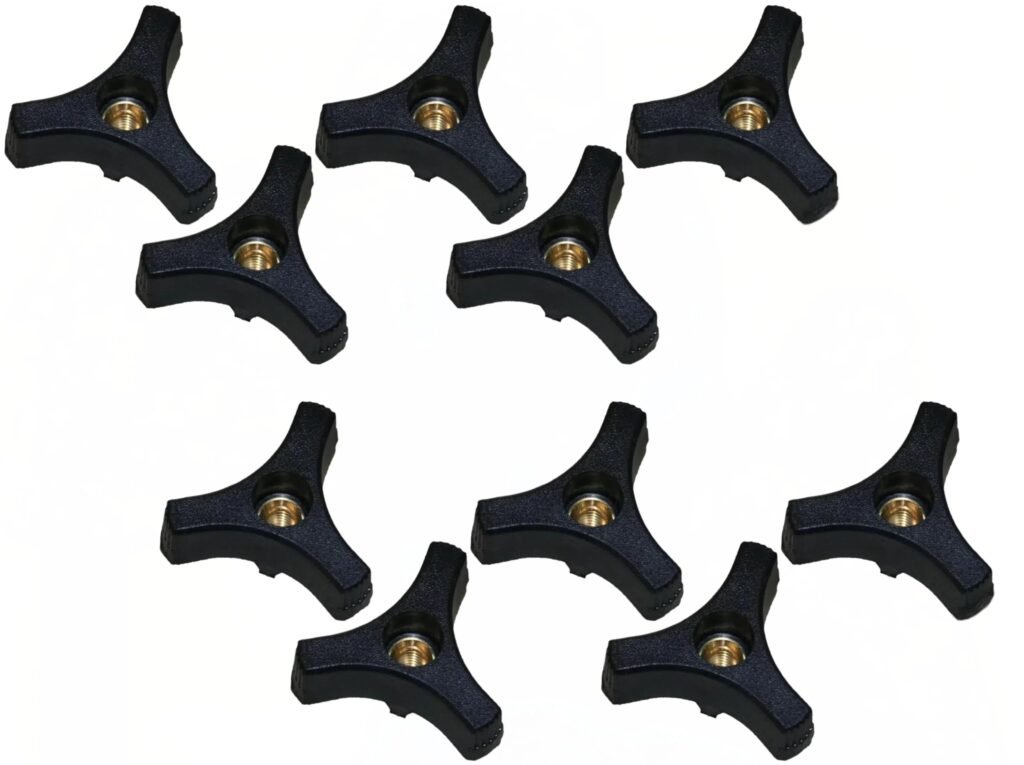
The star knob vs wing knob choice is mainly about how the operator grips the control and how much space is available. A star knob has several lobes around a central hub; a wing knob has two projecting wings. Both may be used for hand adjustment or clamping, but their suitability depends on size, interface, environment and the joint they operate. Shape alone does not establish a safe torque rating.
Quick comparison for buyers
| Selection Point | Star Knob | Wing Knob |
|---|---|---|
| Grip Shape | Several lobes around the hub | Two projecting wings |
| Typical Hand Contact | Regrip from several angles | Pinch or grasp the two wings |
| Clearance Check | Measure full outside diameter and finger space | Measure the wings' full swept path and finger space |
| Before Ordering | Confirm lobe size, thread and insert | Confirm wing span, thread and insert |
These are shape differences, not universal force or torque ratings. Compare the actual product drawings and test the candidates on the assembly.
Compare the hand contact
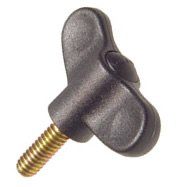
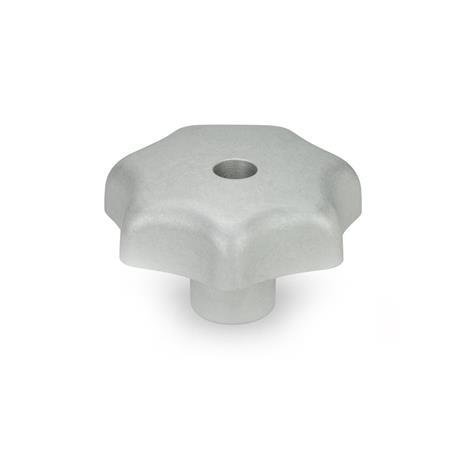
A star knob offers several grip points around the circumference. That can make it convenient when an operator approaches from different angles or needs to turn through repeated partial rotations. A wing knob gives two distinct tabs that can be easy to find and pinch for a quick adjustment. Users wearing gloves may prefer larger features, but the best choice should be tested with the actual glove and surrounding equipment.
The operator’s task matters more than an abstract claim that one design is “better.” A frequently adjusted control should be comfortable through its expected number of turns. An occasional release knob may favor obvious finger access and rapid identification.
Check the clearance envelope
The wings may project farther at certain angles; a star knob occupies a more evenly distributed perimeter. Measure the full swept envelope, not only the distance from the center in one photographed position. Nearby guards, walls, labels or other controls can obstruct fingers even when the knob itself clears them.
In a tight panel, consider the user’s approach path. A knob that technically rotates without touching a guard may still be difficult or unsafe to grip. Prototype the control on the actual assembly or a representative mock-up.
Match the thread and construction
Either shape can be sold with a female thread, a threaded stud or another mounting interface. Specify the thread system, size, pitch and usable length. If the knob has a metal insert in a plastic body, the joint’s performance depends on insert retention as well as thread fit. A sample knob and mating part can reveal fit issues before a production order.
Materials and finishes must match the environment. Ask whether the control sees moisture, chemicals, ultraviolet exposure, cleaning agents or impact. The body, insert and fastener may have different material requirements. Do not choose by color or shape alone for a harsh setting.
Consider operation and maintenance
If metric clamping lobe knobs secure a component, define the joint and required holding performance. If they serve only as adjustment controls, specify the desired feel and position retention. Repeated operation can reveal loosening, wear or operator discomfort that a one-time dimensional inspection misses. Where incorrect adjustment could be hazardous, a hand knob should be assessed as part of the whole machine control system.
Cleaning access can also matter. Lobes and wings create different recesses and edges, so review the shape against the plant’s cleaning method. For a replacement, check the installed height and access to the retaining hardware.
Selection checklist
- What does the operator do: clamp, release, index or adjust?
- How often is it used, and with bare hands or gloves?
- What is the available swept and finger-clearance envelope?
- Which thread or shaft interface is required?
- What body, insert and fastener materials suit the environment?
- What load or retention requirement must the complete joint meet?
- How will a sample be tested on the actual assembly?
If both shapes meet the function, availability, cost and operator preference can decide. Record the reasons so a future replacement does not inadvertently change the interface or usability.
Choose by the type of adjustment
A frequently turned positioning control may benefit from a shape that lets the hand regrip smoothly through repeated partial turns. Stainless steel star knobs may suit applications requiring a durable metal control with multiple gripping points. A wing knob can make a quick clamp or release easy to identify by touch. These are use cases, not fixed rules: diameter, number of lobes, wing length and available hand space change the experience. Test the candidate in its installed orientation rather than judging a loose sample on a desk.
If the knob is used to retain a guard or fixture, the engineer must define the joint’s required holding behavior. Do not assume an operator can or should apply more force simply because a larger shape permits it. Excessive hand force can damage a stud, insert or mating component. Where consistent clamping force matters, a hand knob may need a different mechanism or a controlled tightening procedure.
Compare the complete product, not just the outline
Two star knobs can differ in body material, insert construction, thread depth and hub height. The same is true of wing knobs. A replacement should match the mounting interface, installed height and swept envelope, as well as the visible grip shape. A tall wing may clear the panel but strike an adjacent control while turning; a broad star knob may interfere with the user’s knuckles even when the rim itself clears.
Ask for a dimensioned catalog drawing or custom drawing. Check the thread designation and engagement length with the actual stud. If a product will be exposed to cleaning agents or moisture, review the materials of the body, insert and fastener separately. A corrosion-resistant body does not protect an unsuitable insert hidden inside it.
Run a simple on-machine evaluation
For a new design, fit one candidate of each shape to a representative machine. Ask users to perform the normal adjustment with the usual gloves and posture. Observe whether they can find the control, keep a secure grip, avoid nearby hazards and reach the intended setting without repeated awkward movements. Record specific observations rather than a general preference vote. The chosen shape should solve the relevant problem without reducing clearance or service access.
Check the knob after repeated operation for loosening, wear or insert movement. A short evaluation will not prove long-term durability, but it can catch basic fit and usability errors before a larger order. Keep the approved part number in the spare-parts list so maintenance does not later substitute an apparently similar shape with the wrong thread.
Frequently Asked Questions
Is a star knob always stronger than a wing knob?
No. Compare specific product data and the complete joint, not just the visible outline.
Which is better for a narrow space?
Check the full rotation and finger-access envelope on the actual equipment. Neither shape is universally better.
Can the shapes be swapped on the same thread?
Only if the thread, engagement, clearance and functional requirements all match.