Engineering Plastics Machining Material and Process Guide
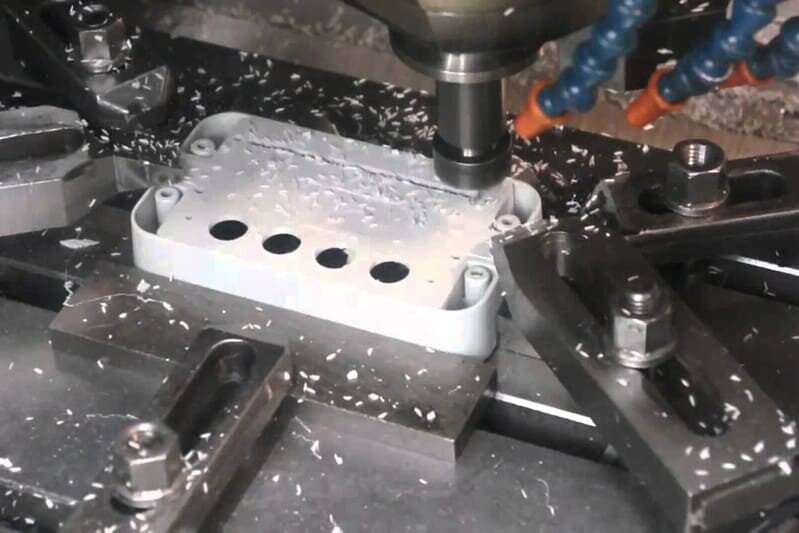
Engineering plastics machining requires a different approach from machining steel, aluminum, or brass. Plastics generally have lower stiffness and lower thermal conductivity than metals. They can move under clamping pressure, retain heat around the cutting edge, develop burrs, and change dimensions as temperature or moisture conditions change.
For engineers and purchasing teams, the central question is not simply whether a plastic can be machined. The real question is whether the material, part geometry, machining process, and inspection conditions work together for the application.
This guide explains how common engineering plastics behave during CNC machining and what information should be defined before requesting a quotation.
Why Machine Engineering Plastics
CNC machining is often suitable for prototypes, low-to-medium production quantities, replacement parts, and components that require features that are difficult to mold. It can also reduce tooling commitment during design validation because parts can be produced directly from stock shapes.
Engineers may select a machined plastic component for one or more of these reasons:
- Lower weight than a comparable metal component
- Electrical insulation
- Corrosion or chemical resistance
- Low friction or reduced lubrication requirements
- Noise reduction
- Compatibility with food, medical, semiconductor, or laboratory environments when the selected grade and documentation are appropriate
- Fast design changes during prototype and pilot production
The best result depends on choosing the correct grade rather than specifying only a broad material family.
Comparing Common Plastics for CNC Machining
| Material family | Typical reasons for selection | Main machining or design concern |
|---|---|---|
| POM / acetal | Dimensional stability, low friction, good machinability | Heat, burr control, and thin-wall movement still require attention |
| Nylon / PA | Toughness, wear resistance, broad mechanical use | Moisture absorption can change dimensions and properties |
| PEEK | Temperature and chemical performance for demanding applications | Material cost makes process planning and scrap prevention important |
| PTFE | Low friction and chemical resistance | Softness, creep, and deformation can make tight features difficult |
| UHMW-PE | Wear resistance and low friction | Flexibility and thermal movement affect workholding and measurement |
| PC / acrylic | Transparency or impact-related applications, depending on grade | Cracking, heat, surface damage, and stress must be controlled |
This table is a starting point. Fillers, reinforcement, production method, stock condition, service temperature, and regulatory requirements can change the final decision.
Heat Control Is a Dimensional-Control Issue
Many plastics do not carry heat away from the cutting zone as effectively as metals. A dull tool, excessive rubbing, poor chip evacuation, or an unsuitable cutting strategy can concentrate heat in the workpiece. The part may measure correctly while warm and then move after it returns to room temperature.
Useful process controls can include:
- Sharp cutting tools with geometry appropriate for the material
- Adequate chip clearance
- Cutting parameters selected to cut rather than rub
- Roughing and finishing in separate stages for sensitive parts
- Time for the part to stabilize before final inspection
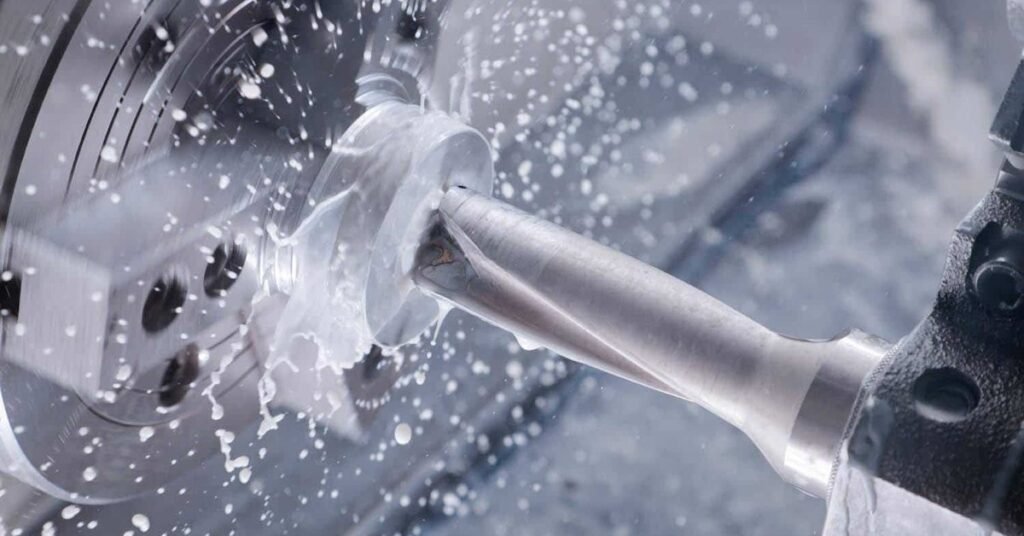
- Coolant or air use that is compatible with the material and application
No single cutting speed or feed rate is correct for every engineering plastic. The grade, reinforcement, tool, diameter, wall thickness, and machine setup all matter.
Moisture, Internal Stress, and Part Stability
Some plastics absorb more moisture than others. Nylon is a common example. A dry machined part and a conditioned part can behave differently in service, so the drawing and inspection plan should identify the expected environment when dimensional stability is important.
Stock shape production can also leave internal stress in the material. Removing a large amount of material from one side of a plate or bar may release that stress and cause warpage. A Brass bushing with oil groove may also require controlled machining conditions when groove geometry and dimensional stability are important. Balanced material removal, intermediate stabilization, or an appropriate stress-relief process may be considered for sensitive geometries.
These decisions should be made for the actual grade and part rather than copied from a general machining chart.
Workholding Engineering Plastic Parts
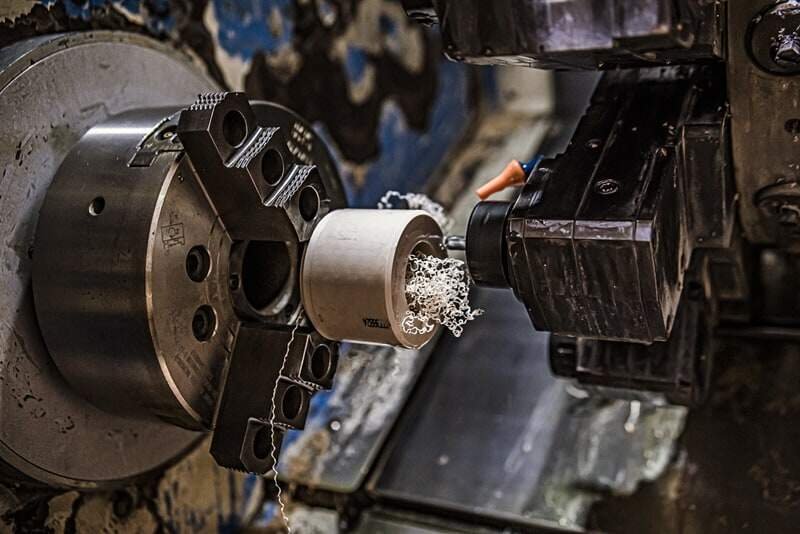
Clamping must hold the workpiece securely without crushing, bowing, or marking it. Thin walls, large plates, tubes, and split geometries are especially sensitive.
Practical workholding considerations include:
- Supporting the part close to the cutting area
- Spreading clamping force over a larger area
- Avoiding excessive jaw pressure
- Using soft jaws, fixtures, plugs, or sacrificial supports where appropriate
- Planning the machining sequence so that weak features are produced late in the process
- Checking the part again after it is released from the fixture
A dimension measured while the workpiece is heavily constrained may not represent its free-state condition.
Tolerances and Inspection Conditions
Machined plastic tolerances depend on more than machine accuracy. Material stiffness, coefficient of thermal expansion, moisture response, wall thickness, feature size, and inspection temperature can all influence the result.
Before specifying a tight tolerance, ask:
- Is the tolerance functionally required?
- Which features control assembly or sealing?
- What temperature and humidity will the component experience?
- Should inspection take place after conditioning or stabilization?
- Can the design use geometric controls or datums instead of unnecessarily tight size tolerances everywhere?
Critical dimensions should be clearly identified on the drawing. This helps the manufacturer focus process control and inspection effort where it matters most.
Design Guidelines for Machined Plastic Parts
The following principles often improve manufacturability:
- Avoid unnecessarily thin walls and deep narrow pockets.
- Use practical internal corner radii that match available cutting tools.
- Provide tool access to critical features.
- Reduce abrupt section changes where possible.
- Define thread engagement according to the plastic grade and load.
- Consider metal inserts when repeated assembly or higher thread strength is required.
- Identify cosmetic surfaces separately from functional surfaces.
- State whether burrs, sharp edges, or particulate contamination require special control.
When a design was originally created for metal, it should be reviewed before simply changing the material callout to plastic.
Machining or Molding
Machining is often preferred for prototypes, lower quantities, large components, frequent design changes, and parts that need features or tolerances that are difficult to achieve directly by molding. Molding can become more economical when quantities justify tooling and the design is stable.
The decision should compare total project cost rather than unit price alone. Tooling, design revisions, validation time, scrap risk, secondary machining, inspection, and inventory all affect the result. An Industrial stainless steel bushing may also involve material, machining, and inspection considerations that influence the overall project cost.
Information to Include in an RFQ
To evaluate an engineering plastic machining project, provide:
- 2D drawing and 3D model when available
- Exact material family and grade, or the operating requirements needed to select one
- Quantity and expected repeat demand
- Critical dimensions, datums, and tolerances
- Service temperature and environmental exposure
- Moisture, chemical, electrical, wear, or friction requirements
- Surface finish and edge requirements
- Thread and insert specifications
- Inspection report or material-documentation requirements
- Packaging and cleanliness requirements
Clear inputs reduce quotation time and prevent assumptions that can affect part performance.
Conclusion
Successful engineering plastics machining depends on the relationship between material behavior, part design, workholding, cutting strategy, and inspection conditions. POM, nylon, PEEK, PTFE, and other polymers each respond differently to heat, load, moisture, and machining stress.
Start with the application requirements, identify the dimensions that control function, and review manufacturability before production. That approach is more reliable than applying metal-machining rules to a plastic component.
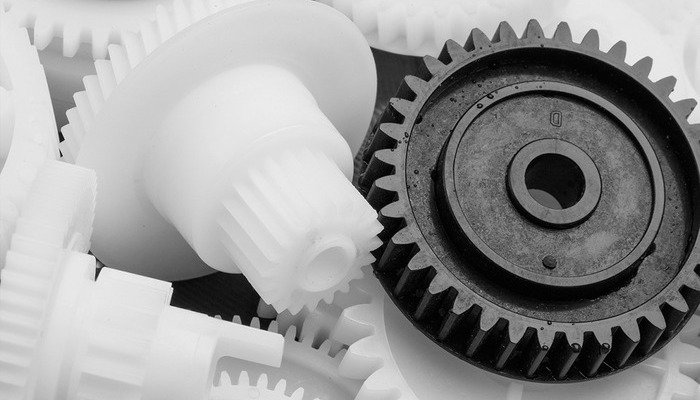
Engineers must align these properties with application requirements. Moisture absorption becomes critical in humid environments. Cost factors influence decisions in large-scale production. Selecting suitable materials improves efficiency and durability. These comparisons support better decisions in machining engineering plastics processes.
Key Considerations When Selecting Engineering Plastics For Machining
Material selection requires careful evaluation of multiple technical factors. Engineers must consider mechanical loads and environmental conditions. Temperature ranges influence material stability during operation. Chemical exposure may require specialized resistant polymers. Cost constraints affect material choices in high-volume production. Machinability determines tooling requirements and production speed. Designers also evaluate dimensional tolerance requirements for precision parts.
- Evaluate mechanical strength requirements
- Analyze thermal and chemical exposure
- Consider machining efficiency and cost
- Review dimensional stability needs
- Assess long-term durability
These considerations guide effective decision-making in complex manufacturing environments. Proper planning improves machining engineering plastics results. Balanced selection enhances performance and reduces production risks.
Future Trends In Machining Engineering Plastics Technology
Technological innovation continues to reshape plastic machining processes. Advanced polymers offer improved strength and thermal resistance. Automation enhances precision and reduces human error in production. CNC systems integrate intelligent software for better process control. Sustainable materials gain importance due to environmental concerns. Recycling technologies support eco-friendly manufacturing practices. Hybrid components combining plastics and metals are becoming common. Digital monitoring improves efficiency and predictive maintenance capabilities. Industry demand drives continuous innovation across sectors. Companies adopting advanced technologies gain competitive advantages. The future of machining engineering plastics remains dynamic and promising.
Frequently Asked Questions
Which engineering plastic is easiest to machine
POM/acetal is often considered machinable and dimensionally stable compared with many softer plastics, but the best choice still depends on load, temperature, wear, chemical exposure, and the required geometry.
Why do plastic parts change size after machining
Temperature change, moisture absorption, released internal stress, and clamping deformation can all contribute. Material conditioning, machining sequence, stabilization, and defined inspection conditions help control the result.
Can engineering plastics hold the same tolerances as metal
Some plastic parts can hold demanding tolerances, but it should not be assumed that a metal tolerance can be transferred directly. The grade, feature size, wall thickness, environment, and inspection method must be reviewed.
What should a buyer send for a plastic machining quotation
Send the drawing, model, material or operating requirements, quantity, critical tolerances, service environment, inspection needs, and any cleanliness or documentation requirements.