Start With Function and a Comparable Baseline
To reduce cnc machining cost, remove avoidable manufacturing work while protecting the features that control performance. Start with the current drawing, quantity, delivery requirement, and inspection scope. Ask your supplier which features consume the most setup, cutting, or verification time. Rank proposed changes by savings, engineering effort, and validation risk. A housing with cosmetic pockets needs a different review than a shaft with bearing seats. Keep the original quote as your baseline. Compare each revision against identical commercial assumptions before accepting any claimed improvement.
Separate Fixed Charges From Recurring Part Costs
Programming, fixture preparation, and initial process development can dominate small orders. Recurring expenses include stock, cutting time, tool wear, finishing, and routine inspection. Ask whether the supplier includes setup charges within each unit price or quotes them separately. Record tooling ownership and repeat-order charges. A simple model divides fixed charges by quantity, then adds recurring expenses. For purchasing decisions, divide total acquisition spending by usable parts. Include freight, duties, receiving checks, and buyer-funded rework once. This exposes cheap quotes that create expensive assembly problems.
Reduce CNC Machining Cost Through Functional Tolerances
Identify bearing seats, sealing faces, locating bores, and mating shoulders before changing tolerances. Preserve controls that protect fit, alignment, or leakage performance. Ask the machinist to flag nonfunctional dimensions requiring extra finishing passes. Specify an agreed general tolerance for remaining features rather than leaving expectations ambiguous. Define datums around assembly function and accessible inspection surfaces. Avoid copying the tightest tolerance across the entire drawing. Validate any relaxation through tolerance analysis and assembly checks. A supplier’s advertised capability does not establish the correct tolerance for your design.
Simplify Pockets, Corners, and Slender Features
Round cutters leave radii inside milled pockets. Larger corner radii permit stiffer tools and faster material removal. Keep radii consistent where function allows, and provide corner relief when rectangular inserts need clearance. Shallower pockets shorten tool reach and improve chip evacuation. Increase thin-wall thickness or support slender features when weight limits permit. Ask the supplier to review cutter access, material stiffness, and workholding together. Avoid treating a single depth ratio as a universal manufacturing limit. Remove decorative contours that require lengthy profiling without improving assembly or service performance.
Standardize Holes, Threads, and Edge Requirements
Use commonly available drills and thread forms when the mating hardware permits. Check the supplier’s tooling before assuming an unusual diameter requires custom equipment. Specify thread engagement from joint loads and material strength. Extra thread depth can add work without improving the joint. Distinguish full thread depth from total drill depth in blind holes. Provide room for the drill point and tapping clearance. Identify sealing chamfers separately from general deburring. Keep mandatory identification marks, but ask whether laser marking can replace slow machined lettering.
Review Setups and Turning Opportunities Together
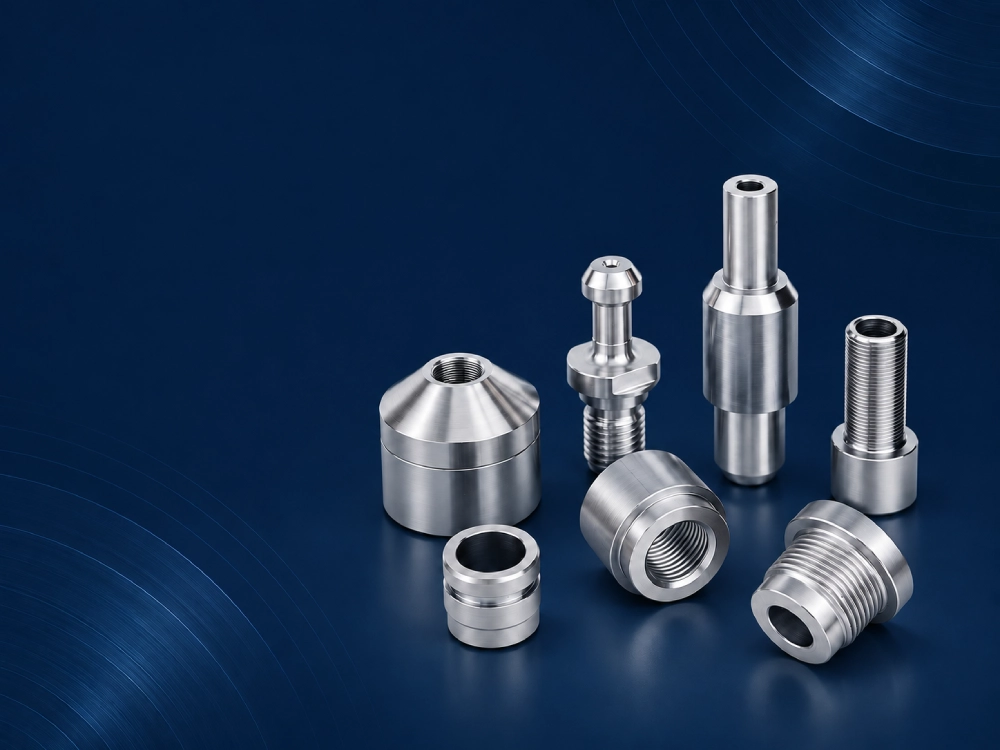
Place related features on accessible faces and provide secure clamping surfaces. Each repositioning adds handling and another opportunity for alignment error. However, compare complete routes before rejecting a higher-rate machine. A multi-axis route may eliminate fixtures and transfers that outweigh its hourly premium. For cylindrical designs, review concentric features together. MXCZ’s CNC machined shafts and pins illustrate stepped diameters, shoulders, grooves, and threaded features. Ask whether the supplier can complete your geometry with fewer transfers. Splitting complex parts also requires an assembly-cost and stiffness review.
Match Material and Stock to Operating Conditions
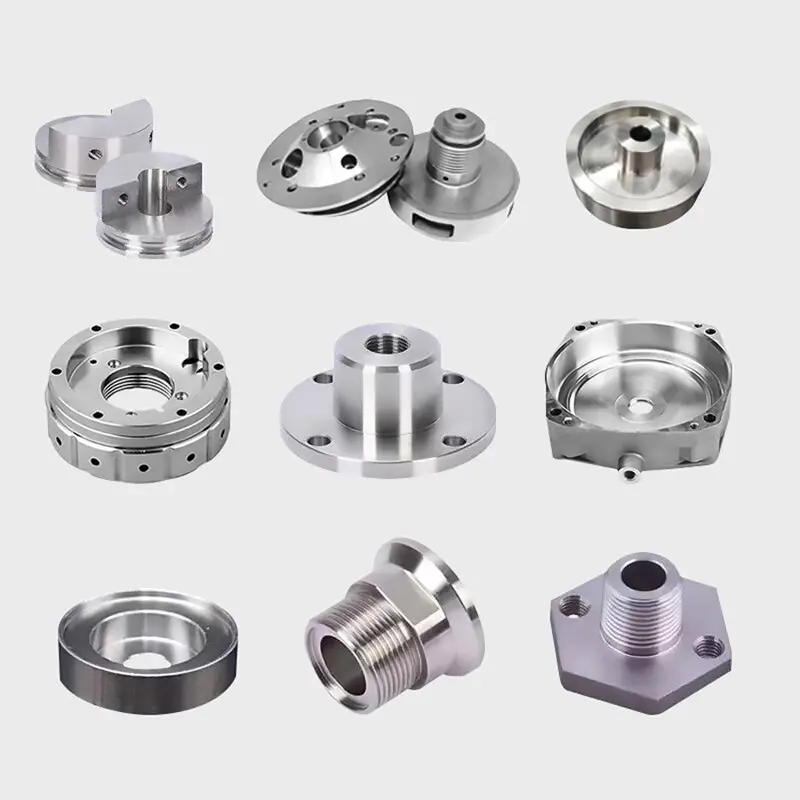
To reduce cnc machining cost responsibly, compare machinability, stock availability, and operating requirements before choosing a cheaper alloy. Retain corrosion resistance, strength, temperature limits, and compatibility requirements. Consider aluminum for suitable lightweight components, while keeping stainless grades where service conditions require them. Ask about local bar and plate availability before fixing noncritical envelope dimensions. Leave sufficient stock for clamping, cleanup, and the final finish. MXCZ offers stainless steel precision machined parts with drawing-based grade and finishing options. Confirm the actual specification rather than assuming every stainless grade performs equally.
Specify Finishing and Inspection After Treatment
Mark cosmetic faces and functional roughness requirements independently. Hidden surfaces rarely need the same appearance as exposed control surfaces. Reduce unnecessary finish combinations, masking, and repeated handling. Retain deburring wherever sharp edges threaten people, seals, or assembly. Coatings and polishing can change final dimensions or thread fit. State whether acceptance applies before or after treatment. Agree on masking, thickness allowances, and any final sizing operations. Protect finished parts during transport. Packaging savings disappear quickly when damaged threads or dented sealing faces trigger rejection.
Test Batch Savings Against Cash and Revision Risk
Request prices at realistic quantities rather than buying excess stock solely for a lower unit price. Consider an illustrative $300 setup charge and $12 recurring expense per part. Ten parts cost $42 each, while 100 parts cost $15 each. These figures demonstrate allocation only and do not represent an MXCZ quotation. Carrying costs, engineering changes, and unused inventory can erase that apparent advantage. Evaluate redesign payback separately. A $600 validation effort with $3 savings per usable part needs 200 parts to recover its cost. Include additional testing when changes affect function.
Reduce CNC Machining Cost With Controlled Quote Comparisons
Send suppliers the same drawing revision, material grade, quantity, finish, acceptance criteria, and delivery basis. Request a baseline quote and a separate proposal listing manufacturability changes. Ask each supplier to identify exclusions, one-time charges, and recurring savings. Approve revised geometry before production. Validate a first article against final dimensions and assembly function. Then compare actual usable-part spending against the baseline. For an MXCZ review, provide matching STEP and dimensioned drawing files, plus forecast quantities. Identify protected features so engineering discussions focus on changes you can safely approve.
FAQ
What should I change first when a quote exceeds budget?
Ask the supplier to identify the largest cost driver before changing the design. Start with unnecessary setups, nonfunctional precision, or difficult geometry. Make one controlled revision, then request a comparable quote. Confirm assembly performance before releasing production quantities.
Does a larger order always provide better value?
No. Larger quantities spread fixed charges, but they also consume cash and increase exposure to design changes. Compare expected consumption against storage, financing, and obsolescence costs. Discuss scheduled releases, and confirm whether separate releases create additional setup charges.
Can I lower spending without changing the material?
Yes. Review tool access, clamping, noncritical tolerances, cosmetic finishes, and inspection scope. Keep functional requirements intact. Ask suppliers to quote alternative machining routes using the same grade. Confirm that any improvement survives final inspection and assembly.