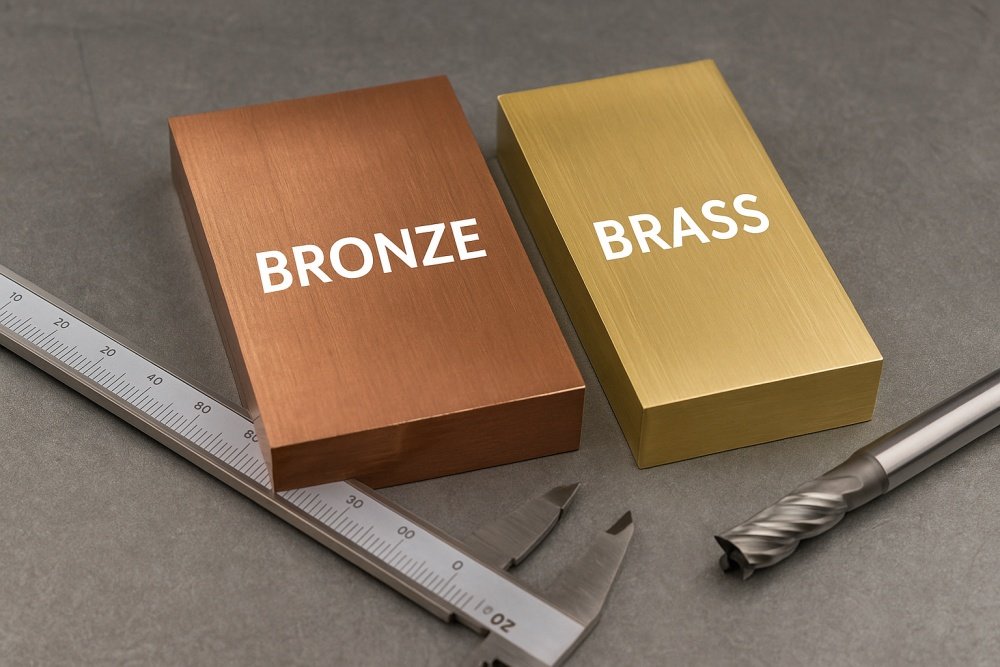
Brass vs bronze cnc machining plays a crucial role in modern precision manufacturing decisions. Engineers often compare these alloys for performance and efficiency. Material selection directly influences machining speed, durability, and final product quality. Brass delivers excellent machinability due to its zinc composition. Bronze provides higher strength and superior wear resistance in demanding environments. Manufacturers depend on these materials for diverse industrial applications. CNC machining requires stable cutting behavior and predictable material response. Careful evaluation of both alloys helps optimize tooling strategies and reduce production costs. Choosing the right material improves product lifespan and minimizes maintenance issues in critical systems.
Brass Vs Bronze CNC Machining: Core Material Composition Differences
Material composition defines the fundamental behavior of each alloy during machining operations. Brass consists primarily of copper and zinc, with zinc improving ductility. Bronze contains copper combined with tin, aluminum, or silicon. These alloying elements increase hardness and corrosion resistance significantly. Zinc in brass promotes smoother cutting and less tool resistance. Tin and aluminum in bronze enhance strength but increase machining difficulty.
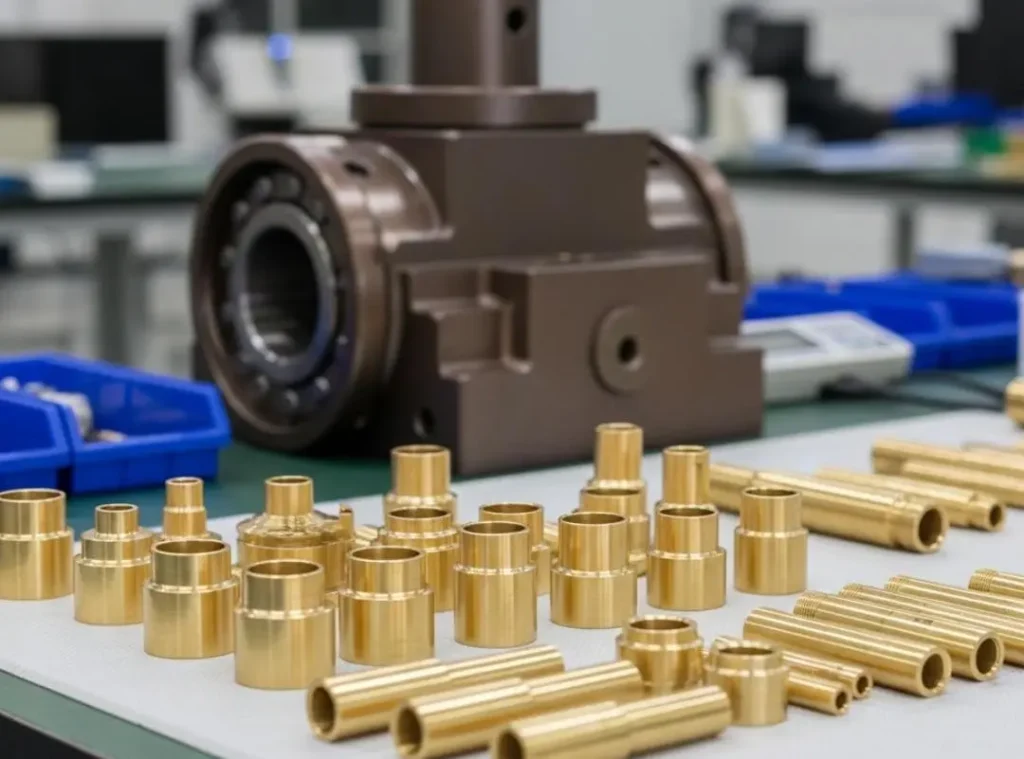
Alloy composition also affects thermal conductivity and chip formation patterns. Engineers consider composition when designing precision milled components for industrial systems. In brass vs bronze cnc machining, composition directly influences machining efficiency and consistency.
Mechanical Properties Comparison in CNC Processing
Mechanical properties determine how materials respond under stress and machining forces. Brass exhibits moderate strength with excellent flexibility and low friction characteristics. Bronze offers higher tensile strength and better fatigue resistance under cyclic loads. Hardness levels in bronze exceed brass, leading to increased durability. However, higher hardness results in faster tool wear during machining. Brass allows easier deformation, which benefits complex CNC shaping tasks. Bronze performs better in load-bearing applications requiring long-term stability. Evaluating brass vs bronze cnc machining ensures correct material selection for demanding mechanical conditions.
| Property | Brass | Bronze |
|---|---|---|
| Tensile Strength | Moderate | High |
| Hardness | Lower | Higher |
| Fatigue Resistance | Moderate | Excellent |
| Elasticity | High | Medium |
Brass Vs Bronze CNC Machining: Mechanical Trade-offs Analysis
The table highlights how each alloy performs under mechanical stress conditions. Brass offers strong flexibility and simplifies forming during machining operations. Bronze provides higher strength and improved fatigue resistance for demanding applications. Engineers assess these differences based on part function and load requirements. Clear evaluation improves material selection for high-performance components. Balanced choices ensure both durability and machining efficiency. These insights contribute to optimized production planning in industrial manufacturing environments.
Machinability Differences in Brass Vs Bronze CNC Machining
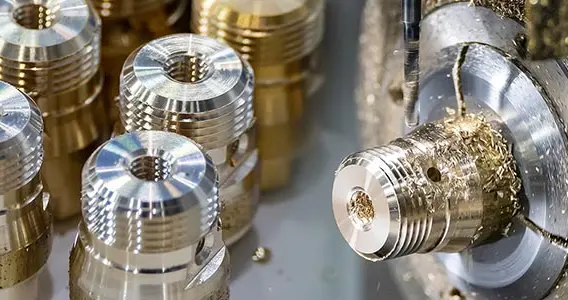
Machinability remains a key factor in evaluating brass vs bronze cnc machining performance. Brass machines quickly due to low friction and excellent chip breakage behavior. Cutting tools experience minimal wear when processing brass components. Bronze requires slower speeds and specialized tooling for optimal results.
| Machining Factor | Brass | Bronze |
|---|---|---|
| Cutting Speed | High | Medium |
| Tool Wear | Low | High |
| Chip Formation | Short, broken | Continuous |
| Surface Finish | Smooth | Moderate |
Brass Vs Bronze CNC Machining: Machining Efficiency Insights
This comparison reveals how machining parameters differ between both materials. Brass enables faster cutting speeds and better chip control during operations. Bronze demands careful parameter adjustments to maintain machining stability. Tool selection becomes critical when processing harder bronze alloys. Operators often use coated carbide tools for improved durability. Proper lubrication techniques reduce heat and extend tool life significantly. These insights help manufacturers achieve consistent machining performance.
Corrosion Resistance and Environmental Performance
Environmental resistance plays a vital role in material selection for industrial components. Brass resists corrosion in mild environments but struggles in saltwater exposure. Bronze performs exceptionally well in marine and chemical environments. Tin and aluminum content protect bronze from oxidation and pitting corrosion. Long-term exposure to moisture favors bronze over brass in durability. Industrial systems benefit from bronze when operating under harsh conditions. Engineers consider environmental factors when selecting materials for long-lasting performance. In brass vs bronze cnc machining, corrosion resistance often determines application suitability.
| Environment | Brass Performance | Bronze Performance |
|---|---|---|
| Indoor Dry | Excellent | Excellent |
| Humid | Moderate | High |
| Marine | Low | Excellent |
| Chemical Exposure | Moderate | High |
Brass Vs Bronze CNC Machining: Environmental Suitability Analysis
The table shows how each alloy behaves under different environmental conditions. Brass performs well in controlled indoor environments with low moisture levels. Bronze excels in marine and chemically aggressive environments. Engineers often select bronze for applications requiring long-term durability. Proper material choice reduces corrosion-related failures and maintenance costs. Environmental analysis ensures reliable performance across industrial systems.
Cost Efficiency and Production Considerations
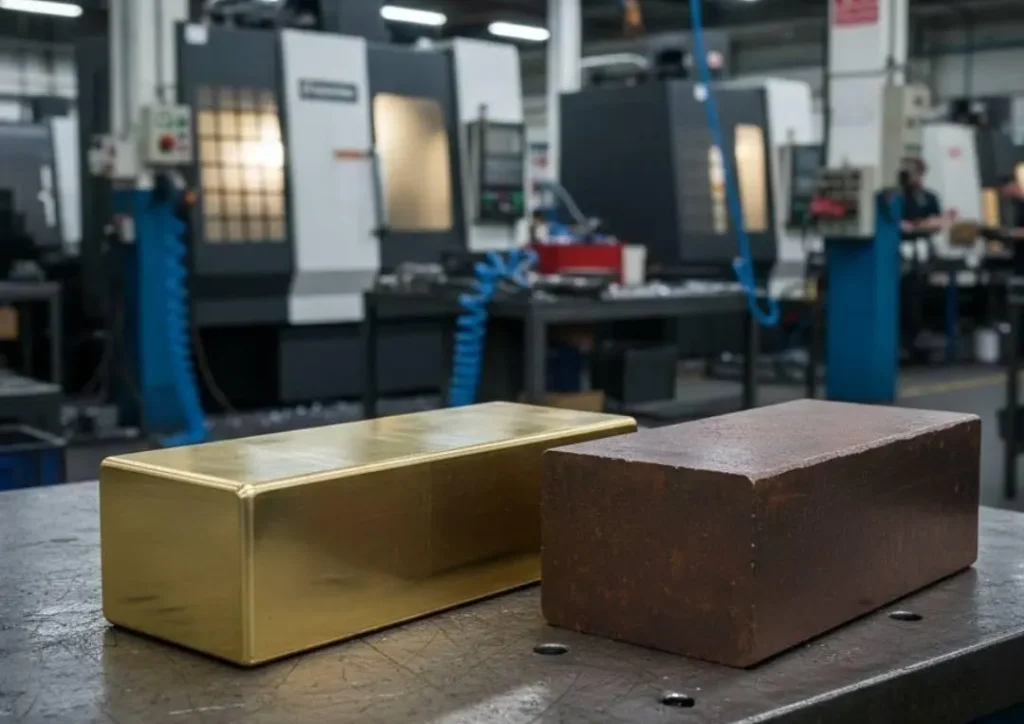
Cost factors influence material selection in large-scale CNC manufacturing projects. Brass generally costs less than bronze due to simpler alloy composition. Faster machining speeds reduce labor and machine operation costs.
Bronze increases tooling expenses because of its hardness and wear resistance. Extended machining time raises overall production costs for bronze components. However, longer lifespan can offset initial investment in certain applications. Manufacturers evaluate total cost of ownership rather than material price alone. Brass vs bronze cnc machining decisions often balance cost against long-term performance.
Application Scenarios and Industry Use Cases
Different industries rely on brass vs bronze cnc machining for specialized applications. Brass suits electrical connectors, valves, and decorative hardware components. Its conductivity and ease of machining make it highly versatile. Bronze works well in bearings, bushings, and marine equipment. Its strength and wear resistance support heavy-duty mechanical systems. Industrial machinery often incorporates bronze for friction-reducing components. Designers select materials based on performance requirements and operating environments. Strategic selection improves efficiency and product longevity.
Advantages and Limitations Breakdown
Both materials present unique benefits and limitations in CNC machining environments.
- Brass advantages include excellent machinability and lower production costs
- Brass limitations include lower strength and reduced corrosion resistance
- Bronze advantages include superior strength and wear resistance
- Bronze limitations include higher cost and increased tool wear
- Application-specific requirements determine the optimal material choice
Brass Vs Bronze CNC Machining: Practical Engineering Insights
Clear evaluation of advantages and limitations enables better engineering decisions. Brass supports high-speed machining with minimal tooling complications. Bronze demands precise parameter control to limit excessive tool wear. Engineers often select materials based on mechanical load and environmental exposure. Proper selection improves reliability and extends component service life. Industrial success depends on balancing machining efficiency with long-term performance. Careful analysis of brass vs bronze cnc machining supports optimized production strategies. These insights enhance consistency and cost control across CNC manufacturing operations.
Choosing the Right Material for CNC Projects
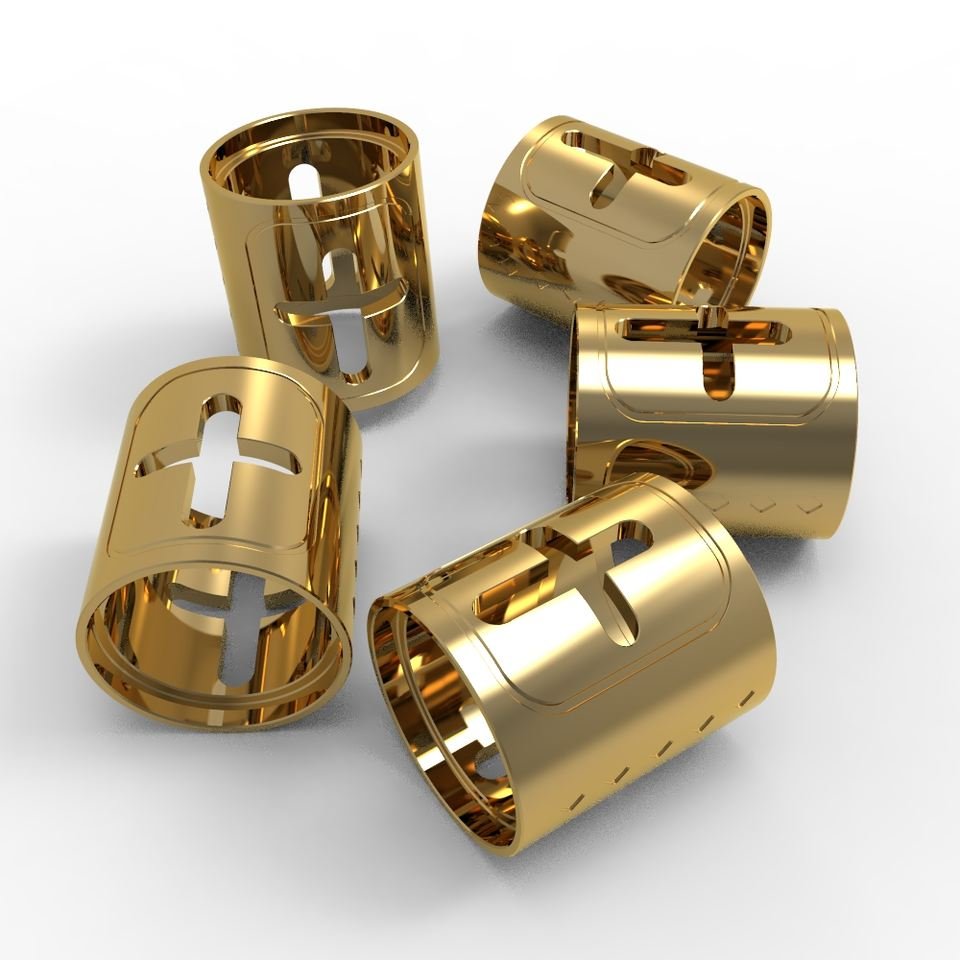
Selecting the correct alloy depends on specific engineering and production requirements. Brass suits projects requiring speed, precision, and cost efficiency. Bronze fits applications demanding strength and long-term durability. Environmental conditions influence material performance and lifespan significantly. Designers must consider load, friction, and corrosion exposure carefully. CNC machining strategies vary based on material hardness and cutting behavior. Stainless steel precision machined parts sometimes compete with these alloys in certain industries. However, brass vs bronze cnc machining remains essential for specialized applications.
FAQ
Which is easier to machine, brass or bronze?
Brass is significantly easier to machine compared to bronze in most CNC operations. Its lower hardness allows cutting tools to move smoothly with minimal resistance. Chips break easily, reducing the risk of tool clogging. Bronze, in contrast, has higher hardness and toughness. These properties increase friction and tool wear during machining.
Operators must reduce cutting speeds and apply proper lubrication. Brass supports faster production cycles and better surface finishes. For high-volume manufacturing, brass offers clear efficiency advantages.
Is bronze stronger than brass in CNC parts?
Bronze generally provides higher strength and durability than brass in CNC applications. Its alloy composition enhances tensile strength and fatigue resistance. These properties make bronze ideal for load-bearing components. Brass offers moderate strength but excels in flexibility and machinability. Industrial applications requiring wear resistance often favor bronze materials. However, higher strength comes with increased machining difficulty. Engineers must balance strength requirements with production efficiency. Selecting the correct material ensures optimal performance in demanding conditions.
When should I choose brass over bronze for machining?
Brass becomes the preferred choice when machining speed and cost efficiency matter most. Its excellent machinability reduces tool wear and shortens production time. Electrical and decorative components often use brass due to its properties. Bronze suits applications requiring strength and corrosion resistance instead. Projects with tight budgets benefit from brass due to lower material costs. Complex geometries also favor brass because it machines more easily. Choosing brass ensures efficient production while maintaining acceptable mechanical performance.