Vibration damping leveling mounts play a critical role in industrial machinery stability and precision control systems. These components reduce unwanted vibration generated during high-speed mechanical operations in factories. Engineers use them to stabilize equipment such as CNC machines, compressors, and automated production lines. By isolating vibration energy at the base, they protect sensitive components from structural fatigue and misalignment. This improves production accuracy and reduces maintenance downtime across industrial environments. Operators also rely on them to maintain consistent output quality under continuous load conditions. In modern manufacturing facilities, stable equipment foundations directly influence product consistency and operational safety standards.
Core Engineering Role of vibration isolation leveling technology
Industrial engineers integrate leveling systems to manage uneven floor conditions and dynamic load shifts. These systems ensure machines remain balanced during operation cycles with variable force distribution. They also reduce stress transfer between machine frames and structural flooring. In high-precision environments, even minor vibration disturbances can affect output tolerance levels. Proper leveling technology supports alignment stability and prevents long-term mechanical drift. Maintenance teams often prioritize base isolation systems during equipment setup phases. Effective leveling solutions also contribute to energy efficiency by reducing mechanical resistance and operational strain. This makes them essential in continuous production environments.
Vibration damping leveling mounts Structural Design and Mechanical Behavior
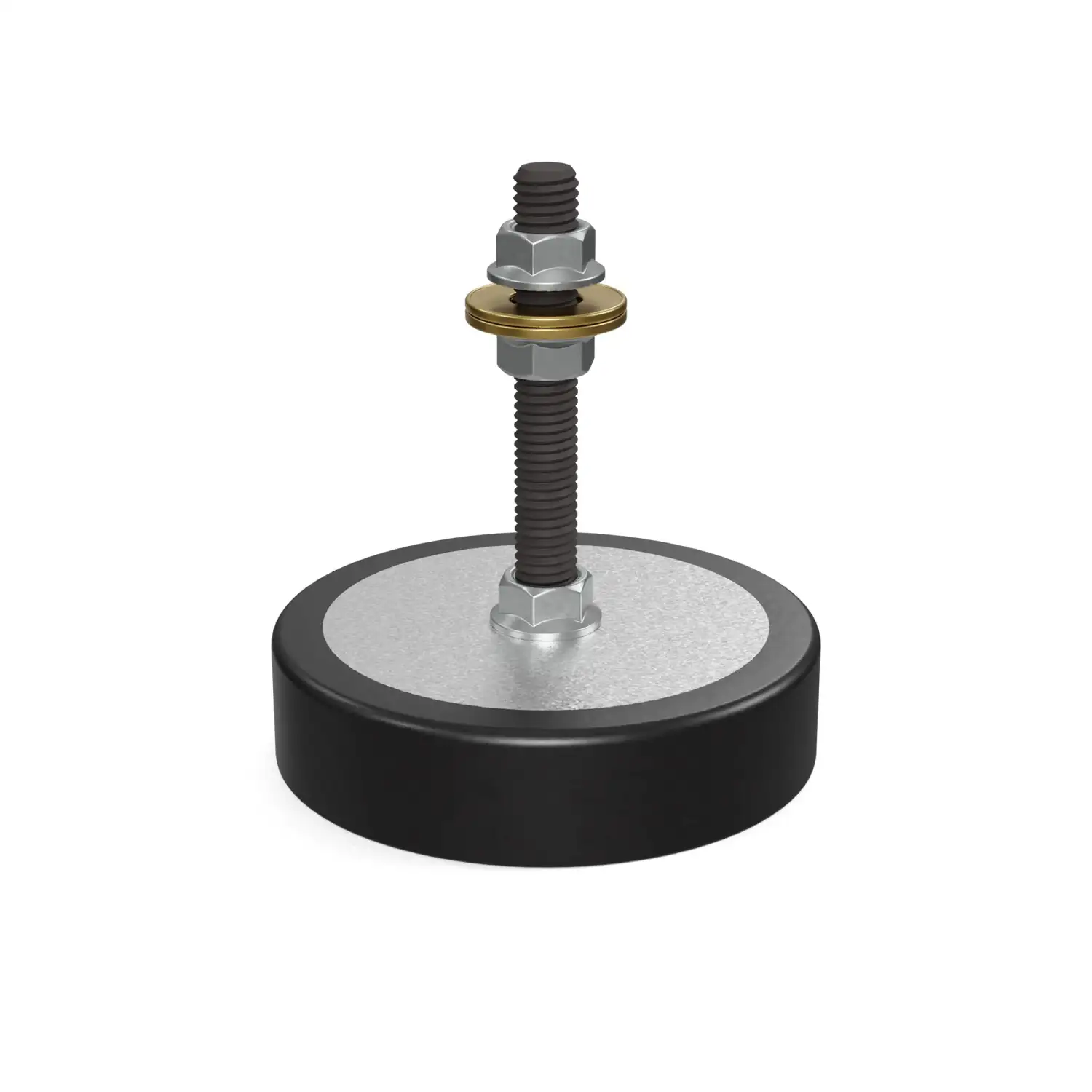
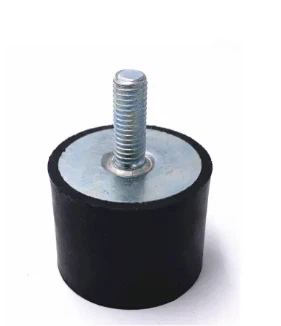
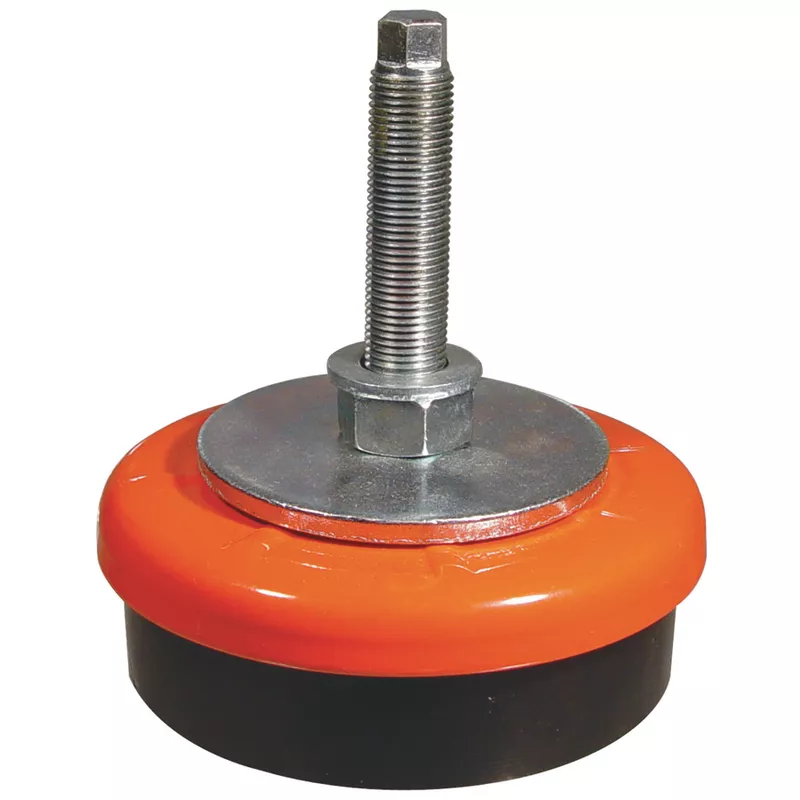
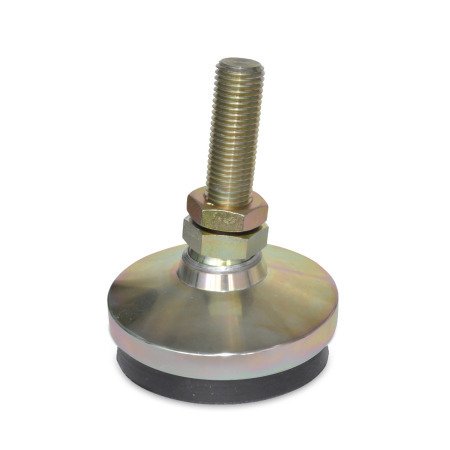
Vibration damping leveling mounts rely on a combination of elastomer layers and reinforced metal housings. These components work together to absorb vibration energy and redistribute mechanical loads evenly. The threaded adjustment mechanism allows operators to fine-tune machine height and balance. Base plates provide stable ground contact, preventing unwanted movement during operation. Engineers design damping layers to handle specific frequency ranges produced by industrial machines. This ensures consistent performance under varying operational loads. The system also reduces resonance effects that can amplify structural vibration. Proper design selection improves both machine lifespan and production accuracy in demanding environments.
Material Performance Standards for vibration damping leveling mounts Selection
Material selection plays a major role in determining damping efficiency and load capacity in industrial applications. Engineers evaluate elastomer hardness, metal corrosion resistance, and fatigue strength under continuous stress. Rubber compounds are often chosen for their energy absorption capability and flexibility. Metal housings provide structural integrity and long-term stability under heavy loads. Environmental conditions such as humidity and chemical exposure also influence material choice. In high-temperature environments, specialized polymers maintain damping performance without deformation. Manufacturers test materials under cyclic load conditions to ensure reliability. These evaluations help ensure consistent performance in demanding production environments.
| Material Type | Key Property | Industrial Benefit |
|---|---|---|
| Natural Rubber | High elasticity | Strong vibration absorption |
| Polyurethane | Wear resistance | Long service life |
| Stainless Alloy | Corrosion resistance | Harsh environment stability |
Material classification directly influences operational stability and equipment lifespan. Engineers match material properties with machine load requirements and environmental stress levels. This ensures consistent performance under industrial operating conditions.
Installation Practices and vibration damping leveling mounts Alignment Control
Vibration damping leveling mounts require precise installation to achieve optimal performance in industrial environments. Technicians begin by assessing floor flatness and load distribution points. Proper alignment ensures uniform stress distribution across the machine base. Adjustable screws allow fine calibration of height and tilt angles. During installation, torque control is essential to avoid over-compression of damping materials. Engineers often verify alignment using laser leveling tools for accuracy. Correct installation reduces vibration transfer and improves operational stability. In automated systems, proper setup directly affects production efficiency and mechanical reliability over time.
- Check floor stability before installation begins
- Adjust leveling screws gradually for balance
- Verify load distribution across all support points
- Use precision instruments for alignment accuracy
Installation procedures must follow structured calibration steps to ensure long-term stability. Each adjustment impacts vibration behavior during machine operation. Proper setup reduces mechanical wear and improves output consistency across production cycles.
Application Fields of vibration damping leveling mounts in Heavy Machinery
Vibration damping leveling mounts are widely used in CNC machining centers, packaging systems, and industrial compressors. These systems require high precision and stable operating conditions to maintain product quality. In laboratory equipment, vibration control ensures accurate measurement results. Heavy-duty production lines rely on these mounts to reduce structural fatigue and improve safety. They also enhance operational consistency in automated assembly systems. Engineers apply them in environments where continuous motion generates high-frequency vibration. Their use significantly extends machine service life and reduces maintenance interruptions. Industrial sectors depend on them to maintain production reliability under demanding workloads.
| Application Area | Vibration Source | Performance Requirement |
|---|---|---|
| CNC Machines | Spindle rotation | High precision stability |
| Compressors | Motor vibration | Noise reduction |
| Packaging Lines | Mechanical motion | Continuous operation |
Each application environment demands specific vibration control characteristics. Engineers select configurations based on load intensity and operational frequency. This ensures stable performance across different industrial systems.
Maintenance Strategies for vibration damping leveling mounts Longevity
Maintenance routines ensure consistent performance and extend operational lifespan in industrial environments. Technicians inspect damping components for wear, compression loss, and surface degradation. Regular cleaning prevents contamination buildup that can affect performance stability. Load recalibration helps maintain proper machine balance over time. Engineers monitor vibration levels to detect early signs of system fatigue. Replacement cycles depend on operating intensity and environmental exposure conditions. Preventive maintenance reduces unexpected downtime and improves production efficiency. Proper care also ensures long-term structural integrity under continuous industrial use.
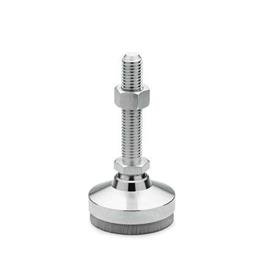
The anti vibration leveling foot is often evaluated during maintenance checks for load balance consistency. Its condition directly influences vibration isolation efficiency in heavy-duty systems.
Environmental and Mechanical Optimization of vibration damping leveling mounts Systems
Environmental factors such as temperature variation, humidity, and chemical exposure affect damping performance. Engineers design systems to withstand fluctuating industrial conditions without losing stability. Mechanical optimization focuses on reducing resonance and improving energy absorption efficiency. Surface treatment technologies enhance corrosion resistance and structural durability. Load distribution analysis helps prevent uneven stress accumulation across machine bases. In advanced facilities, predictive monitoring systems track vibration patterns continuously. This allows early detection of performance degradation and supports preventive adjustments. Proper optimization ensures stable operation under long-term industrial stress conditions.
The stainless steel leveling foot is commonly used in corrosive environments where durability and hygiene are critical.
FAQ
What industries benefit most from vibration damping leveling mounts?
Industries such as manufacturing, energy production, and precision engineering benefit significantly from vibration control systems. Manufacturing plants use these systems to stabilize CNC machines and automated assembly lines. Energy facilities rely on them to reduce vibration in compressors and turbine systems. Laboratory environments require stable foundations to ensure accurate measurement and testing results. Pharmaceutical production also depends on controlled vibration levels for sensitive processes. These systems improve operational reliability across all these sectors. They also reduce equipment wear and extend machine service life under continuous operation. Consistent stability supports higher production quality and reduces maintenance costs.
How do vibration damping leveling mounts improve machine accuracy?
Machine accuracy improves significantly when vibration interference is minimized at the structural base. These systems isolate unwanted motion that can distort machining precision. Stable foundations help maintain consistent tool alignment during high-speed operations. Reduced vibration also prevents measurement deviations in sensitive equipment. Engineers observe improved tolerance control in production output when isolation systems are properly installed. This leads to fewer defects and higher product consistency. Operational efficiency increases as machines maintain stable performance over longer cycles. Precision stability becomes a direct result of controlled vibration management in industrial environments.
What factors affect the lifespan of vibration damping leveling mounts?
Several factors influence the operational lifespan of damping systems in industrial use. Load intensity plays a major role in material fatigue and compression behavior. Environmental exposure such as moisture and chemicals accelerates material degradation. Temperature fluctuations can also impact elastomer flexibility and performance stability. Maintenance frequency determines how well the system retains its damping efficiency over time. Improper installation increases uneven stress distribution and shortens service life. Continuous monitoring helps identify early wear patterns before failure occurs. Proper selection and maintenance significantly extend operational durability and ensure long-term system reliability.