Industrial environments demand high reliability for every control component. machine handle safety becomes a critical design focus across heavy equipment systems. Engineers evaluate load behavior, operator interaction, and environmental exposure during development stages. Poor structural choices can lead to mechanical failure or operator injury. Consistent performance depends on balanced material strength and ergonomic optimization. Manufacturers also consider vibration, torque fluctuation, and long duty cycles. Safety expectations rise in automated and semi-automated production lines. Each design decision directly influences operational stability and long-term durability.
Material Selection and Its Impact on Machine Handle Safety
Material choice strongly determines structural reliability in industrial handles. Stainless steel offers high tensile strength and corrosion resistance in harsh environments. Aluminum alloys reduce weight while maintaining moderate mechanical strength under controlled loads. Engineering plastics provide electrical insulation and vibration dampening benefits. machine handle safety improves when materials resist fatigue cracking under repeated stress cycles. In high-moisture environments, surface oxidation resistance becomes essential. Heat-treated alloys enhance deformation resistance under torque pressure. Material uniformity also reduces failure risks during continuous operation. Manufacturers often simulate stress distribution before final selection.
| Material Type | Strength Level | Corrosion Resistance | Industrial Use |
|---|---|---|---|
| Stainless Steel | High | Excellent | Heavy machinery systems |
| Aluminum Alloy | Medium | Good | Light equipment assemblies |
| Engineering Plastic | Low to Medium | High | Electrical control devices |
Material engineering decisions shape long-term reliability outcomes in demanding environments. Stainless steel performs best in corrosive or high-load systems. Aluminum supports portability-focused machinery with reduced inertia forces. Engineering polymers stabilize vibration-sensitive applications effectively. Selection depends on balancing mechanical load requirements with environmental exposure conditions. Manufacturers also evaluate cost efficiency during large-scale production planning. Testing phases simulate real operational stress cycles. These evaluations ensure consistent performance before deployment. Material consistency reduces unexpected deformation risks. Industrial buyers prioritize durability alongside maintenance efficiency.
Ergonomic Design and Operational Stress Considerations
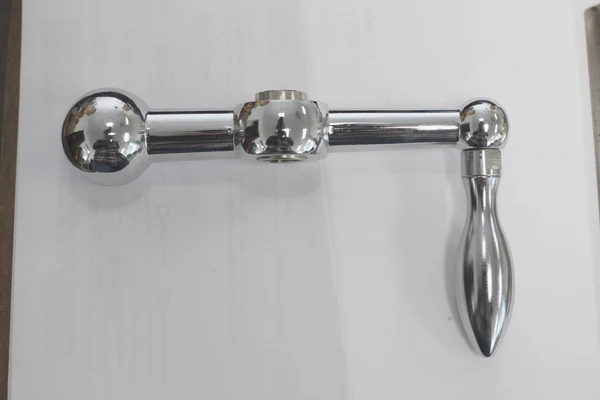
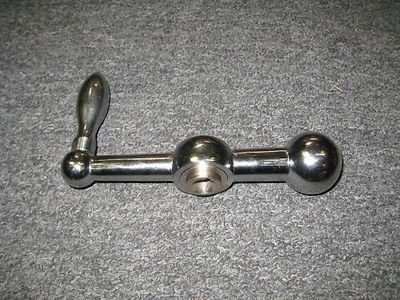
Ergonomic structure directly influences operator safety and system efficiency. Poor grip geometry increases fatigue during repetitive machine operation cycles. Rounded surfaces distribute force more evenly across the hand. Proper spacing reduces wrist strain during high-torque adjustments. machine handle safety improves when ergonomic modeling aligns with human biomechanics. Designers study motion patterns across repeated industrial tasks. Excessive reach distance often leads to posture imbalance. Balanced torque transmission prevents localized pressure points. In some systems, crank handles are used for manual adjustments requiring controlled force application. Operator comfort directly impacts production accuracy and long-term injury prevention outcomes.
Surface Treatment and Environmental Resistance in Machine Handle Safety
Surface engineering significantly extends operational lifespan in industrial environments. machine handle safety depends on resistance against corrosion, abrasion, and chemical exposure. Anodizing creates a protective oxide layer on aluminum components. Powder coating enhances scratch resistance under mechanical contact. Electroplating improves surface hardness and environmental sealing performance. These treatments reduce micro-crack formation under repetitive stress. In humid or chemically aggressive settings, untreated surfaces degrade rapidly. A folding handles mechanism benefits from coated joints that resist friction wear. Thermal cycling also influences coating adhesion strength. Proper surface preparation ensures long-term bonding stability.
Surface treatments vary based on application requirements and environmental exposure levels.
- Anodizing enhances aluminum corrosion resistance
- Powder coating improves abrasion durability
- Electroplating increases surface hardness
- Chemical passivation reduces oxidation risks
Surface finishing selection depends on operational intensity and environmental conditions. Anodized layers perform well in marine or humid climates. Powder coatings suit high-contact industrial equipment. Electroplated finishes provide superior hardness in heavy-load systems. Proper pretreatment ensures coating adhesion stability. Surface roughness control also influences friction behavior during operation. Engineers test coatings under accelerated aging conditions. These evaluations predict long-term degradation patterns. Reliable surface protection improves system safety margins significantly.
Load Capacity and Mechanical Stress Distribution in Industrial Handles
Mechanical load management defines structural reliability in industrial handle systems. Force distribution determines whether stress concentrates at weak points. machine handle safety improves when torque paths remain balanced across the structure.
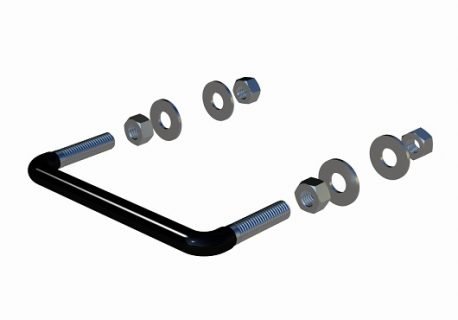
Excessive localized stress often leads to deformation or fracture. Finite element analysis helps predict failure zones during design stages. Material thickness also influences load endurance capacity. Reinforcement ribs increase resistance to bending forces. Industrial systems often exceed static load conditions during operation. Dynamic forces introduce additional stress variations. Engineers simulate real working conditions before final approval. Proper alignment reduces uneven stress accumulation across joints.
Maintenance, Inspection, and Lifecycle Management in Industrial Handle Systems
Regular maintenance ensures long-term operational reliability in industrial equipment. machine handle safety depends on consistent inspection and timely part replacement. Lubrication reduces friction in moving components. Wear monitoring identifies early signs of mechanical degradation. Operators check fastening stability during scheduled maintenance cycles. Surface cracks often indicate fatigue progression. Cleaning procedures remove abrasive contaminants from contact zones. In high-frequency systems, inspection intervals become shorter. Lifecycle management extends equipment usability and reduces downtime risks. Predictive maintenance systems now integrate sensor-based monitoring tools. These systems improve early fault detection accuracy. Maintenance discipline directly affects safety performance outcomes.
Standards, Testing Methods, and Compliance Requirements
Industrial certification ensures consistent safety performance across manufacturing systems. International standards such as ISO 12100 for machinery safety design and ASTM B117 for corrosion testing define testing procedures for load, fatigue, and corrosion resistance. machine handle safety is validated through controlled laboratory simulations. ISO 898-1 mechanical properties and ISO 12100 risk assessment frameworks establish global mechanical reliability benchmarks. ASTM E466 fatigue testing protocols measure structural endurance under repeated stress cycles. ISO 148-1 Charpy impact testing evaluates sudden force tolerance. Salt spray tests assess corrosion behavior over extended exposure periods. Compliance ensures compatibility across global industrial markets. Certification also improves buyer confidence in OEM supply chains.
| Test Type | Standard | Purpose |
|---|---|---|
| Fatigue Testing | ISO 898 / ASTM E466 | Measures repeated load endurance |
| Corrosion Test | ASTM B117 | Evaluates salt spray resistance |
| Impact Testing | ISO 148-1 | Determines impact strength |

Testing frameworks ensure mechanical reliability before deployment. Fatigue analysis identifies long-term structural weaknesses. Corrosion testing simulates harsh environmental exposure conditions. Load testing verifies maximum operational thresholds. These procedures reduce failure risks in industrial environments. Certification results guide material and design improvements. Manufacturers use standardized benchmarks for global compliance. Quality assurance teams validate each production batch. Consistent testing improves long-term safety reliability.
FAQ
What materials improve machine handle safety?
Material selection directly influences performance stability in industrial handles. Stainless steel offers high strength and corrosion resistance under heavy loads. Aluminum alloys provide lightweight construction with moderate durability. Engineering plastics reduce vibration transmission during operation. Each material responds differently to stress, heat, and chemical exposure. Proper selection depends on environmental conditions and mechanical requirements. Heat-treated metals improve fatigue resistance under cyclic loading. Composite materials enhance flexibility in specialized applications. Surface coatings further enhance durability across all material types. Engineers balance cost, weight, and mechanical performance during selection. Reliable material choice ensures stable operation in demanding industrial systems.
How does ergonomics influence machine handle safety?
Ergonomic design reduces physical strain during repetitive industrial tasks. Proper grip geometry distributes force evenly across the hand. Balanced torque alignment prevents wrist overextension during operation. Poor design increases fatigue and reduces operational accuracy. Adjustable positioning improves accessibility across different machine types. Human factor studies guide optimal handle dimensions. Reduced vibration transmission minimizes long-term musculoskeletal stress. Surface texture also affects grip stability in wet or oily conditions. Operator comfort directly impacts production efficiency and error reduction. Ergonomic improvements contribute significantly to long-term safety performance in industrial environments.
Which standards are used to evaluate machine handle safety?
International standards ensure consistent evaluation of industrial handle performance. ISO 12100 defines machinery safety risk assessment and design requirements, while ISO 898 specifies mechanical properties of metallic components under load. ASTM E8/E8M measures tensile strength behavior, and ASTM B117 evaluates salt spray corrosion resistance. ISO 148-1 Charpy impact testing assesses sudden force resistance. Testing procedures simulate real operational environments under controlled conditions. Compliance ensures compatibility across global manufacturing systems. Certification validates structural reliability before market deployment. Repeated stress testing identifies long-term failure risks. Environmental simulations assess durability under humidity and temperature variation. Standardized frameworks support continuous product improvement.