Plastic Knob Threaded Inserts Design and Selection Guide
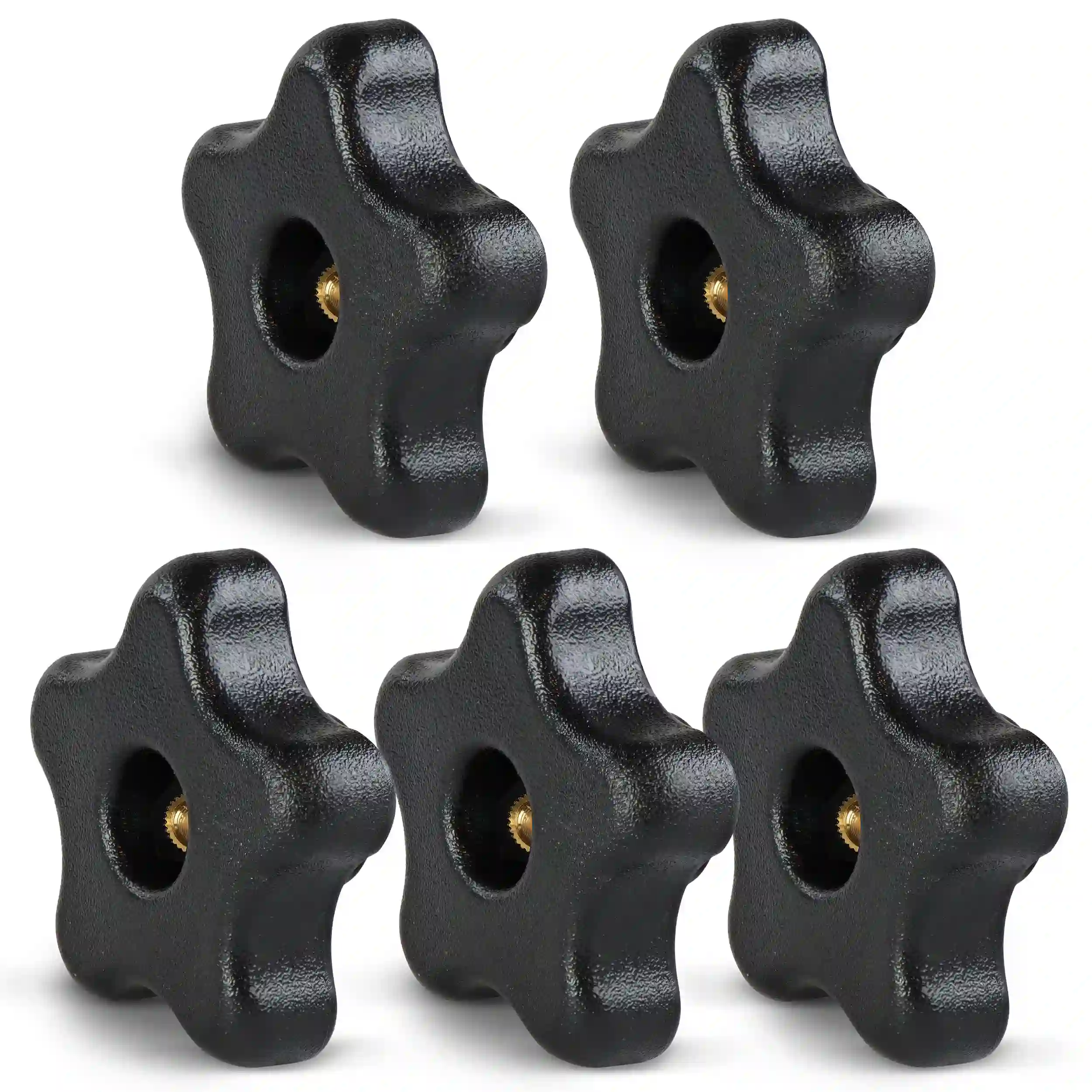
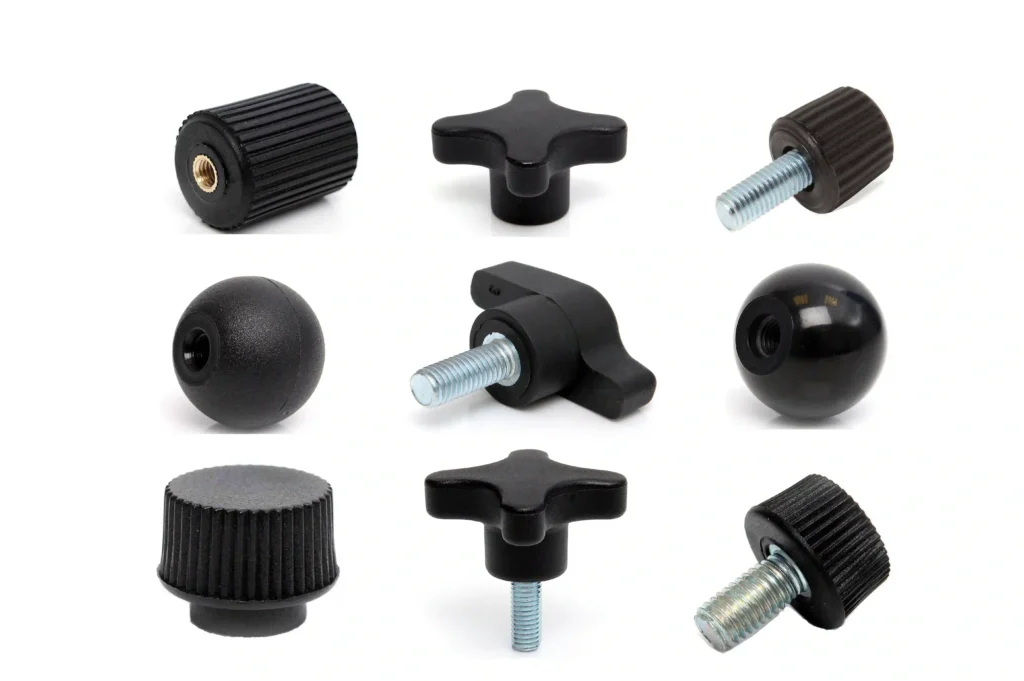
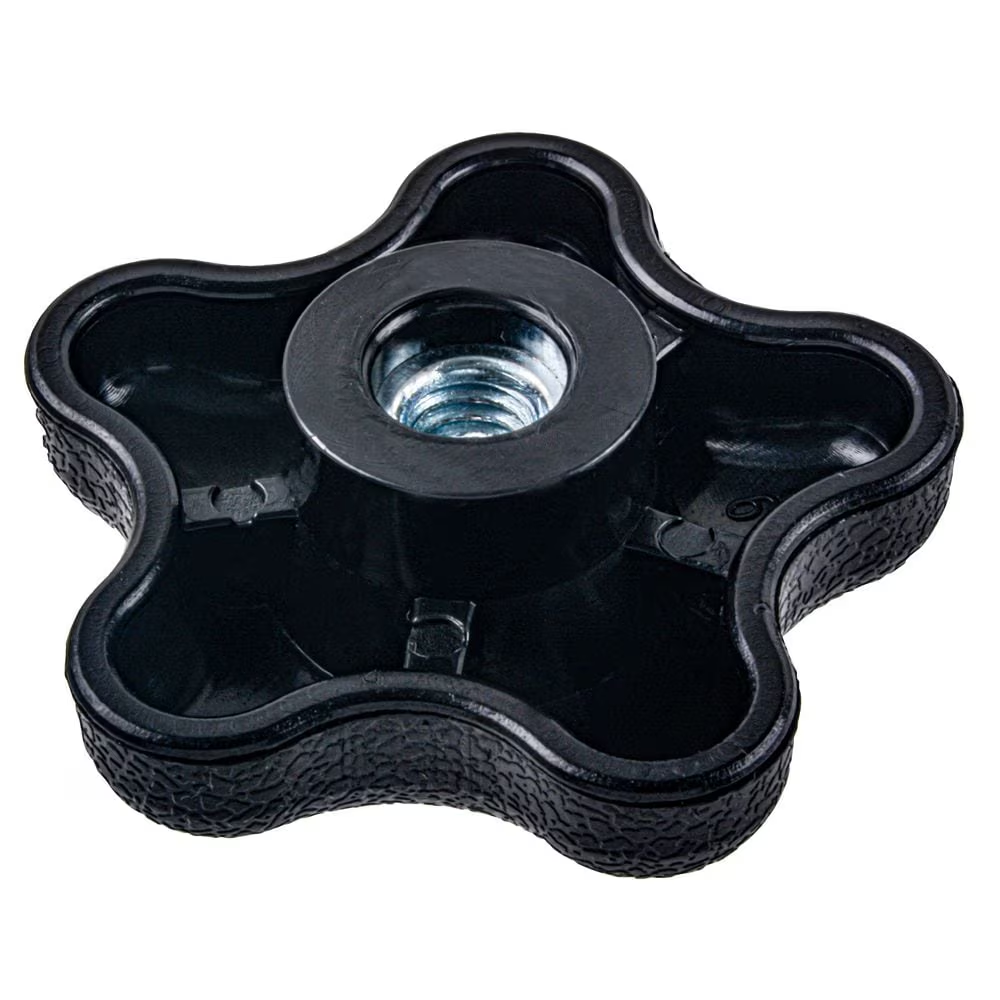
A plastic knob threaded insert combines an easy-to-grip polymer body with a stronger internal metal thread. The insert allows the knob to be tightened, loosened, adjusted, or removed repeatedly without relying on threads cut directly into plastic.
This design is common in machinery, fixtures, guards, laboratory equipment, furniture, electronics, and control systems. Its performance depends on more than thread size. The plastic, insert material, insert geometry, installation method, knob diameter, tightening load, temperature, chemicals, and number of operating cycles must work together. Stainless steel star knobs may be considered when corrosion resistance and repeated manual adjustment are important.
What Does the Threaded Insert Do
The insert transfers load between the screw, stud, or shaft and the plastic knob body. It can provide:
- A durable female thread for repeated assembly
- Better resistance to thread wear than plastic alone
- More reliable tightening torque
- A defined metal interface for standard fasteners
- Easier replacement or adjustment in service
The insert does not make every plastic knob suitable for unlimited torque. If the insert is too small, poorly retained, or installed in an unsuitable plastic boss, it can rotate, pull out, crack the knob, or loosen under vibration.
Common Insert Configurations
Molded-In Inserts
A molded-in insert is positioned in the mold before plastic is formed around it. This can provide strong mechanical retention and accurate integration when the tooling and molding process are controlled. It is commonly considered for production quantities that justify dedicated tooling.
Press-Fit or Expansion Inserts
These inserts are pressed into a prepared hole. Knurls, barbs, or expansion features engage the plastic. Hole size, boss geometry, plastic stiffness, and installation force are important because excessive interference can split the boss.
Heat or Ultrasonic Inserts
Heat or ultrasonic energy softens thermoplastic around the insert during installation. The plastic flows around the insert features and then solidifies. Temperature, insertion speed, alignment, depth, and boss design must be controlled.
Machined or Captive Inserts
Some knob designs mechanically capture a nut, bushing, or specially machined insert. This may suit lower quantities, large knobs, unusual threads, or assemblies that need a nonstandard interface.
The best configuration depends on production volume, plastic type, load, tool investment, and the expected service environment.
Insert Materials
| Insert material | Typical reason for selection | Design consideration |
|---|---|---|
| Brass | Machinability, corrosion resistance in many environments, common insert geometries | Confirm chemical and temperature compatibility |
| Carbon steel | Strength and cost | May require plating or another corrosion-control method |
| Stainless steel | Corrosion resistance and clean-environment use | Grade, galling risk, cost, and installation method require review |
The insert material should also be compatible with the mating fastener. Dissimilar materials, moisture, cleaning agents, and repeated tightening can affect corrosion and thread behavior.
Plastic Materials for the Knob Body
Common knob bodies may use thermoplastics such as polyamide or other engineering polymers. The exact resin grade affects stiffness, impact resistance, moisture response, temperature capability, chemical resistance, color, and the way the insert is retained.
Material names alone are not enough. Reinforcement, molding condition, recycled content, UV exposure, and service temperature can change performance. For demanding applications, specify the exact grade and any regulatory or flammability requirements.
Thread and Knob Geometry
The thread size must match the mating component, but the surrounding knob geometry determines whether a user can apply the required torque comfortably and safely.
Review:
- Metric or inch thread system
- Internal or external thread
- Thread engagement length
- Blind or through-thread configuration
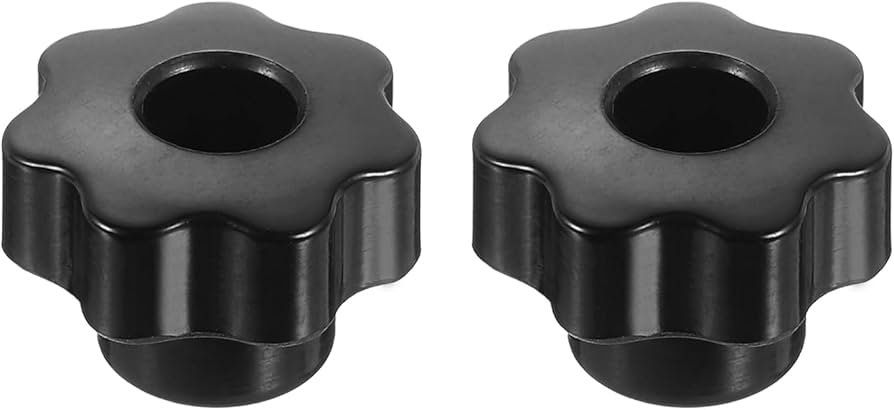
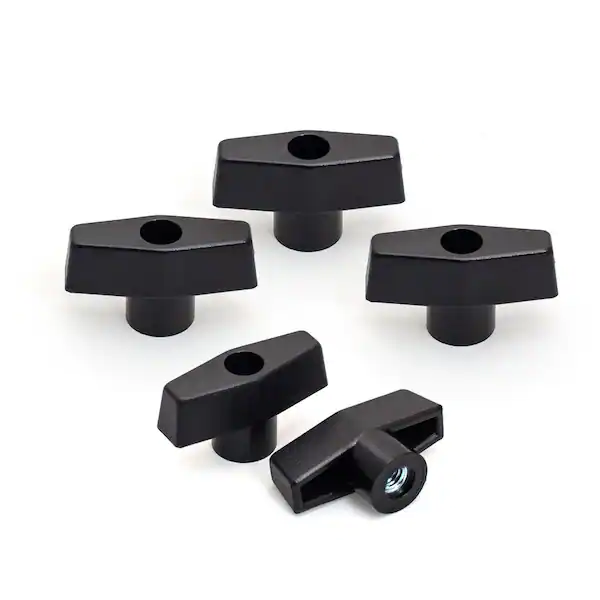
- Knob diameter and grip style
- Boss diameter and wall thickness around the insert
- Distance from the insert to the knob edge
- Required tightening and release torque
- Clearance around the hand and nearby equipment
A larger knob can increase the torque a user applies. The insert and plastic body must be designed for that leverage.
Main Failure Modes
Insert Rotation
The insert turns inside the plastic instead of transmitting torque. Causes may include insufficient anti-rotation features, an oversized installation hole, plastic creep, excessive tightening, or poor molding around the insert.
Pull-Out
Axial load pulls the insert from the knob. Engagement length, insert geometry, boss dimensions, plastic strength, temperature, and installation quality all influence pull-out resistance.
Boss Cracking
The plastic around the insert cracks during installation or use. Excessive interference, sharp corners, insufficient wall thickness, low temperature, chemical attack, or impact can contribute.
Thread Damage
Cross-threading, incompatible fasteners, contamination, galling, or excessive torque can damage the internal thread.
Creep and Loosening
Plastic can deform gradually under sustained load, especially at elevated temperature. The joint design should not assume that initial tightening force will remain unchanged indefinitely.
Selecting a Plastic Knob With a Threaded Insert
Use this sequence:
- Define the adjustment, clamping, or control function.
- Specify the mating thread and required engagement.
- Estimate tightening, pull-out, side, and vibration loads.
- Define temperature, moisture, UV, chemical, and cleaning exposure.
- Select the knob body material and insert material together.
- Choose an insert-retention method appropriate for the production volume.
- Review grip, clearance, ergonomics, and safety.
- Validate the final assembly with representative parts and realistic cycles.
Information to Include in an OEM RFQ
Provide:
- Knob style, diameter, and overall dimensions
- Plastic material and color
- Insert material
- Thread standard, size, pitch, class, and depth
- Internal or external thread configuration
- Tightening, pull-out, and side-load expectations
- Service temperature and chemical exposure
- Quantity and annual demand
- Logo, marking, or packaging requirements
- Inspection and test requirements
- Drawing, 3D model, or physical sample
If exact loads are unknown, describe how the knob is used and how often it is adjusted.
Conclusion
A plastic knob threaded insert is a small mechanical system. The insert, plastic body, installation process, thread, and user-applied torque all affect reliability. Selecting only by thread size can lead to spinning inserts, cracking, pull-out, or early wear.
Define the application, environment, load, production quantity, and mating hardware first. Metric clamping lobe knobs may be considered when standardized metric threads and frequent manual clamping are required. Then validate the insert design with the actual plastic and installation process.
Frequently Asked Questions
Why use a metal insert instead of threading the plastic directly
A metal insert generally provides a more durable thread for repeated use and can improve torque and wear performance. The final capacity still depends on how the insert is retained in the plastic.
Is brass or stainless steel better for a knob insert
Neither is always better. Brass is widely used for machinability and corrosion behavior, while stainless steel may suit more corrosive environments. Load, mating fastener, chemical exposure, cost, and installation process determine the choice.
Can a loose insert be repaired
Repair depends on the knob design and safety requirements. Re-pressing or bonding a damaged insert may not restore the original capacity. Replacing the knob is often the safer option when clamping or operator safety is important.
What testing is useful
Torque-to-failure, pull-out, repeated-cycle, temperature, vibration, and chemical-exposure tests may be relevant. Test the actual production material and installation process.