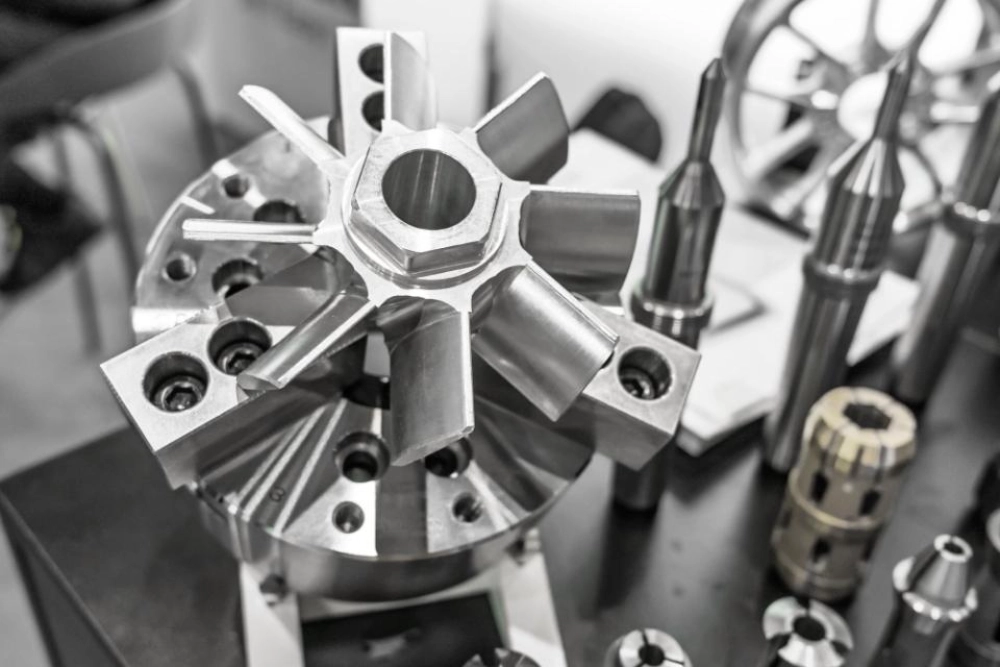

CNC Surface Finish Ra and Why It Matters
CNC surface finish Ra is a common way to specify the average roughness of a machined surface. It describes the average absolute deviation of the measured profile from its mean line over the evaluation length. For precision machined components, a lower Ra value indicates a smoother average profile, but it does not describe every feature of the surface.
The correct roughness requirement should come from function. Sealing, sliding, bearing contact, fatigue, coating adhesion, cleanliness and appearance can require different textures. Specifying the lowest possible Ra on every face usually adds machining and inspection cost without improving the part.
Units and Drawing Callouts
Ra may be expressed in micrometres or microinches. Confusing the units creates a major specification error, so the drawing should state them clearly. The callout should also identify which surfaces are controlled and whether the value is a maximum, range or another defined requirement.
For example, a callout reading only “Ra 0.8” is incomplete if the unit and controlled surface are unclear. A buyer should confirm the unit, the exact face, the applicable drawing standard and whether the requirement applies before or after coating. This is a drawing-review example, not a claimed machining capability.
Surface texture standards include more than Ra. Depending on function, the engineer may need Rz, direction of lay, waviness, machining allowance or a specified production method. Use the drawing standard and customer requirements that apply to the project.
Ra Does Not Describe the Whole Surface
Two surfaces can have the same Ra and behave differently because their peaks, valleys, spacing and lay are different. A turned surface with a regular feed pattern is not identical to a ground, polished or blasted surface with the same reported Ra.
Functional review may need to consider:
- Peak and valley distribution
- Direction of lay
- Waviness and form error
- Isolated scratches or dents
- Burrs and edge condition
- Porosity or coating defects
- Cleanliness and embedded particles
Ra should therefore be paired with other requirements when the surface function demands it.
How Machining Parameters Affect Roughness
Surface finish is influenced by the machine, tool, material and setup. Important factors include:
- Feed per revolution or tooth
- Tool nose radius and edge condition
- Cutting speed and depth of cut
- Machine and fixture rigidity
- Tool overhang and runout
- Material microstructure and hardness
- Built-up edge, chatter and vibration
- Coolant or lubrication strategy
- Direction of tool marks relative to function
Changing one parameter may improve roughness while creating another problem. For example, a larger tool radius may reduce the ideal feed pattern but increase cutting force and chatter on a flexible part.
Typical Process Relationships
The table below is qualitative. Actual capability must be verified for the material, geometry, machine and measurement method.
| Process condition | General surface result | Common tradeoff |
|---|---|---|
| Standard turning or milling | Visible, controlled tool pattern | Efficient but may not suit sealing or cosmetic faces |
| Dedicated finishing pass | Smoother and more consistent surface | Adds cycle time and may require fresh tooling |
| Grinding | Fine texture and dimensional control on suitable features | Adds setup and secondary processing |
| Polishing or lapping | Can reduce roughness further | May alter geometry, edge definition and cost |
| Blasting | Changes appearance and texture | Does not replace dimensional finishing and may affect later coating |
| Coating or plating | Changes the final surface condition | Requires allowance and post-process inspection |
Match Roughness to Function
Sealing Surfaces
Seal performance can depend on roughness, lay, flatness, waviness and material. The seal supplier or responsible engineer should define the surface requirement. A low Ra alone does not guarantee leak-free performance.
Sliding and Bearing Surfaces
A surface may need enough smoothness to control wear while retaining suitable lubrication. Counterface material, speed, load, lubricant and alignment all affect the requirement.
Cosmetic Surfaces
Appearance depends on consistency, direction, color and visible defects, not only a profilometer value. Establish an approved visual sample when appearance is important.
Coated or Bonded Surfaces
Some coatings or adhesives need a controlled texture for adhesion. Final performance depends on cleaning, preparation, coating thickness and process control as well as the machined Ra.
How Ra Is Measured
A contact profilometer commonly traces a stylus across the surface and calculates parameters from the measured profile. Optical methods may also be used. The cutoff, evaluation length, filter, direction and instrument setup influence the result.
For repeatable measurement:
- Clean the surface without changing it.
- Identify the required measurement direction.
- Use the specified units, cutoff and evaluation settings.
- Position the trace on the controlled area.
- Take the required number of measurements.
- Record the actual results and instrument information.
Curved, narrow, interrupted or inaccessible surfaces may require special equipment or an agreed alternative method.
Two reports can show different Ra results on the same part if they use different trace directions, filters, evaluation lengths or measurement locations. When a result is near the acceptance limit, ask the inspector to document the setup rather than comparing two numbers without their conditions.
How Roughness Affects Cost and Lead Time
A tighter finish can require slower feeds, finishing passes, special tools, additional setups, grinding, polishing and dedicated measurement. For precision CNC machined parts, it can also increase scrap risk if the final process removes too much material or damages dimensional tolerances.
Control only the surfaces that need the requirement. Use different callouts for critical and noncritical faces where appropriate. Discuss unusually smooth or hard-to-access surfaces during quotation so the supplier can select a realistic process.
RFQ and Drawing Checklist
Provide:
- Surface-texture symbol and parameter
- Units and acceptance limit
- Exact controlled surfaces
- Direction of lay if functional
- Final material and heat-treatment condition
- Coating or plating sequence
- Measurement method or report requirement
- Cosmetic sample or appearance standard where needed
- Quantity and expected repeat demand
Frequently Asked Questions
Does a lower Ra always mean a better surface
No. The best surface is the one that meets the function. An unnecessarily low Ra can increase cost and may not improve performance.
Can two surfaces with the same Ra perform differently
Yes. Lay, waviness, peak shape, valleys, defects and manufacturing process can differ even when the average Ra is similar.
Should every surface on a CNC part have the same Ra
Usually not. Critical sealing, sliding or cosmetic faces may need tighter control than general nonfunctional surfaces.

Technical References
ISO 21920-2 defines profile surface-texture terms and parameters. Mitutoyo’s metrology guidance explains why the trace direction and measurement setup matter. These references explain measurement principles, not a supplier’s achievable Ra range.
- ISO: https://www.iso.org/standard/72226.html
- Mitutoyo: https://dev.mitutoyo.com/article/expand-your-cmms-capabilities/