Folding Handle vs Fixed Handle for Industrial Equipment
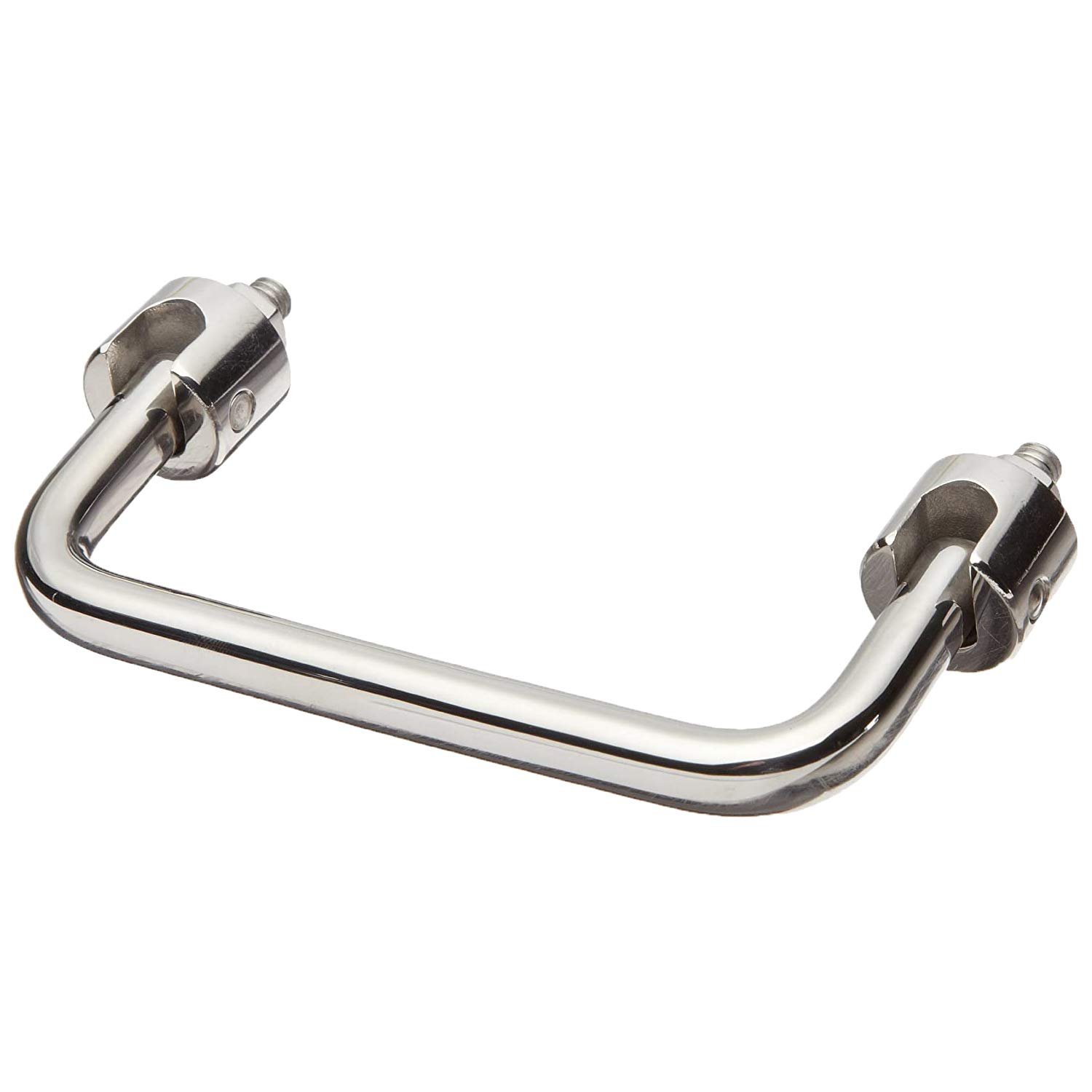
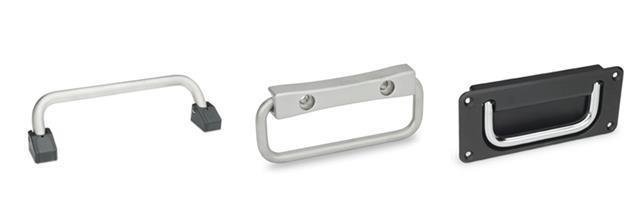
The main difference between a folding handle and a fixed handle is whether the grip remains permanently projected from the mounting surface. A fixed handle provides a simple rigid load path and is always ready to use. A folding handle can lie closer to the panel when not in use, reducing protrusion, but its hinge, pin and retention mechanism become part of the load path.
Neither design is automatically better. The correct choice depends on the load, available space, mounting surface, vibration, contamination, operating frequency, ergonomics and consequences of accidental movement.
Quick Comparison
| Decision point | Fixed handle | Folding handle |
|---|---|---|
| Profile when not in use | Always projects | Can fold closer to the surface |
| Load path | Direct and rigid | Passes through a hinge or pivot |
| Speed of access | Immediately available | Must be deployed before use |
| Moving parts | Few or none | Pin, hinge and possibly a spring or detent |
| Dirt and corrosion sensitivity | Generally easier to clean and inspect | Pivot may trap debris or require closer material control |
| Vibration behavior | Depends mainly on mounting security | Must also remain securely stowed or deployed |
| Typical reason to choose | Simplicity and frequent use | Clearance, transport envelope or snag reduction |
When a Fixed Handle Is Usually Appropriate
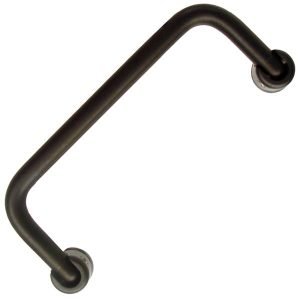
A fixed handle suits applications where a permanent projection does not create a hazard and the grip is used frequently. Its direct load path is easy to understand, inspect and maintain. There is no hinge to seize, rattle or fold unexpectedly.
Typical uses include cabinet doors, machine guards, drawers, access panels and equipment where clearance around the grip is protected. A fixed design can also be preferable in dirty environments because there are fewer moving interfaces.
The mounting surface still needs adequate strength. A robust handle attached to a thin or unsupported panel can deform the panel or loosen its fasteners.
When a Folding Handle Is Usually Appropriate
A folding handle is useful when permanent protrusion would interfere with walkways, adjacent equipment, packaging, transport, storage or machine motion. When stowed, it can reduce snag and impact risk.
Its benefits depend on the mechanism. The handle should remain in the intended position, deploy without trapping fingers and carry the specified load through the hinge and base. In vibrating equipment, an uncontrolled handle may rattle, wear the pivot or move out of its stowed position.
Compare the Complete Load Path
Handle selection should start with how force reaches the structure. For a fixed handle, the load typically passes from the grip through the legs or brackets into the mounting fasteners and panel. For a folding handle, the load also passes through the pivot pin, stops and retention features.
Review:
- Pull direction and off-axis loading
- One-hand or two-hand use
- Static load, repeated cycles and occasional shock
- Hinge-pin diameter and material
- Stop geometry in the deployed position
- Fastener size, spacing and thread engagement
- Panel thickness and need for a backing plate
- Edge distance around mounting holes
- Corrosion and wear at the pivot
Catalog dimensions alone do not establish the strength of the installed assembly. If a catalogue gives a load rating, read its test conditions and direction of loading before applying it to a different panel or fastener arrangement.
Clearance and Safety
Map both the deployed and stowed envelopes. A folding handle saves space only when it stays within the intended profile. Check nearby doors, guards, cable paths, conveyors, operator routes and service tools.
Consider pinch points between the moving grip and mounting surface. The handle shape, stop position and available finger clearance should suit the actual operating method, including gloves. If the handle is used to lift a cover, the user should have a stable grip before the load is transferred.
Mounting Options
Common attachment methods include through bolts, threaded studs, screws into inserts, welding and integral mounting features. The best method depends on service load, panel access, material thickness, corrosion control and replacement needs.
Through bolts with suitable load distribution can be useful when both sides of the panel are accessible. Threaded inserts or captive hardware may simplify assembly but must be selected for the substrate. Welded handles eliminate loose fasteners but require compatible materials, controlled welding and suitable finish restoration.
Materials and Environment
Material selection affects strength, corrosion resistance, weight, appearance and cleanability. Stainless steel may suit wet or corrosive environments, while steel with a protective finish may suit general industrial use. Aluminum or polymer grips may reduce weight but require application-specific review. Revolving handles may also require material compatibility checks around moving components.
For a folding handle, the pivot may combine different materials. Check galling, galvanic interaction, lubrication, washdown chemicals, dust and temperature. A corrosion-resistant grip does not guarantee that its pin, spring or fasteners have the same resistance.
Selection Questions
- What force and direction will the operator apply?
- Is permanent protrusion acceptable?
- How often will the handle be used?
- Must it stay locked in the stowed or deployed position?
- Is the environment wet, dusty, corrosive or difficult to clean?
- Can the mounting panel carry the load?
- Is rear access available for through fasteners?
- Does the handle need to be replaceable?
- What clearance is required for gloves and nearby components?
- Is accidental deployment a safety concern?
A Practical Selection Example
Consider an access panel beside a narrow service aisle. Fixed U-handles may be easier to grasp during frequent checks, but their permanent projection could obstruct movement. A folding handle may reduce that obstruction when stowed. The decision still requires a dimensioned clearance check in both positions, a review of the panel and fasteners, and a product-specific load rating for the intended pull direction. This is a selection example, not a tested design.
Information to Include in an RFQ
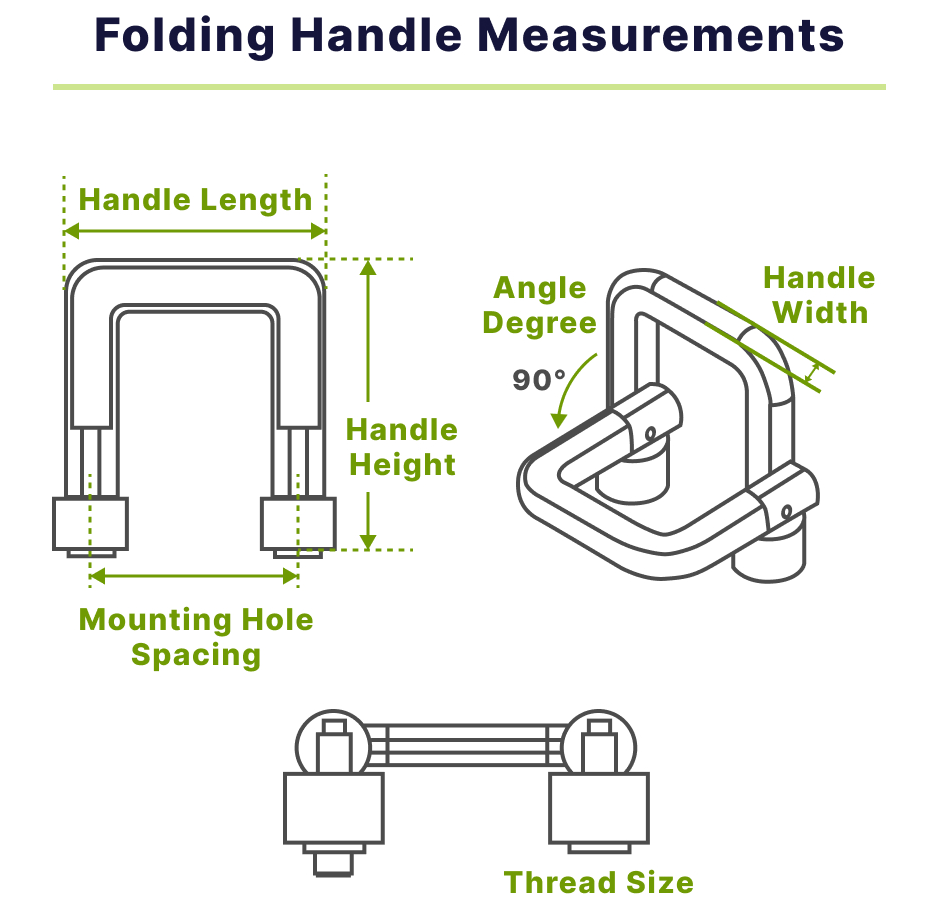
Provide the handle type, overall and grip dimensions, mounting-hole pattern, fastener method, material, finish, expected load direction, operating cycles, stowed profile, environment, quantity and drawing. For folding designs, specify the desired retention behavior and allowable movement or rattle.
Frequently Asked Questions
Is a folding handle weaker than a fixed handle
Not necessarily, but it has more load-path elements. Its pivot, stop, base and mounting must be evaluated for the application.
Which handle is better for a confined workspace
A folding handle is often preferred because it can reduce protrusion when stowed, provided it remains securely stowed and does not introduce a pinch or vibration problem.
Which design needs less maintenance
A fixed handle generally has fewer moving parts. A folding handle may require inspection of the pivot, retention mechanism, wear and contamination.
Technical Reference
Elesa Ganter’s GN 425.5 folding-handle specification illustrates why the stowed projection, mounting details and model-specific load information should be checked together. Its specifications apply only to that manufacturer’s product.
https://www.elesa-ganter.com/en/www/U-Handles–Folding-Handles–GN4255-NI