Passivation of Stainless Steel Pipe Fittings
Stainless steel already has strong corrosion resistance, but machining, welding, grinding, handling, and fabrication can leave iron particles, heat tint, oxide scale, oil, or other contaminants on the surface. If these residues remain, local corrosion can begin even when the fitting itself is made from a suitable stainless steel grade.
Passivation is used to remove contaminant iron and leave a chemically clean stainless steel surface that can maintain its protective passive film. For stainless steel pipe fittings used in chemical processing, food equipment, sanitary piping, marine systems, and other demanding applications, surface condition can be just as important as the alloy grade itself.
Passivation does not make a fitting mechanically stronger, nor can it compensate for poor welding, deep pitting, or an unsuitable material grade. Its main role is surface cleanliness and corrosion protection.
What Passivation Actually Does to Stainless Steel
The corrosion resistance of stainless steel comes primarily from the chromium in its alloy. When a clean stainless steel surface contacts an oxygen-containing environment, a thin, chromium-rich oxide film forms naturally.
Although this passive film is extremely thin, it separates the underlying metal from the surrounding environment and helps slow further oxidation.
Surface contamination can interfere with this protection during manufacturing. Carbon steel tools, grinding dust, machining operations, welding, handling equipment, and shop-floor particles can introduce free iron onto the stainless steel surface. These contaminants lack the corrosion resistance of the underlying alloy and may rust when exposed to moisture.
Chemical passivation removes this contaminant iron without significantly removing the stainless steel itself. After proper cleaning, chemical treatment, rinsing, and drying, the surface can maintain its protective passive condition. This process can be particularly relevant for precision components such as a metric hydraulic connector, where clean surfaces can support reliable performance in demanding fluid systems.
For this reason, passivation is better described as a surface-cleaning and corrosion-control process rather than a coating. It does not add a thick protective layer to the fitting.
Why Stainless Steel Pipe Fittings May Need Passivation
Pipe fittings usually pass through several manufacturing operations before shipment. Depending on the design, these may include:
- CNC machining
- Turning and threading
- Drilling
- Grinding
- Welding
- Forming
- Polishing
- Handling and inspection
Each operation creates opportunities for surface contamination.
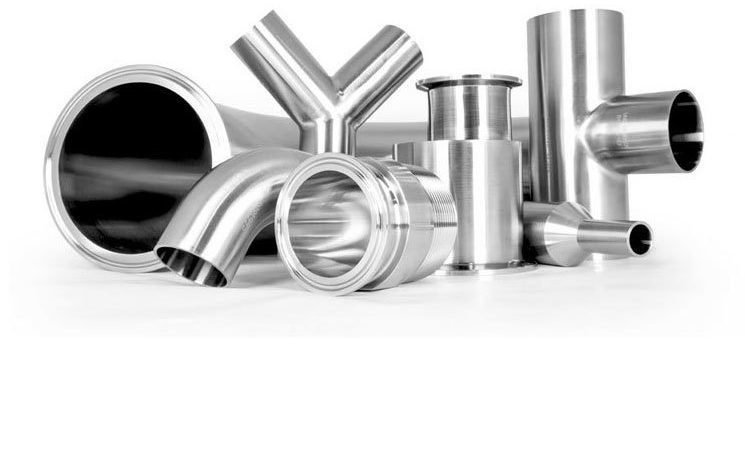
Threaded fittings, adapters, unions, flanges, elbows, tees, sanitary fittings, and custom machined connectors can all be affected if carbon steel particles or other contaminants become embedded in the surface.
Passivation is particularly relevant when the fittings will be used in systems where corrosion, product purity, or surface cleanliness matters. Typical examples include food and beverage equipment, pharmaceutical piping, chemical processing systems, marine applications, water treatment equipment, laboratory systems, and sanitary process lines.
The need for passivation should still be determined by the alloy, manufacturing route, final surface condition, service environment, and customer specification. It should not be treated as an automatic substitute for correct material selection.
Pickling vs Passivation
Pickling and passivation are often mentioned together, but they perform different jobs.
| Item | Pickling | Passivation |
|---|---|---|
| Main purpose | Remove oxide scale, heat tint and affected surface material | Remove contaminant iron and support a clean passive surface |
| Typical use | After welding, heating or heavy oxidation | After machining, fabrication or cleaning |
| Material removal | Removes a thin surface layer | Minimal attack on the stainless substrate when correctly controlled |
| Heat tint removal | Yes | Not its primary purpose |
| Free iron removal | Can contribute | One of the main purposes |
| Common standards | ASTM A380/A380M | ASTM A380/A380M and ASTM A967/A967M |
This distinction matters for welded stainless steel fittings.
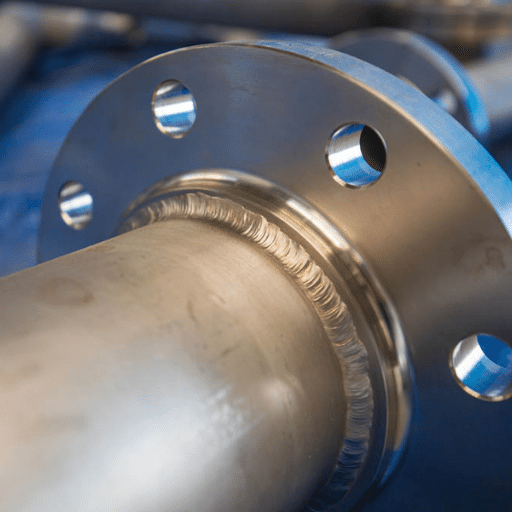
A welded elbow or tee may have visible heat tint around the weld zone. Passivation alone should not be expected to remove heavy oxide scale or heat tint. The surface may need descaling or pickling first, followed by appropriate cleaning and passivation.
Calling every acid treatment “passivation” can therefore create confusion between a supplier and a buyer. The required final surface condition should be clearly stated on the drawing, purchase order, or technical specification.
When Pickling Is Required Before Passivation
Pickling becomes relevant when fabrication leaves oxide scale or heat-affected discoloration on the stainless steel.
Common situations include:
Welded fittings
Welding can produce heat tint and oxide around the weld area. The extent depends on temperature, shielding, alloy grade, and welding conditions.
Heat-treated components
High-temperature processing may form oxide scale that cannot be removed by normal passivation.
Heavily contaminated surfaces
Grinding debris, embedded particles, rust marks, and shop contamination may require more extensive surface preparation.
Specified sanitary or corrosion-sensitive applications
Some projects define a particular final surface condition and cleaning procedure rather than simply requesting “passivation.”
The sequence therefore depends on the actual surface:
Cleaning → Descaling/Pickling when required → Rinsing → Passivation → Final rinsing → Drying → Inspection
A clean machined fitting without scale may not require the same pretreatment as a welded component with visible heat tint.
Passivation Process for Stainless Steel Pipe Fittings
The exact process should match the stainless steel grade, geometry, contamination level, customer specification, and applicable standard. A typical manufacturing sequence includes the following stages.
1. Initial Inspection
The fitting is checked for visible rust, oil, machining residues, scale, weld discoloration, grinding marks, and other contamination.
This step determines whether normal cleaning is sufficient or whether additional descaling or pickling is required.
2. Cleaning and Degreasing
Oil, grease, polishing compounds, machining fluids, and shop dirt must be removed before chemical treatment.
Passivation chemistry cannot work consistently through an oily or heavily contaminated surface.
3. Pickling or Descaling When Required
Weld scale, heat tint, or heavier oxide contamination is removed before passivation.
This is a separate operation from passivation and should be specified separately when the application requires it.
4. Passivation Treatment
The cleaned stainless steel is treated using an appropriate passivation method. Nitric-acid and citric-acid processes are widely referenced in stainless steel passivation standards.
The treatment selection depends on factors such as material grade, part geometry, process specification, and customer requirement.
5. Thorough Rinsing
Residual treatment chemicals must be removed after passivation. Proper rinsing is an important part of the process because chemical residue left on a fitting can create its own surface problems.
6. Drying and Protection
After rinsing, fittings are dried and handled in a way that reduces the risk of recontamination.
Clean parts can be contaminated again if they are placed on carbon steel surfaces, handled with dirty tools, or packed with unsuitable materials.
7. Inspection or Verification
Where required, the finished fittings are inspected or tested according to the agreed acceptance criteria.
For critical applications, “passivated” on a purchase order is often not enough. The required standard and verification method should also be defined.
ASTM A380 vs ASTM A967
ASTM A380/A380M and ASTM A967/A967M are frequently referenced for stainless steel surface treatment, but their scope is different.
| Standard | ASTM A380/A380M | ASTM A967/A967M |
|---|---|---|
| Main scope | Cleaning, descaling, pickling and passivation | Chemical passivation treatments |
| Surface cleaning | Covered | Addressed as part of preparation |
| Descaling / pickling | Covered | Not the main focus |
| Passivation | Covered | Primary focus |
| Nitric acid treatment | Applicable | Covered |
| Citric acid treatment | Applicable depending on procedure | Covered |
| Verification | Includes inspection/testing provisions | Provides passivation acceptance tests |
ASTM A380/A380M-25 deals broadly with the condition of stainless steel surfaces, including cleaning and removal of contamination that could reduce normal corrosion resistance.
ASTM A967/A967M-25 is more specifically focused on chemical passivation treatments for stainless steel parts and methods used to confirm treatment effectiveness.
For purchasing purposes, the standard number alone may still be insufficient. The drawing or purchase order can also specify the required treatment, surface condition, verification, documentation, and any industry-specific requirements.
Nitric Acid vs Citric Acid Passivation
Both nitric-acid and citric-acid methods are used for stainless steel passivation.
Nitric acid has a long history in industrial stainless steel processing and remains common in many established specifications.
Citric acid systems provide another route for removing contaminant iron from a properly cleaned stainless steel surface. They are also covered by ASTM A967/A967M.
Neither method should be selected only because one sounds more modern or more aggressive. Material grade, contamination, production controls, customer requirements, environmental considerations, and validation requirements all affect the choice.
The important point for a buyer is that the supplier can define and control the process rather than simply state that a part has been “acid treated.”
How Passivation Is Verified
Visual appearance is useful, but it does not tell the whole story.
A bright fitting is not automatically well passivated, and a matte surface is not automatically defective. Surface appearance also depends on the original material, machining, polishing, pickling, and other finishing operations.
Depending on the specification, verification can include methods such as:
- Visual inspection
- Water immersion testing
- High-humidity testing
- Salt spray testing
- Copper sulfate testing
- Other contamination or passivation verification methods specified by the applicable standard
The correct test depends on the material and specification.
For OEM projects, buyers should state any required acceptance method before production. This is particularly important when inspection reports, batch records, material certificates, or other documentation must be supplied with the order.
304 vs 316 Stainless Steel Pipe Fittings
Passivation does not replace alloy selection.
304 and 316 stainless steels both rely on chromium for their passive surface behavior, but 316 contains molybdenum, which generally provides better resistance to localized corrosion in chloride-containing environments.
For this reason, 316 or 316L is commonly selected for more demanding chemical, marine, sanitary, and process applications.
| Factor | 304 Stainless Steel | 316 / 316L Stainless Steel |
|---|---|---|
| General corrosion resistance | Good | Very good |
| Chloride resistance | Moderate | Better than 304 |
| Common industrial use | General piping and equipment | Chemical, marine and sanitary systems |
| Passivation | Can be specified | Can be specified |
| Material selection | Based on service environment | Based on service environment |
A passivated 304 fitting does not automatically become a substitute for 316 in an environment where 316 is required.
Likewise, using 316 does not mean surface contamination can be ignored. Poor fabrication and embedded iron can still create localized corrosion problems.
Both alloy selection and surface treatment need to match the application.
Where Passivated Stainless Steel Pipe Fittings Are Used
Passivated fittings are commonly specified where corrosion resistance, cleanliness, or process reliability is important.
Food and beverage equipment may require clean stainless steel surfaces that are easier to maintain and less likely to introduce contamination.
Pharmaceutical and laboratory systems often have stricter requirements for material traceability, surface condition, and cleanliness.
Chemical processing systems expose fittings to aggressive process media, making alloy grade and surface condition important design factors.
Marine equipment faces chloride exposure and usually requires careful material selection together with controlled fabrication.
Water treatment systems may use stainless steel fittings where long-term corrosion behavior and cleanliness are priorities.
General industrial piping may specify passivation after machining or welding when iron contamination is a concern.
The requirement should ultimately come from the service conditions and project specification rather than the industry name alone.
What Buyers Should Specify When Ordering Passivated Pipe Fittings
A clear RFQ reduces ambiguity between buyer and manufacturer.
Useful information includes:
| RFQ Item | Example |
|---|---|
| Material | 304, 316, 316L |
| Fitting type | Elbow, tee, flange, adapter, union, sanitary fitting |
| Size | Drawing or pipe/thread size |
| Connection | NPT, BSP/BSPT, welded, flange, tri-clamp or custom |
| Surface requirement | Machined, polished, pickled, passivated, electropolished |
| Applicable standard | ASTM A380/A380M, ASTM A967/A967M or project specification |
| Testing | Required verification method, if applicable |
| Documentation | Material certificate, inspection report, dimensional report |
| Quantity | Prototype, sample batch or production quantity |
| Drawing | CAD, STEP or technical drawing where applicable |
For custom stainless steel pipe fittings, surface treatment is best defined during engineering review rather than after machining has already been completed.
Dream Industry supplies stainless steel pipe fittings and custom machined fluid components in 304, 316 and 316L, with surface-treatment options including polishing, passivation and electropolishing. CAD/STEP files, material requirements, dimensions and inspection requirements can be reviewed before quotation.
Frequently Asked Questions
Does stainless steel always need passivation?
No. Stainless steel naturally forms a passive surface in an oxygen-containing environment when the surface is clean. Additional chemical passivation is commonly specified when fabrication or handling may have introduced contaminant iron or when a project requires controlled surface treatment and verification.
Is pickling the same as passivation?
No. Pickling is mainly used to remove scale, heat tint and an affected surface layer. Passivation focuses on removing contaminant iron and maintaining a clean corrosion-resistant stainless steel surface. Welded components may require both.
Does passivation remove weld discoloration?
Passivation should not be treated as the primary process for removing significant weld heat tint or oxide scale. Pickling, mechanical treatment, or another suitable descaling process may be required first.
Do 304 stainless steel fittings need passivation?
They can. The requirement depends on how the fitting was manufactured, whether the surface has been contaminated, its service environment, and the customer’s specification.
Do 316 stainless steel fittings need passivation?
316 and 316L have better resistance to many corrosive environments than 304, particularly where chlorides are present, but their surfaces can still be contaminated during machining, grinding, welding, or handling. Passivation may therefore still be specified.
Which ASTM standard applies to stainless steel passivation?
ASTM A380/A380M covers cleaning, descaling, pickling and passivation practices for stainless steel parts, equipment and systems. ASTM A967/A967M focuses specifically on chemical passivation treatments and verification requirements for stainless steel parts.
Does passivation increase the pressure rating of a pipe fitting?
No. Passivation is a surface treatment. It does not increase the base material strength, wall thickness, thread strength, weld strength, or pressure rating of the fitting. Pressure capability depends on material, geometry, manufacturing quality, connection design, and the applicable piping standard.
Final Note
Passivation is most valuable when it is treated as part of the manufacturing and quality-control process rather than as a cosmetic finishing step.
For stainless steel pipe fittings, the correct sequence may involve cleaning alone, pickling followed by passivation, polishing, electropolishing, or another specified surface treatment. The right choice depends on the alloy, manufacturing history, final application, and acceptance requirements.
When requesting a quotation for passivated stainless steel pipe fittings, include the material grade, fitting type, size, surface-treatment requirement, applicable standard, inspection requirement, and drawing where available. This gives the manufacturer enough information to quote the correct process instead of making assumptions from the word “passivated.”