
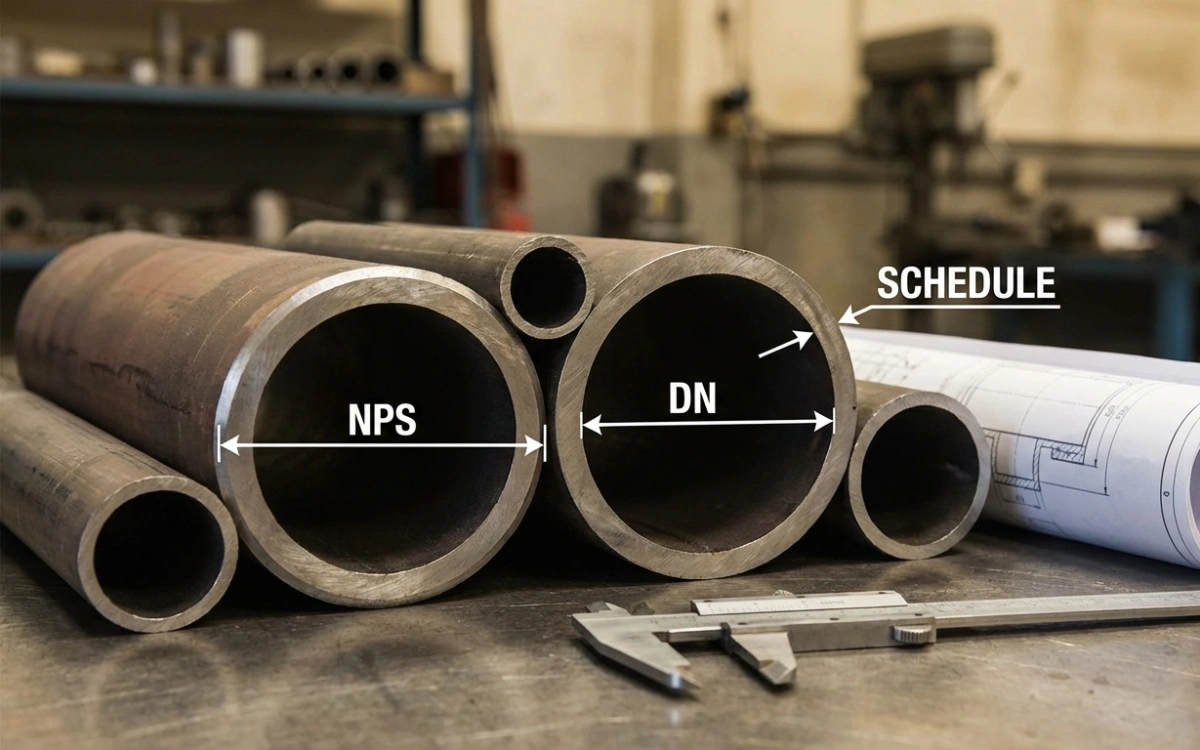
DN vs NPS pipe size remains one of the most misunderstood topics in industrial piping procurement. Engineering teams often work across regions that follow different dimensional standards. European projects frequently reference DN values, while North American specifications commonly use NPS designations. Procurement personnel may assume both systems represent identical measurements. That assumption often creates purchasing errors and installation delays. Manufacturers, contractors, and project managers must verify dimensional compatibility before issuing purchase orders. Accurate pipe selection directly affects flange alignment, fitting compatibility, and pressure performance. Large industrial facilities depend on consistent specifications throughout construction phases. Even small documentation discrepancies can increase costs significantly during fabrication and commissioning activities.
DN Vs NPS Pipe Size Explained
The term DN refers to Diameter Nominal, which follows metric-based sizing conventions. NPS stands for Nominal Pipe Size and originates from imperial measurement systems.
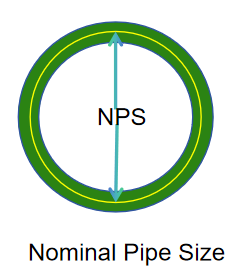
Neither designation always matches the actual pipe diameter. Instead, both function as reference sizes for standardization purposes. Engineers use these systems to simplify communication across manufacturers and suppliers. Standard pipe dimensions remain controlled through established industry specifications. Historical developments shaped both systems according to regional industrial practices. Modern international projects often involve equipment sourced from multiple countries. Therefore, technical teams frequently encounter both sizing methods within the same project documentation. Correct interpretation prevents specification conflicts during procurement and installation processes.
Core Differences Between DN And NPS Systems
Several distinctions separate these two sizing approaches. DN uses metric numbering conventions that generally relate to millimeter dimensions. NPS follows inch-based nominal designations established through American standards. Regional adoption patterns also differ considerably. European, Asian, and many international projects favor DN references. North American industries commonly specify NPS values in engineering drawings. Governing organizations publish dimensional requirements to maintain manufacturing consistency. Although conversion charts simplify communication, direct numerical equivalence does not always exist. Technical personnel should review applicable standards before making assumptions. Consistent specification practices reduce procurement risks and improve coordination among suppliers, contractors, and engineering consultants.
| Feature | DN System | NPS System |
|---|---|---|
| Measurement Basis | Metric | Imperial |
| Typical Markets | Europe and Asia | North America |
| Designation Style | DN15, DN50, DN100 | NPS 1/2, NPS 2, NPS 4 |
| Main Standards | ISO and EN | ASME and ASTM |
| Industrial Usage | Global Projects | US-Based Projects |
How Pipe Outside Diameter Relates To Nominal Sizes
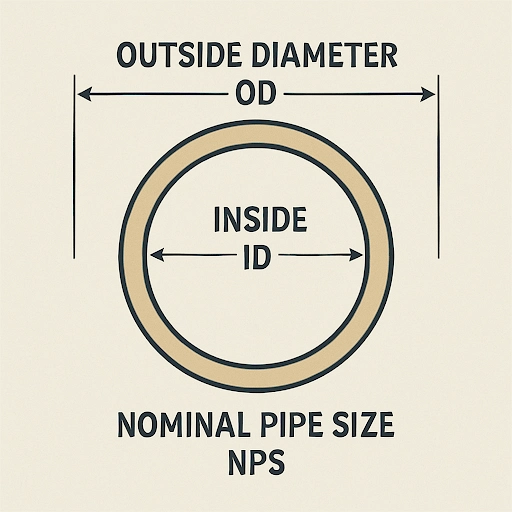
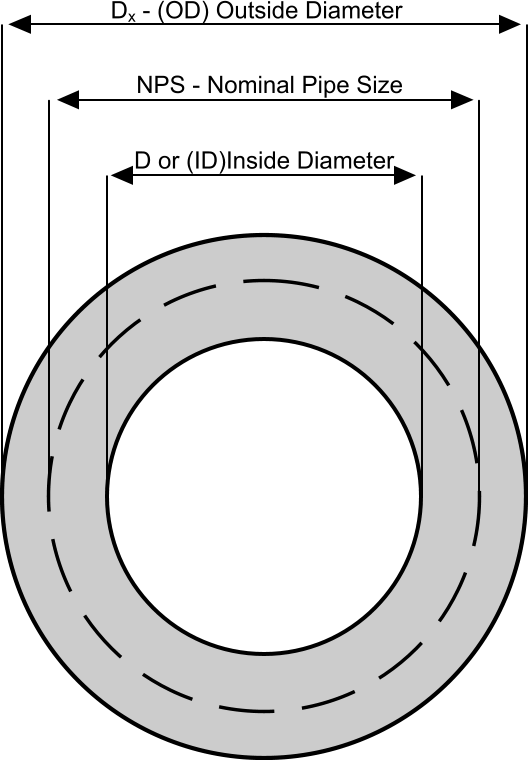
Outside diameter determines compatibility between pipes, flanges, valves, and fittings. In dn vs nps pipe size comparisons, nominal designations serve as simplified references rather than physical measurements. Many pipe sizes maintain a fixed outside diameter across different schedules. Wall thickness changes while external dimensions remain unchanged. This approach supports interchangeability throughout industrial systems. Design engineers rely on published dimensional tables when selecting components. Manufacturing consistency enables reliable assembly across multiple suppliers. Pipe schedules influence pressure ratings and flow characteristics. Consequently, dimensional verification remains essential before finalizing material requisitions. Projects involving international sourcing require additional attention because specifications may contain both metric and imperial references.
Common DN To NPS Conversion Reference
Conversion references help procurement teams compare specifications efficiently. However, conversion charts should support verification rather than replace engineering review. Certain designations correspond closely between systems. Experienced engineers still validate outside diameter and schedule data before approval. Dimensional accuracy becomes especially important for high-pressure systems and critical process applications. Documentation consistency reduces the possibility of mismatched components arriving on site. Conversion references also assist suppliers when responding to international requests for quotation. Clear communication shortens procurement cycles and minimizes clarification requests during technical evaluations.
| DN | Approximate NPS | Outside Diameter (mm) |
|---|---|---|
| DN15 | 1/2 | 21.3 |
| DN20 | 3/4 | 26.7 |
| DN25 | 1 | 33.4 |
| DN40 | 1-1/2 | 48.3 |
| DN50 | 2 | 60.3 |
| DN80 | 3 | 88.9 |
| DN100 | 4 | 114.3 |
| DN150 | 6 | 168.3 |
| DN200 | 8 | 219.1 |
Why Wall Thickness Matters More Than Many Buyers Expect
Wall thickness significantly influences mechanical strength and pressure capability. Pipe schedules define thickness variations within a given nominal size. Schedule 10 products feature thinner walls than Schedule 40 or Schedule 80 alternatives. Increased thickness generally improves pressure resistance and structural durability. Material consumption also rises as wall thickness increases. Consequently, heavier schedules often carry higher procurement costs. Design engineers evaluate operating pressure, temperature, corrosion conditions, and safety margins before selection. Proper schedule matching prevents performance issues throughout service life.
Key Standards Engineers Should Verify Before Purchasing
Several industry standards govern pipe manufacturing and dimensional consistency. ASME B36.10 and ASME B36.19 establish dimensional requirements for carbon steel and stainless steel piping. ASTM specifications define material properties and testing requirements. ISO standards support global dimensional harmonization across many industries. EN standards remain widely used throughout European projects. Procurement teams should verify applicable standards before supplier qualification. Material certificates provide traceability and quality assurance documentation. Many projects also require third-party inspection records. Stainless steel pipe fittings often accompany piping systems and must satisfy compatible dimensional and material standards to ensure reliable installation performance.
Practical Selection Tips For International Supply Chains
Global sourcing introduces additional complexity into pipe procurement activities. Successful projects depend on clear communication and detailed technical verification.
- Confirm the applicable dimensional standard.
- Verify nominal size and schedule requirements.
- Check flange pressure class compatibility.
- Review material certificates before approval.
- Validate conversion references carefully.
- Align engineering drawings with purchase orders.
- Confirm inspection and testing requirements.
Applying these practices reduces procurement risks and improves project coordination. Technical reviews should occur before manufacturing begins. Early verification minimizes expensive corrections later.Supply chain teams benefit from standardized documentation formats and clear approval workflows.
Consistent communication supports efficient collaboration between engineering, procurement, quality control, and manufacturing departments. International projects frequently involve suppliers from multiple regions. Therefore, specification accuracy remains essential throughout the procurement lifecycle. Strong verification processes help prevent delays, reduce rework, and maintain project budgets.
Avoiding Costly Specification Errors In Industrial Projects
Specification errors often originate from incomplete documentation or incorrect assumptions. Engineers may reference nominal sizes without identifying schedules or governing standards. Suppliers might interpret requirements differently when information lacks sufficient detail. Dimensional conflicts commonly appear during fabrication and assembly stages. Early technical reviews reduce these risks considerably. Quality control personnel should inspect documentation before production starts. Verification procedures must include dimensional checks, material validation, and standards compliance assessments. Cross-functional communication strengthens project execution and supports timely delivery objectives. Careful planning improves installation efficiency while reducing operational disruptions during commissioning and startup activities.
Choosing The Correct DN Vs NPS Pipe Size For Global Business Operations
Selecting the proper dn vs nps pipe size depends on project location, customer requirements, and governing specifications. International manufacturers frequently receive technical documents that contain both sizing systems. Internal engineering procedures should establish clear conversion rules before procurement begins. Consistency improves communication between suppliers, contractors, and project owners. Detailed specifications reduce ambiguity during quotation reviews and production planning. Some hydraulic installations also utilize a Metric hydraulic connector when equipment follows metric design standards. Compatibility verification remains critical whenever multiple standards appear within one system. Strong specification management improves reliability, reduces procurement risks, and supports long-term operational performance.
Additional Comparison Between DN And NPS Applications
Industrial sectors apply these sizing systems according to regional standards and project requirements. Oil and gas facilities often follow ASME B36.10, ASME B16.5, and ASTM piping specifications in North America. Chemical processing plants may adopt ISO 6708 and EN 10255 requirements in international markets. Water treatment projects frequently combine equipment from several countries. Such situations increase the importance of dn vs nps pipe size verification. Engineering teams should compare nominal size, outside diameter, wall thickness, pressure ratings, and flange standards before approval. Comprehensive technical reviews help avoid costly field modifications. Effective coordination among stakeholders supports smoother project execution and better lifecycle performance.
| Industry | Common System | Main Consideration |
|---|---|---|
| Oil & Gas | NPS | ASME Compliance |
| Chemical Processing | DN | International Standards |
| Water Treatment | Mixed Usage | Equipment Compatibility |
| Power Generation | Mixed Usage | Pressure Requirements |
| Manufacturing | Project Dependent | Supplier Coordination |

FAQ
Is DN The Same As Actual Pipe Diameter?
No. DN serves as a nominal reference rather than an exact dimensional value. Many buyers mistakenly assume the number directly represents the pipe diameter in millimeters. Actual dimensions frequently differ because industry standards define specific outside diameters for each nominal size. Pipes with identical DN designations may also have different internal diameters when wall thickness changes. Engineers therefore rely on dimensional charts and technical standards instead of nominal labels alone. Proper verification helps ensure compatibility among valves, flanges, fittings, and piping components. This practice reduces installation issues and improves procurement accuracy across industrial projects.
Can DN And NPS Be Used Interchangeably?
DN and NPS correspond closely in many standard sizes, but they are not interchangeable by definition. Each system originates from different measurement traditions and standardization frameworks. Conversion tables provide useful references during international procurement activities. Nevertheless, engineers should verify outside diameter, schedule designation, and pressure class before approving materials. Technical documentation always takes priority over approximate conversions. A specification that lacks detailed dimensional information may create confusion between suppliers and contractors. Careful review of standards and dimensional data helps prevent ordering errors and supports successful project execution.
Why Do Some Pipes Share The Same Outside Diameter But Different Thicknesses?
Manufacturing standards intentionally keep outside diameters consistent across multiple schedules. This approach allows fittings, flanges, and valves to remain compatible despite wall thickness variations. When wall thickness increases, the internal diameter decreases while the external dimension remains unchanged. Thicker walls generally provide greater pressure resistance and mechanical strength. Different industrial applications require different performance levels. High-pressure systems often require heavier schedules, while lower-pressure services may use lighter alternatives. Engineers evaluate pressure, temperature, corrosion exposure, and safety margins before final selection. Proper schedule specification ensures reliable performance throughout the operational lifespan of the piping system.